Visiting Belgium for the first time? The country has subtle but distinct customs around greeting, language, dining, and social interaction that catch many international visitors off-guard. This Belgian traditions customs guide for 2026 covers the practical etiquette every visitor should know — from how many cheek kisses to give, to why “Bonjour” works in Brussels but not Antwerp, to dining norms that distinguish a successful Belgian meal from an awkward one.
Belgian Traditions Customs: Top Things to Know
1. Belgium Is a Federal Country with 3 Language Communities
Belgium has three official languages:
- Dutch (Flemish) — spoken in Flanders (northern Belgium).
- French — spoken in Wallonia (southern Belgium) and Brussels.
- German — spoken by ~75,000 people in eastern Belgium.
Brussels is officially bilingual French/Dutch. Most locals speak both, plus excellent English.
2. Match Your Greeting to the Region
- In Wallonia (Liège, Namur, Mons): “Bonjour” (hello), “Merci” (thank you), “Au revoir” (goodbye).
- In Flanders (Antwerp, Ghent, Bruges): “Goeiedag” or “Hallo”, “Dank u”, “Tot ziens”.
- In Brussels: Either works; French is slightly more common in everyday speech.
3. Cheek Kisses (Faire la Bise)
Belgian convention is three kisses on alternating cheeks (start with right cheek), used between female friends and between male and female friends after a relationship is established. It’s an air-kiss near the cheek — minimal actual contact.
Men greeting men: handshake, never kissing.
First meetings: handshake regardless of gender.
4. Punctuality Matters
Belgians are punctual. Arrive on time for restaurant reservations, business meetings, and social invitations. Being more than 5-10 minutes late requires a call or message of apology.
5. Dining Is Formal
Belgian dining is more formal than many travellers expect:
- Wait for the host to say “Bon appétit” / “Smakelijk” before starting.
- Keep hands above the table, wrists resting on the edge.
- Cut food with knife in right hand, fork in left (European style).
- Don’t start drinking until the host raises their glass.
- Finish what’s on your plate — leaving food can be seen as rude.
6. Tipping Is Modest
Restaurant service is included by Belgian law. A 5-10% top-up is appreciated for excellent service but not expected. Taxi drivers: round up to nearest euro. Hotel porters: €1-€2 per bag.
7. Belgians Are Reserved on First Meeting
Don’t expect American-style warmth from strangers. Belgians tend to be polite but reserved until you’ve established a relationship. Once that happens, they’re generous hosts.
Belgian Traditions Customs: Cultural Norms
Personal Space
Belgians value personal space. Standing too close, loud conversation in public, or excessive physical contact can feel intrusive. Match your volume to the room.
Queuing
Belgians queue properly. Don’t jump lines.
Public Behaviour
Belgians are generally restrained in public. Loud English, drunkenness on weekday evenings, and ostentatious displays of wealth are frowned upon.
Belgian Modesty
Belgian humour is often self-deprecating. Belgians rarely boast about themselves. Reciprocate by avoiding bragging about your own achievements.
Avoid Generalising Belgium with the Netherlands
This is a pet peeve. Belgium and the Netherlands are distinct countries with distinct cultures. Don’t call Belgian beer “Dutch beer” or assume Belgian customs are the same as Dutch ones.
Belgian Traditions Customs: Seasonal Traditions
Ommegang (Brussels, late June/early July)
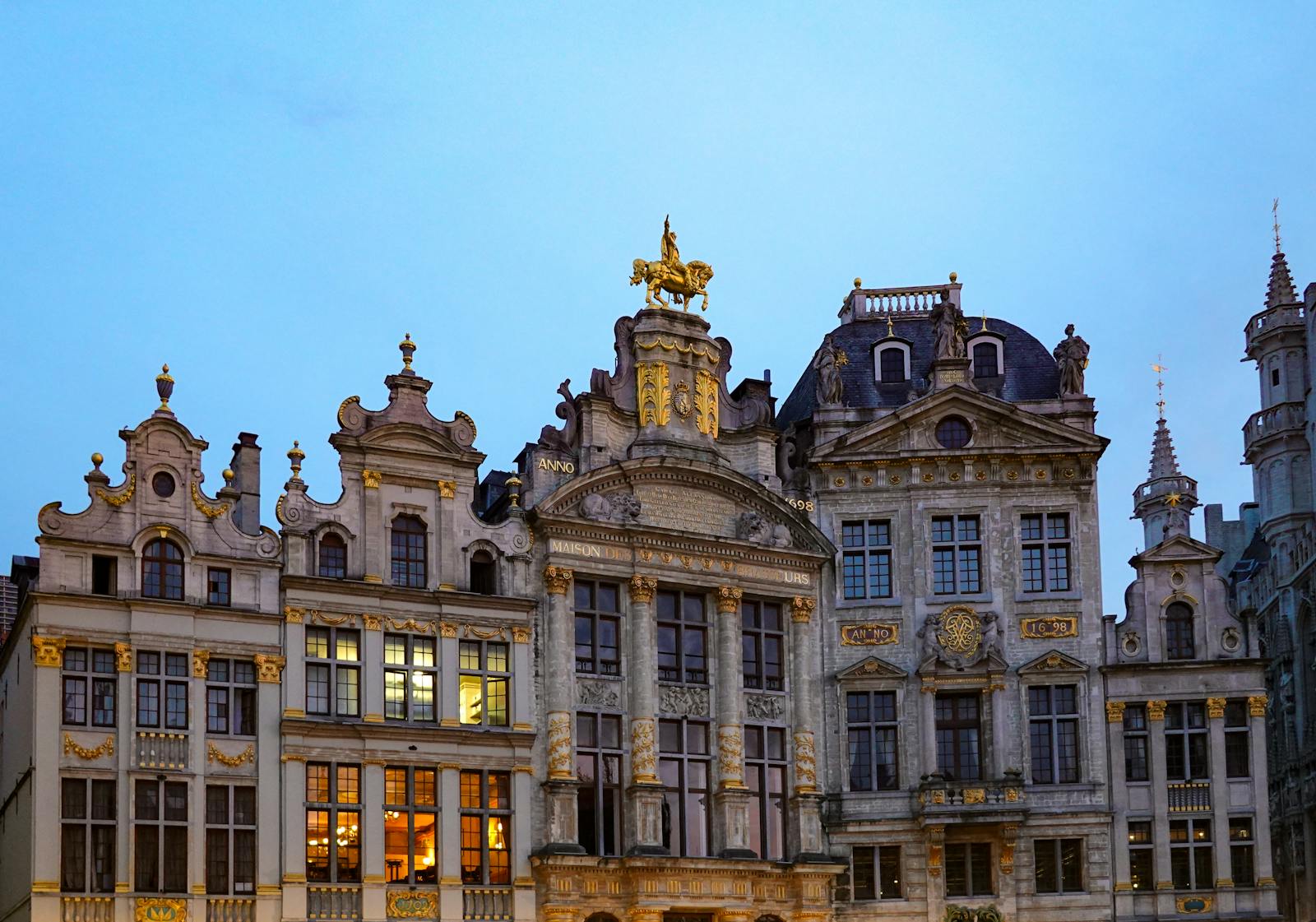
Annual procession in Grand Place re-enacting 16th-century Habsburg ceremonies. UNESCO-listed.
Flower Carpet (Brussels, August biennial)
Even-numbered years, Grand Place is covered in 1,800 m² of begonias.
Saint Nicholas / Sinterklaas (6 December)
The Belgian Santa Claus — celebrated weeks before Christmas. Children receive small gifts on Saint Nicholas eve.
Christmas markets
“Winter Wonders” Christmas market in Brussels runs late November to early January.
Carnival (February-March)
Especially elaborate in Binche (UNESCO-listed Gilles parades), Aalst, and Stavelot.
Belgian Traditions Customs: Food and Beer Etiquette
- Belgian beer: Always served in its proper glass. Don’t pour different beers into the same glass.
- Frites: Eaten with mayonnaise (not ketchup) by most locals.
- Chocolate: Given as host gifts; never eat someone else’s offered chocolate in one bite.
- Bread: Broken with hands, not cut with knife.
- Cheese: Served at end of meal in French-influenced Wallonia; with bread or rolls.
Belgian Traditions Customs: Business and Hospitality
- Business cards: Exchange formally.
- Meeting hours: Lunch is at 12:00-14:00. Don’t schedule meetings during.
- Sunday closing: Most shops close on Sundays. Many restaurants close Sunday-Monday.
- Hospitality gifts: Belgian chocolate, wine, or flowers (avoid chrysanthemums — funeral associations).
- Hand gestures: Avoid pointing with index finger (use whole hand). Don’t snap fingers to summon servers.
Belgian Traditions Customs: Useful Language Tips
| English | French | Dutch |
|---|---|---|
| Hello | Bonjour | Goeiedag / Hallo |
| Good evening | Bonsoir | Goedenavond |
| Thank you | Merci | Dank u |
| Please | S’il vous plaît | Alstublieft |
| Excuse me | Pardon / Excusez-moi | Pardon |
| Goodbye | Au revoir | Tot ziens |
| Yes / No | Oui / Non | Ja / Nee |
| Cheers! | Santé! | Proost! |
Belgian Traditions Customs: Quick Reference
| Topic | Etiquette |
|---|---|
| Greeting (formal) | Handshake |
| Greeting (friends) | 3 cheek kisses (right-left-right) |
| Tipping | 5-10% if excellent; service included |
| Dining start | Wait for host “Bon appétit” |
| Punctuality | On time always |
| Personal space | Substantial; avoid standing close |
| Public volume | Match the room; quiet preferred |
| Frites accompaniment | Mayonnaise standard |
| Gift for host | Belgian chocolate or wine |
Hidden Belgian Traditions and Customs Most Tourists Miss
The famous Belgian traditions and customs – waffles, beer, fries – barely scratch the surface. These four lesser-known practices are alive and well in specific Brussels venues and dates.
- The Meyboom planting on 9 August: Brussels’ oldest folk tradition (1308) sees a young beech tree planted at the corner of Rue des Sables and Rue du Marais by 17:00. Folkloric “Compagnons” in 14th-century costume parade with giants from Grand Place. Free spectacle, arrive by 16:00 for a clear view.
- The Ommegang historical pageant (first week of July): Two evenings of medieval pageantry on Grand Place re-enacting Charles V’s 1549 procession. Seated tickets €40-€95, but the surrounding streets host free associated parades the same week.
- Saint-Verhaegen / 20 November: Brussels’ student festival, started in 1888. Watch the ULB and VUB student floats parade chaotically from Boulevard du Midi to the campuses; messy, beer-fuelled, profoundly Bruxellois.
- The Iris Festival (early May): Brussels Region’s official day. Free public-building openings, jazz concerts in Parc Royal, and the Atomium opens its rooftop view for €1 instead of €18.
These keep Belgian traditions and customs alive in places you can actually attend – not just describe to friends back home.
Where to Experience Belgian Traditions and Customs in Real Time
This month-by-month calendar shows the best months to catch genuinely local Belgian traditions and customs rather than tourist-curated demos.
| Month | Tradition | Best Venue | Cost |
|---|---|---|---|
| February | Carnaval de Binche (UNESCO) | Binche town centre, 1h train from Brussels-Midi | Free |
| March | Mid-Lent fair (Foire du Midi) | Boulevard du Midi, Brussels | Free entry, €2-€8 per ride |
| May | Iris Festival, Queen Elisabeth Competition | Across Brussels, BOZAR | Free / €10-€40 finals |
| July | Ommegang on Grand Place | Grand Place, Brussels | €40-€95 stand seats |
| August (odd years) | Flower Carpet on Grand Place | Grand Place, Brussels | Free, €6 City Hall balcony |
| August (every year) | Meyboom planting | Rue des Sables corner | Free |
| September | Heritage Days | City-wide | Free |
| October | Belgian Beer Weekend… wait, that’s Sept | Grand Place | Free entry, €1.50/token tasting |
| December | Plaisirs d’Hiver Christmas market | Sainte-Catherine + Bourse | Free entry, €5 ice rink |
Combine an Ommegang ticket with a daytime Grand Place walk and you experience two layers of Belgian traditions and customs in 24 hours.
Common Misconceptions About Belgian Traditions and Customs
Some of the most repeated “facts” about Belgium are half-truths or outright myths. Locals roll their eyes politely at these, but knowing them helps your trip feel less touristy.
- Myth: French fries are French. They were invented in the Meuse Valley (Wallonia) in the late 1600s, possibly Namur. The “French” name came from US WWI soldiers who heard French-speaking Walloons offering them and misattributed the origin. Real Belgian fries are double-fried in beef tallow at a fritkot like Maison Antoine or Tabora.
- Myth: Brussels sprouts were invented in Brussels. Cultivation references date to 13th-century Brussels but the modern variety is mostly Dutch. Belgians eat far more endive and chicory than sprouts.
- Myth: Manneken-Pis has just one outfit. The little statue has over 1,100 costumes; the wardrobe is stored at the GardeRobe MannekenPis museum (€5, Rue du Chene 19). Costumes change at official ceremonies up to 4 times a week.
- Myth: All Belgians speak French. Only ~40% are native French speakers; ~59% are Dutch (Flemish) speakers and ~1% are German speakers in the eastern cantons. Brussels itself is officially bilingual French/Dutch.
- Myth: Belgians drink only beer. Per-capita wine consumption is also high (about 30 litres per year), and the country runs a thriving local Brut sparkling industry in the Hageland and Heuvelland regions. Try Domaine du Chant d’Eole at Le Wine Bar des Marolles (€8-€12 per glass).
- Myth: The Smurfs are Dutch. They are Belgian, created by Schaerbeek’s Peyo in 1958. The confusion exists because the original “Schtroumpfs” came up in conversation in Dutch first, but the publisher and creator were both based in Brussels.
For a richer dive into the language side of Belgian traditions and customs, see our languages spoken in Brussels guide. For the political and royal roots of many ceremonies, our Royal Palace Brussels guide explains the National Day pageantry on 21 July.
Self-Guided Walking Tour to Experience Belgian Traditions and Customs
This 90-minute, 2.3-km walking loop strings together the best places to taste, hear and see Belgian traditions and customs in central Brussels. Best done Saturday morning.
- Start: Maison Dandoy (Rue au Beurre 31). Founded 1829, the temple of speculoos biscuits and Brussels waffles. Order one freshly pressed gaufre with pearl sugar (€3.50) and a coffee.
- Walk 3 min to Grand Place. Pause to admire the gilded guild houses and identify the goldsmiths’, brewers’ and bakers’ coats of arms – each one a snapshot of medieval Belgian traditions and customs.
- Continue 4 min to Manneken-Pis (corner Rue de l’Etuve and Rue du Chene). Check the outfit of the day on the GardeRobe MannekenPis museum sign across the street; the statue changes clothes up to four times per week as part of an unbroken 400-year tradition.
- Walk 8 min north to Place de la Bourse. Pop into the new Belgian Beer World (€21.50 with a tasting and a 33cl beer, allow 90 min) for an immersive look at the country’s 1,500+ beer varieties.
- Continue 5 min to Maison Antoine (Place Jourdan). Belgium’s most famous frites stand since 1948; a medium cone with andalouse sauce costs €4.80. Eat standing – locals lean against the surrounding cafe walls and use the cafe interior for a beer to wash it down.
- Walk 10 min to A la Mort Subite (Rue Montagne aux Herbes Potageres 7). Iconic 1928 cafe serving classic Brussels Lambic, Gueuze and Kriek beers in original Art Deco surroundings.
- Finish at Wittamer (Place du Sablon). Founded 1910, Belgium’s most prestigious chocolate house; a box of nine pralines is €19 and worth every centime.
The whole tour costs roughly €40-€55 per person depending on how much you eat and drink, and gives a comprehensive taste of Belgian traditions and customs in less than two hours.
Family-Friendly Angles on Belgian Traditions and Customs
Many Belgian traditions and customs translate brilliantly to families. These activities work for kids aged 5-12.
- Chocolate workshop at the Choco-Story museum (Rue de l’Etuve 41): 90-minute kids’ workshop, €15 per child, includes making and decorating six pralines to take home. Daily 11:00 and 14:30.
- Manneken-Pis costume-change ceremony: Wednesday and Sunday mornings around 10:30, free, kid-magnet event. Check the schedule at the City Museum.
- Waffle-making at Aux Gauffres de Bruxelles: Several central shops let kids press their own gaufre on a heated iron (€6, includes toppings). Best at the Rue de l’Etuve branch.
- Carnaval de Binche (Saturday-Monday before Lent): The UNESCO-listed festival is genuinely child-friendly, with feather-hatted Gilles throwing oranges to the crowd. Train to Binche from Brussels-Midi takes 60 min; fares are priced by distance, under-12s travel free with an adult, and under-26s and over-65s get 40% off at any time.
- Christmas market ice rink (Marche aux Poissons, December): €5 entry with skates included, open-air rink alongside chalets selling speculoos cookies and hot chocolate.
- “Spot the Smurf” Smurf-themed bus tour: Brussels City Tours runs a Smurfs experience bus every Saturday (€28 adults, €18 ages 6-12), stopping at the Comic Strip Museum and the original Peyo apartment.
For more family-engaged itinerary ideas in Brussels, see our 2 days in Brussels itinerary, which builds in chocolate and waffle stops naturally. The full sweep of Belgian traditions and customs is best experienced over several days of small encounters rather than one grand tour.
Frequently Asked Questions About Belgian Traditions and Customs
Common visitor questions about Belgian traditions and customs in 2026 – quick reference answers.
- Are Belgian fries really better than French fries? Yes – the double-fry technique in beef tallow at a fritkot is genuinely different in flavour and texture. Try Maison Antoine (Place Jourdan) or Frit Flagey for the benchmark.
- How many Belgian beer styles exist? Around 1,500 distinct varieties from 200+ active breweries. The six main families are Trappist, Abbey, Lambic, Wheat (Witbier), Strong Golden Ale and Saison.
- Is it true Belgians eat chocolate every day? Per-capita consumption is about 8 kg/year, second only to the Swiss. Pralines for Saint Nicholas (6 December) and Easter eggs are unmissable.
- What is the most important Belgian holiday? 21 July (National Day), commemorating the swearing-in of Leopold I in 1831. Public holiday, military parade in front of the Royal Palace, free fireworks at Parc de Bruxelles in the evening.
- Do Belgians really tip 10%? No – service is included by law. Round up or leave 1-2 euros for good service in restaurants; €1 per drink at upmarket bars is welcomed but not expected.
- What is the polite greeting in Brussels? “Bonjour” in French-leaning areas, “Goedendag” in Flemish-leaning areas, or “Hello” to play safe. Three cheek kisses (alternating) for friends, handshake for first meetings.
The single best place to see this living rather than described is Binche on Shrove Tuesday, where the Gilles appear in wax masks at dawn and ostrich-feather headdresses by afternoon — an hour from Brussels by train. Our guide to Brussels in February covers the carnival week and how to do it as a day trip.
Related Brussels Guides
Keep planning with these companion guides:
- Brussels History and Culture — From Medieval Origins to Capital of Europe
- History of Brussels — 1,400 Years from Medieval Town to EU Capital
- Art Nouveau Architecture Brussels — Complete Horta & UNESCO Guide
Useful Resources
- Expatica Belgium etiquette — comprehensive expat guide.
- Commisceo Belgium culture guide — business etiquette.
- visit.brussels — official tourism office.
Frequently Asked Questions
How many kisses do Belgians give?
Three — alternating cheeks starting with the right. Used between friends after a relationship is established. First meetings: handshake.
What language should I use in Brussels?
French (“Bonjour”) is more common in everyday speech, but Brussels is officially bilingual. Most locals speak excellent English. In Flanders (Antwerp, Bruges, Ghent), use Dutch greetings; in Wallonia (Liège, Namur), French.
Do I need to tip in Belgium?
Service is included by law. A 5-10% top-up for excellent service is appreciated but not required.
Are Belgians formal?
Yes, more than most travellers expect. Punctuality matters, dining is formal, and public behaviour is reserved. Don’t expect American-style warmth from strangers.
What’s the biggest Belgian customs mistake tourists make?
Confusing Belgium with the Netherlands. Belgium is its own country with its own languages, beers, foods, and customs. Don’t call Belgian chocolate “Dutch chocolate”.
How do Belgians greet each other?
Handshake for strangers and business; three cheek kisses for friends (between women, and between women and men). Men never cheek-kiss other men.
Final Thoughts
The Belgian traditions customs that matter most for visitors are simple: be punctual, be polite, match your language to the region, and don’t compare Belgium to the Netherlands. For more, see our Brussels first time visitor tips and languages in Brussels guide.
Photo Credits
-
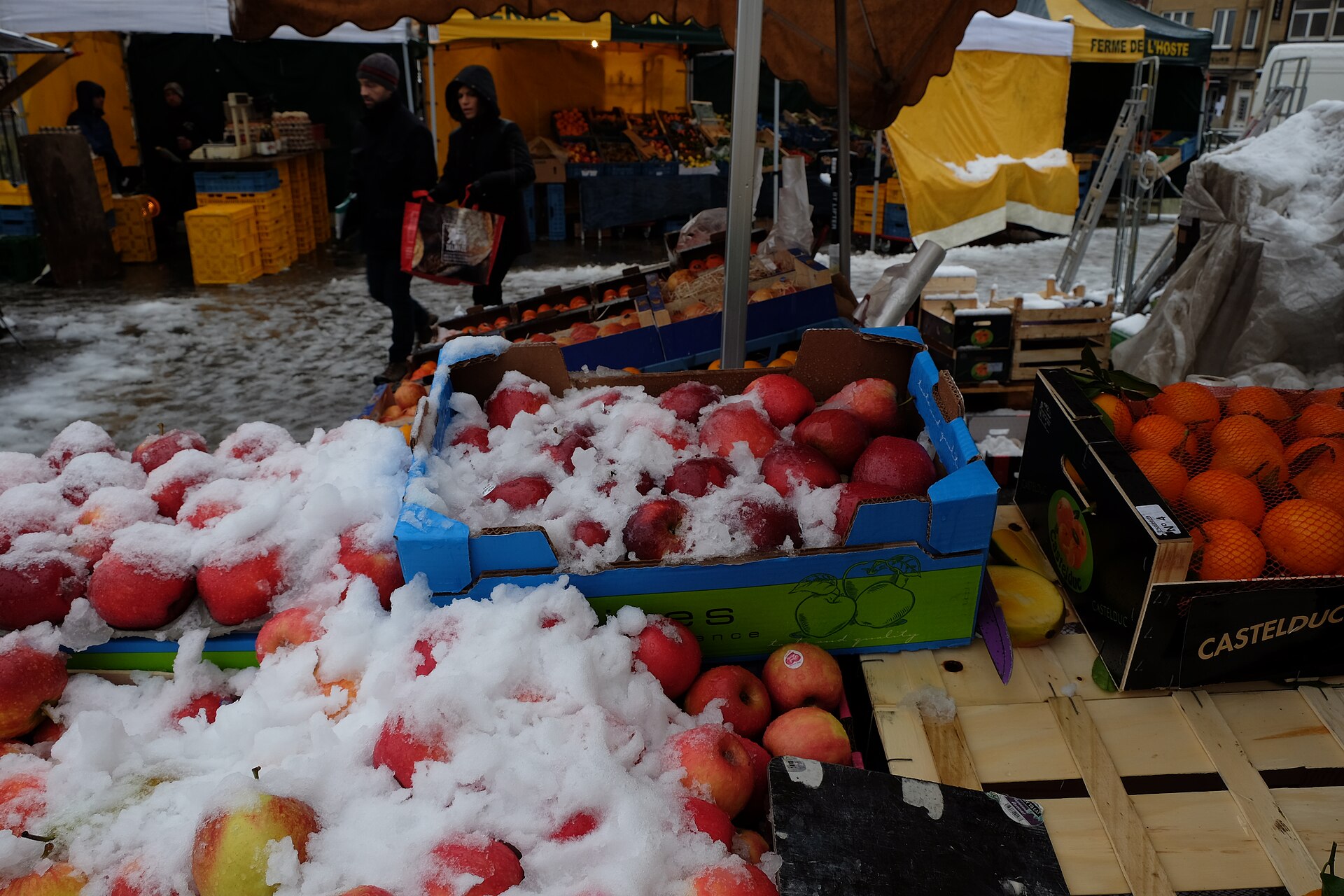
Fruit stalls at the Marche de Boitsfort in the snow: Produces covered in snow at Marché de Boitsfort (Belgium) by Trougnouf, CC BY 4.0, via Wikimedia Commons.