Brussels weather month by month follows a temperate oceanic pattern — mild summers, cool wet winters, and rain possible year-round (it falls on roughly 200 days per year). Knowing what to expect each month helps you pack correctly and plan around the weather. This guide breaks down Brussels weather month by month for 2026 with average temperatures, rainfall, daylight hours, and what to wear.
This Brussels weather month by month guide helps you plan your trip with confidence. The Brussels weather month by month patterns show clear seasonal trends. Use the Brussels weather month by month table below to choose the right month for your priorities.

Brussels Climate Overview
Brussels has a temperate maritime climate — strongly influenced by its proximity to the North Sea. The Brussels weather month by month pattern is one of mild extremes: rarely too hot in summer, rarely brutally cold in winter, but consistently humid and rainy. Annual rainfall averages 850 mm spread across about 190 days per year — slightly less than London but more than Paris.
The Brussels weather month by month follows European seasonal norms, with daylight ranging from 8 hours in December to 17 hours in June. Spring and autumn shoulder seasons offer the best weather-to-crowd ratio.
Brussels Weather Month by Month: Detailed Breakdown
January Weather
Average high/low: 6°C / 1°C. Rainfall: 18 wet days; 75 mm. Daylight: 8.5 hours. Notable: Coldest month. Occasional snow.
For events, opening hours and day trips, see Brussels in January.
February Weather
Average high/low: 7°C / 1°C. Rainfall: 14 wet days; 55 mm. Daylight: 10 hours. Notable: Driest winter month.
For events, opening hours and day trips, see Brussels in February.
March Weather
Average high/low: 11°C / 3°C. Rainfall: 14 wet days; 65 mm. Daylight: 12 hours. Notable: Start of spring; daffodils.
For events, opening hours and day trips, see Brussels in March.
April Weather
Average high/low: 14°C / 5°C. Rainfall: 14 wet days; 55 mm. Daylight: 13.5 hours. Notable: Spring flowers begin.
For events, opening hours and day trips, see Brussels in April.
May Weather
Average high/low: 18°C / 9°C. Rainfall: 14 wet days; 70 mm. Daylight: 15.5 hours. Notable: Best balance of warmth and dry-ish weather.
For events, opening hours and day trips, see Brussels in May.
June Weather
Average high/low: 21°C / 12°C. Rainfall: 14 wet days; 75 mm. Daylight: 16.5 hours. Notable: Long evenings (sunset around 22:00).
July Weather
Average high/low: 23°C / 14°C. Rainfall: 14 wet days; 75 mm. Daylight: 16 hours. Notable: Warmest month. Occasional heatwaves to 32°C+.
August Weather
Average high/low: 23°C / 14°C. Rainfall: 13 wet days; 85 mm. Daylight: 14 hours. Notable: Similar to July; summer storms possible.
September Weather
Average high/low: 19°C / 10°C. Rainfall: 14 wet days; 70 mm. Daylight: 12.5 hours. Notable: Reliable shoulder month.
October Weather
Average high/low: 15°C / 7°C. Rainfall: 16 wet days; 80 mm. Daylight: 10.5 hours. Notable: Autumn colours peak.
November Weather
Average high/low: 10°C / 4°C. Rainfall: 17 wet days; 75 mm. Daylight: 8.5 hours. Notable: Cool and damp.
For events, opening hours and day trips, see Brussels in November.
December Weather
Average high/low: 6°C / 1°C. Rainfall: 18 wet days; 80 mm. Daylight: 8 hours. Notable: Cold; occasional snow.

For events, opening hours and day trips, see Brussels in December.
What to Pack for Brussels Weather Month by Month
Year-Round Essentials
- Lightweight waterproof jacket or coat
- Compact umbrella (rain possible any month)
- Comfortable walking shoes (cobblestones everywhere)
- Layers (mornings often cooler than afternoons)
Winter Packing (November-February)
- Warm coat (wool or insulated)
- Scarf and gloves
- Waterproof shoes (rain and wet snow common)
- Wool socks
Spring/Autumn Packing (March-May, September-October)
- Light jacket plus warmer layer
- Compact umbrella
- Comfortable walking shoes
- One slightly dressy outfit for restaurants
Summer Packing (June-August)
- Lightweight clothing
- One warmer layer for cool evenings
- Sunscreen (UV is stronger than the temperature suggests)
- Compact umbrella (summer thunderstorms common)
- Comfortable walking shoes
Brussels Weather Month by Month: Quick Reference
| Month | High | Low | Rain days | Daylight |
|---|---|---|---|---|
| January | 6°C | 1°C | 18 | 8.5h |
| February | 7°C | 1°C | 14 | 10h |
| March | 11°C | 3°C | 14 | 12h |
| April | 14°C | 5°C | 14 | 13.5h |
| May | 18°C | 9°C | 14 | 15.5h |
| June | 21°C | 12°C | 14 | 16.5h |
| July | 23°C | 14°C | 14 | 16h |
| August | 23°C | 14°C | 13 | 14h |
| September | 19°C | 10°C | 14 | 12.5h |
| October | 15°C | 7°C | 16 | 10.5h |
| November | 10°C | 4°C | 17 | 8.5h |
| December | 6°C | 1°C | 18 | 8h |
Weather is only half of what makes a month worth choosing. May brings Brussels Jazz Weekend and, in even-numbered years, the Zinneke Parade, September brings Heritage Days and the comic parade, and the last week of December through the first week of January puts the Christmas market on offer at low-season hotel rates. Our Brussels events calendar sets out the whole year.
Weather is only one of four things that decide how a Brussels month feels — the others being daylight, the European institutional calendar that drives hotel rates, and what happens to be closed. Our Brussels month by month guide puts all four together for each month of the year.
If November is the month you are looking at, the temperature is the least of it — the real constraint is that it is dark by about a quarter to five and the rain is the fine, persistent sort that beats an umbrella. Our guide to Brussels in November sets out what that actually means for a trip.
Related Brussels Guides
Keep planning with these companion guides:
- How to Get to Brussels — Trains, Flights & Buses Guide
- Brussels Airport Transfer — Train, Taxi & Shuttle Options
Useful Resources for Brussels Weather
- Belgian Royal Meteorological Institute — official weather forecasts.
- Time and Date Brussels Weather — historical climate data.
- visit.brussels — official tourism office with seasonal travel tips.
Frequently Asked Questions
What is Brussels weather like?
Brussels has a temperate maritime climate — mild summers (avg 22°C), cool wet winters (avg 6°C), and rain possible year-round (about 190 wet days annually). Spring and autumn are pleasant; July is the warmest month.
Does it rain a lot in Brussels?
Yes. Brussels averages about 190 wet days per year. Bring an umbrella regardless of season.
What is the warmest month in Brussels?
July, with an average high of 23°C. Heatwaves occasionally push temperatures above 30°C in July-August.
Does it snow in Brussels?
Occasionally, in December-February. Snow rarely lasts more than 1-2 days. Wet snow that turns to slush is more common than dry snow.
What’s the best Brussels weather month?
May (18°C, 15.5 hours of daylight) and September (19°C, 12.5 hours of daylight) consistently deliver the best Brussels weather month by month — pleasant temperatures, manageable rain, and good light.
What should I pack for Brussels?
Year-round: waterproof jacket, compact umbrella, comfortable walking shoes. Add layers in winter; add sunscreen in summer.
Brussels Weather Month-by-Month Cheat Sheet
The Brussels weather follows a mild maritime pattern: cool winters rarely below freezing, warm but not hot summers, and rain spread evenly across the year. Use this table to pack right and plan indoor backups.
| Month | Avg High / Low | Rain Days | Daylight | What to Pack |
|---|---|---|---|---|
| January | 6° / 1°C | 19 | 8h | Waterproof coat, scarf, gloves, sturdy boots |
| February | 7° / 1°C | 16 | 10h | Same as January, lighter layers possible end of month |
| March | 10° / 3°C | 17 | 12h | Trench coat, umbrella, light scarf |
| April | 14° / 5°C | 17 | 14h | Layers, raincoat, sneakers for park walks |
| May | 18° / 9°C | 17 | 15h | Light jacket for evenings, sunglasses, day-pack umbrella |
| June | 21° / 12°C | 16 | 16h | T-shirts, cardigan for evening terraces |
| July | 23° / 14°C | 14 | 16h | Summer clothes, light raincoat, sun hat |
| August | 23° / 14°C | 14 | 14h | Same as July, swimwear if visiting Flow open-air pool |
| September | 20° / 11°C | 15 | 12h | Mix of summer and autumn layers |
| October | 15° / 8°C | 17 | 10h | Mid-weight jacket, scarf, waterproof shoes |
| November | 10° / 4°C | 19 | 9h | Heavy coat, gloves, sturdy umbrella |
| December | 6° / 1°C | 19 | 8h | Winter coat, thermal layers for market evenings |
Real Traveller Scenarios for Brussels Weather Planning
The Brussels weather guide changes meaning depending on the kind of trip you are running. Here are four scenarios with weather-specific tactics that actually work.
- Two-day November city break – Expect 19 of 30 days to bring rain. Build your itinerary around the Mont des Arts museum cluster (Magritte, Old Masters, MIM) where you can spend six hours under one roof, then move to the covered Galeries Royales Saint-Hubert for dinner at Taverne du Passage (€35-€55 mains).
- Summer family trip with under-10s – July and August can hit 30°C during occasional heatwaves with no air conditioning in many older hotels. Book a place with AC like Hotel Amigo or Pillows Grand Hotel, and plan outdoor mornings (Mini-Europe, Bois de la Cambre paddle boats €15/hour) before noon.
- Spring weekend for photography – April light is dramatic with frequent showers and breaks. Carry a microfibre cloth, shoot the Grand Place after rain for reflective cobbles, and budget €25 for a return tram to Tervuren for spring blossoms.
- December Christmas market visit – Layer for 6°C and standing still for 30+ minutes. Hand warmers from any pharmacy cost €3 per pack, and a Gluhwein at Plaisirs d’Hiver (€5) buys you a refundable mug deposit that doubles as a souvenir.
Common Mistakes With Brussels Weather and How to Avoid Them
Visitors regularly misread the Brussels weather and end up cold, wet, or stuck indoors when they didn’t need to be. These are the patterns we see most often.
- Skipping the umbrella in summer – July and August still average 14 rain days. Buy a compact umbrella from any Hema store (€8) on arrival if you forgot one.
- Wearing white sneakers in spring – Brussels pavements stay damp for hours after showers. Dark waterproof footwear from a Decathlon (Boulevard Anspach branch) costs €40-€60 and saves your shoes.
- Trusting hourly forecasts more than 24 hours out – Brussels weather shifts quickly off the North Sea. Use the Belgian RMI app for the most accurate two-hour radar.
- Booking only outdoor activities for one weekend – Always pair an outdoor plan (Grand Place tour, Cinquantenaire park) with a contingency indoor option. The Royal Museums of Fine Arts (entry €15) work well as a rain backup near most central hotels.
- Ignoring wind chill in winter – Open squares like Place Poelaert and the Atomium plateau feel 5°C colder than forecast due to exposure. Add a windproof outer shell to your packing list.
Best and Worst Weeks Weather-Wise in Brussels
Drilling deeper than month-by-month averages, certain weeks consistently outperform or underperform. These windows are based on 30-year Belgian climate records.
- Best week, statistically: second week of September. Averages 21°C high, 11°C low, only 3 rain days, low humidity.
- Second best: last week of May into the first week of June – 19°C, long evenings, school groups gone.
- Worst week for rain: third week of November – 5 of 7 days typically wet, plus low light makes photography hard.
- Worst week for cold snaps: late January through early February – occasional dips to -5°C, salt on pavements, scarce taxis.
- Most unpredictable: first two weeks of April – can swing from snow flurries to 20°C sunshine within 48 hours.
For more on aligning weather with festival timing, see our best time to visit Brussels guide, and pair it with our first-time visitors guide for packing checklists by season.
Final Thoughts
The Brussels weather month by month tells a clear story: pack for rain regardless of season, layer for temperature swings, and choose May or September for the best balance. For more on planning your trip — and current conditions via Belgium’s Royal Meteorological Institute —, see our best time to visit Brussels guide and Brussels travel guide.
Photo Credits
-
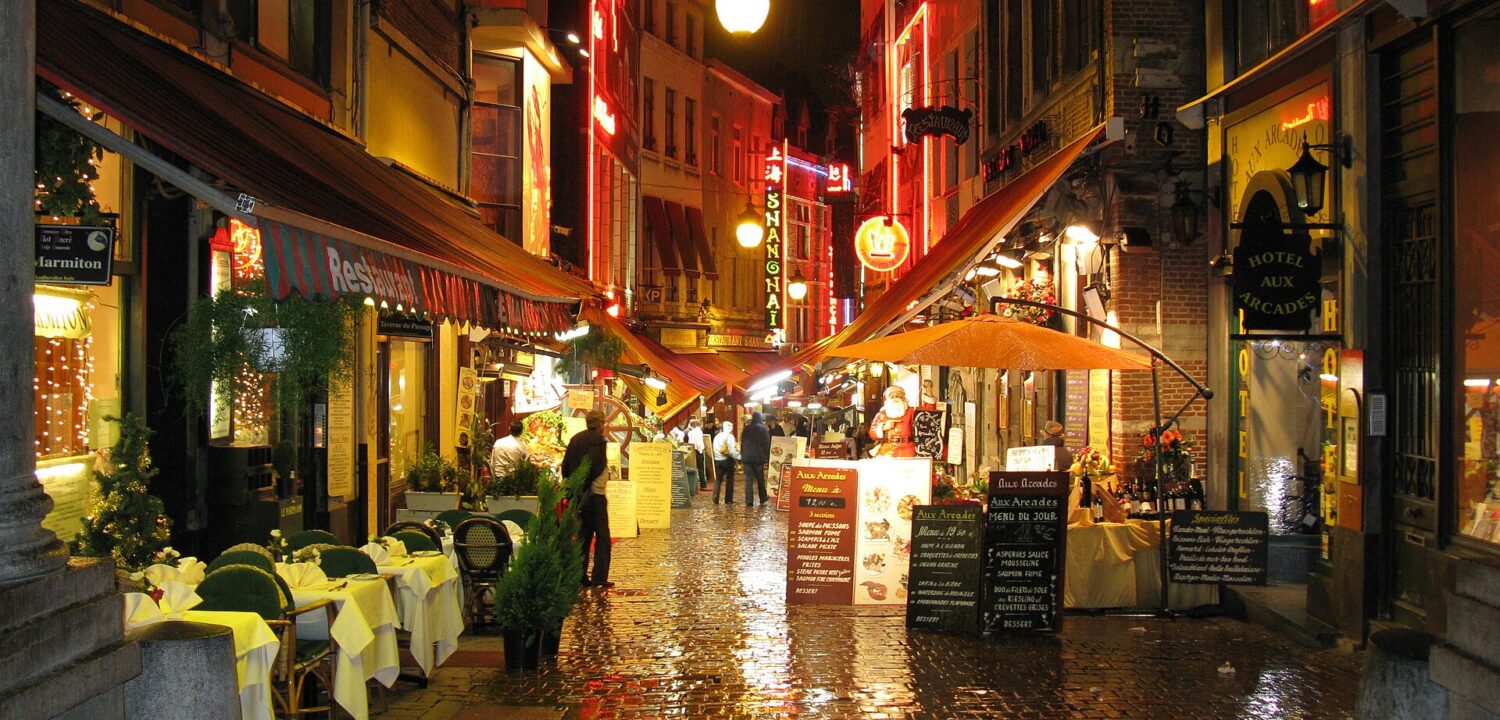
Wet cobbles on Rue des Bouchers: Rue des Bouchers by Rex, CC BY 3.0, via Wikimedia Commons.