Brussels’ historic centre — the Pentagon — radiates outward from one square: Grand Place Brussels. The 17th-century Baroque ensemble, the Gothic town hall, the 1847 royal arcade, and the lanes of restaurants surrounding it are the heart of any Brussels itinerary. This Grand Place Brussels guide for 2026 covers the square’s history, the buildings worth knowing, the surrounding city centre attractions, and how to navigate the area like a local rather than a tourist.
Why Grand Place Is the Heart of Brussels
Grand Place — known as Grote Markt in Dutch — is the central square of Brussels and a UNESCO World Heritage site (inscribed 1998). Widely considered one of the most beautiful squares in Europe, it blends Baroque guild houses, Gothic civic architecture, and Louis XIV elegance into a single 68 × 110 metre rectangle. The square has anchored Brussels civic life since the 11th century, evolving from a medieval market to the city’s symbolic centre.
For visitors, Grand Place serves as both the must-see icon and the practical centre of any first trip. Its proximity to Brussels Central Station (5 minutes’ walk), three metro stops (De Brouckère, Bourse, Gare Centrale), and most major attractions makes it the logical starting point for any city walking tour.
A Brief History of Grand Place
The square’s history can be summarised in three acts:
Medieval roots (11th-15th century). Grand Place grew from a medieval market on a drained marshland between the Senne river and the upper city. By the 13th century, guild houses surrounded the square, and the iconic Hôtel de Ville (town hall) construction began in 1402, finishing in 1455.
The 1695 destruction. Louis XIV’s army shelled Brussels for 36 hours in August 1695, leveling most of the city centre — including Grand Place. The guilds rebuilt within five years, this time in Baroque style, creating the unified ensemble that survives today.
UNESCO recognition (1998). Brussels’ Grand Place was inscribed on the UNESCO World Heritage List specifically for the architectural ensemble’s exceptional unity, the synthesis of Gothic civic and Baroque guild architecture, and its testimony to Brussels’ commercial power in the 17th century.
The Key Buildings Around Grand Place Brussels
Hôtel de Ville (Town Hall)
The Gothic town hall is the square’s most striking landmark. Construction began in 1402 and finished in 1455. The 96-metre tower (rebuilt in 1697 after the 1695 bombardment) is topped by a 5-metre statue of Saint Michael — the patron saint of Brussels. The interior includes Gothic council chambers and an art collection. Guided tours are available on Wednesdays and Sundays.
Maison du Roi (King’s House)
Despite its name, no king ever lived here. The neo-Gothic building (rebuilt 1873-1895) opposite the Hôtel de Ville now houses the Museum of the City of Brussels — including the Manneken Pis costume collection and exhibitions on Brussels history.
The Guild Houses
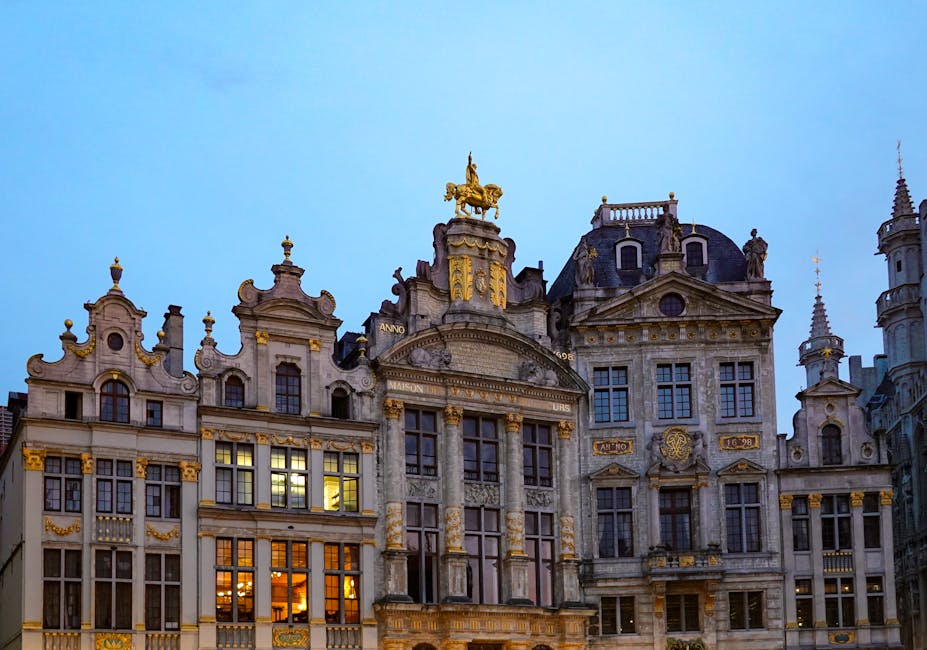
The Baroque guild houses surrounding the square each represent a specific trade: bakers, brewers, tailors, archers, butchers, painters, carpenters. Each facade carries symbolic ornament — gilded statues, allegorical figures, and trade emblems. The most photographed are:
- Maison des Ducs de Brabant: Seven-house facade with busts of Brabant dukes.
- Le Cygne (The Swan): Former butchers’ guild; later a tavern where Karl Marx wrote part of the Communist Manifesto.
- L’Étoile (The Star): Smallest building on the square; below it lies the bronze “lying down” Everard ‘t Serclaes statue (rub the arm for good luck — locals do this constantly).
- La Maison du Roi d’Espagne (King of Spain): Now a beer café; named for a 17th-century Spanish king statue.
- Le Pigeon: Where Victor Hugo lived briefly during exile.
Surrounding Brussels City Centre Attractions
Galeries Royales Saint-Hubert (2 minutes from Grand Place)
One of Europe’s oldest covered shopping arcades, opened in 1847. Three connected galleries (Galerie du Roi, Galerie de la Reine, Galerie des Princes) home to chocolatiers (Neuhaus, Mary), boutique hotels (Hotel des Galeries), tea rooms (Mokafé), and a small opera house. Beautiful in any weather.
Manneken Pis (4 minutes)
The famously small bronze statue of a peeing boy, dating from 1619 (the current copy from 1965). Don’t expect to be impressed by the statue itself — the joke is that it’s smaller than every postcard suggests. The costume collection at the Museum of the City of Brussels (in Maison du Roi) is more interesting.
Brussels Cathedral / Cathedral of Saint Michael and Saint Gudula (5 minutes)
Brussels’ main Gothic cathedral. 13th-15th century construction, Renaissance stained glass, and a crypt tour. Free to enter except the crypt and tower.
Mont des Arts (8 minutes)
The terraced gardens between the lower town and the Royal Quarter. Excellent skyline views including the Hôtel de Ville tower. The Royal Museums of Fine Arts and the Magritte Museum are at the top.
Royal Palace (10 minutes)
The official Belgian royal palace, open to the public for 6 weeks each summer (late July to early September). Even when closed, the exterior facade and gardens are worth visiting.
Sablon Quarter (12 minutes)
The antique-and-chocolate district uphill from Grand Place. Pierre Marcolini, Wittamer, and a weekend antique market. See our Sablon Brussels guide for more.
Marolles Quarter (15 minutes)
The flea-market and bohemian district south of Grand Place. Daily Jeu de Balle flea market. See our Marolles Brussels guide.
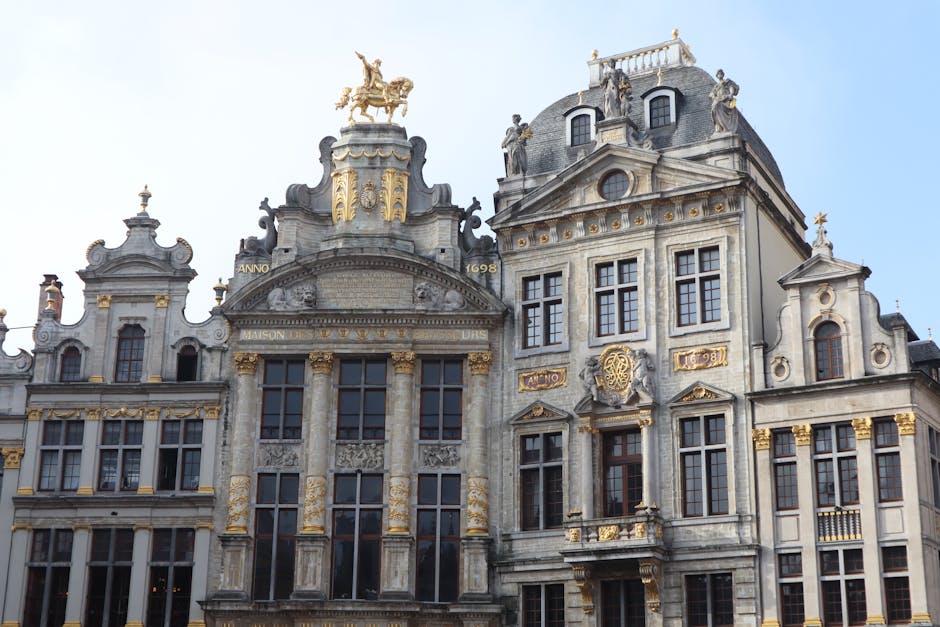
Best Things to Do at Grand Place Brussels
Visit at sunrise and sunset. Grand Place is photogenic at any hour, but sunrise (no crowds) and the blue hour after sunset (lit facades) are when the architecture is most beautiful.
Visit in winter for the Christmas market. Brussels Winter Wonders runs late November to early January. Grand Place hosts a sound-and-light show, the “Plaisirs d’Hiver” Christmas market, and a Belgian-beer chalet bar.
Don’t miss the biennial Flower Carpet. Every other August (even-numbered years), Grand Place hosts the famous “Tapis de Fleurs” — 1.8 million begonias arranged in a 1,800 square metre carpet. Next: August 2026.
Visit the Town Hall. Guided tours are Wednesday and Sunday afternoons. Tickets €5-€10. The Council Chamber and Gothic interior are remarkable.
Take a guided walking tour. Brussels Greeters offers free volunteer-led walking tours that often start at Grand Place. Brussels by Foot offers paid 90-minute heritage tours.
Visit the Museum of the City of Brussels. €8 admission. Includes the Manneken Pis wardrobe collection and the city history exhibition.
Eat traditional Belgian food. The lanes around Grand Place — Rue des Bouchers, Petite Rue des Bouchers — host traditional brasseries. Choose carefully; the lane has both excellent restaurants (Aux Armes de Bruxelles, Chez Léon) and tourist traps. See our best restaurants in Brussels.
Find Le Cygne. The former tavern where Karl Marx wrote part of the Communist Manifesto in 1847-1848. Now a private restaurant; you can still see the building.
How to Get to Grand Place Brussels
By train: 5-minute walk from Brussels Central Station (Gare Centrale).
By metro: De Brouckère (Lines 1, 5) or Gare Centrale (Lines 1, 5) — 3-5 minutes’ walk to the square.
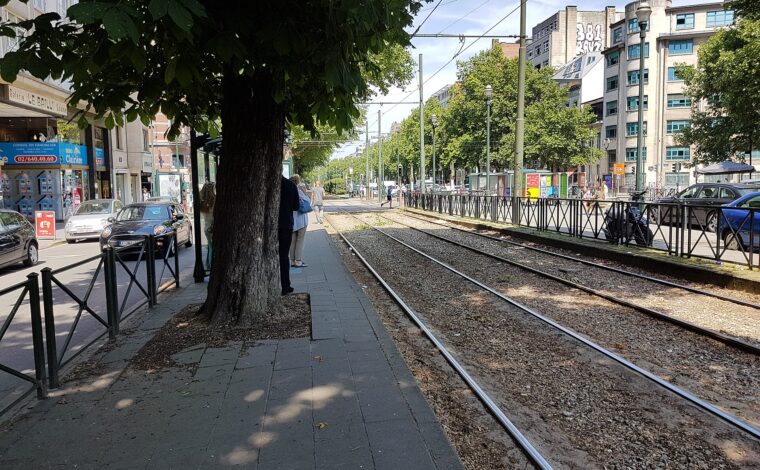
By tram: Tram lines 3 and 4 stop at Bourse, 2 minutes’ walk to Grand Place.
By bus: Multiple lines stop at Bourse and Gare Centrale.
From Brussels Airport: 18-minute airport train to Brussels-Central, then 5-minute walk.
From Eurostar (Brussels-Midi): One stop on metro Line 2 or 6 to De Brouckère, or 12-minute taxi.
By car: Don’t. The streets immediately around Grand Place are pedestrianised. Use one of the underground car parks (Parking 58, Parking Grand Place, or Parking Albertine) — €25-€35 per night.
Best Time to Visit Grand Place Brussels
Time of day: Early morning (before 9 AM) and after 22:00 are quietest. Mid-day weekend tour-bus arrivals make the square crowded.
Time of year: May, September, and December (Christmas market) are the best months. August is busy if Floralientime is happening that year. January and February offer the quietest experience.
Time of week: Weekdays are quieter than weekends. Sunday mornings are particularly photogenic.
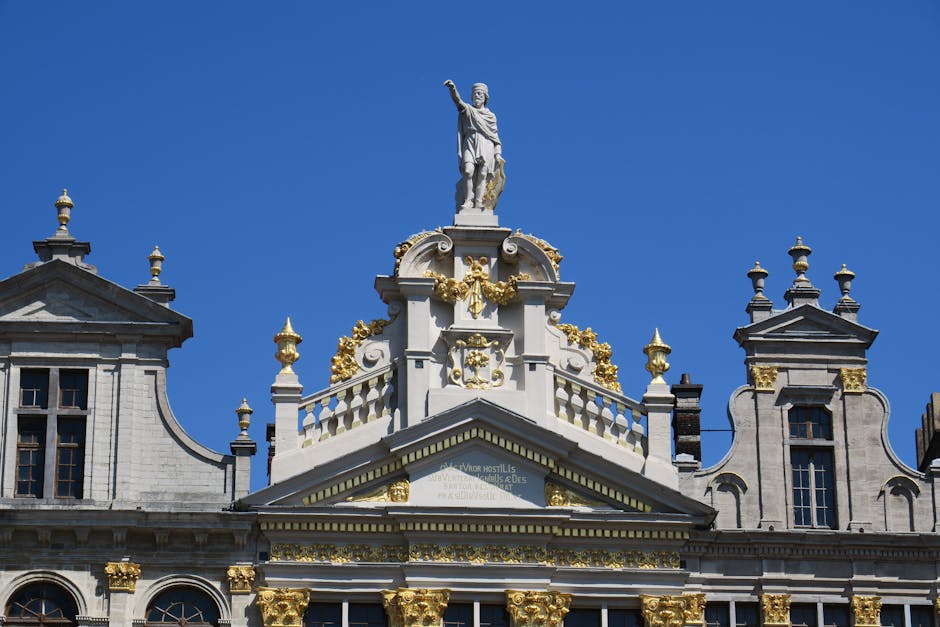
Where to Stay Near Grand Place
Booking a hotel within walking distance of Grand Place is one of the highest-leverage decisions of any first trip to Brussels. Top hotels near Grand Place include Hotel Amigo (1 minute), Le Dixseptieme (3 minutes), Marriott Grand Place (5 minutes), and Hotel des Galeries (4 minutes inside the Royal Galleries). For full coverage, see our hotels near Grand Place Brussels guide.
Grand Place Brussels: Quick Reference
| Detail | Information |
|---|---|
| Address | Grand Place, 1000 Brussels |
| UNESCO Inscription | 1998 |
| Square dimensions | 68 × 110 metres |
| Town Hall built | 1402-1455 |
| Major rebuilding | After 1695 French bombardment |
| Closest metro | Gare Centrale, De Brouckère |
| Closest train | Brussels-Central (5 min walk) |
| Hours | Free, open 24 hours |
| Admission | Free (square); Town Hall tour €5-€10 |
Related Brussels Guides
Keep planning with these companion guides:
- Ixelles Brussels Guide — Trendy Cafés & Art Nouveau
- Saint-Gilles Brussels Guide — Bohemian & Art Nouveau District
- European Quarter Brussels Guide — EU Institutions & Parks
Useful Resources for Visiting Grand Place Brussels
- UNESCO Grand Place — official UNESCO World Heritage inscription details.
- Brussels City Official Grand Place Page — official tourist information.
- visit.brussels — official tourism office with daily walking tour calendar.
- Museum of the City of Brussels — official site for the Maison du Roi museum.
Frequently Asked Questions
What is the Grand Place Brussels?
Grand Place is the central square of Brussels, a UNESCO World Heritage site since 1998, surrounded by Baroque guild houses, the Gothic town hall (Hôtel de Ville), and the neo-Gothic King’s House. It’s widely regarded as one of the most beautiful squares in Europe.
Is Grand Place Brussels free?
Yes. Grand Place itself is open 24 hours, free to enter, and never closed. The Town Hall guided tour costs €5-€10 (Wednesday and Sunday afternoons). The Museum of the City of Brussels costs about €8.
How much time do I need at Grand Place Brussels?
Plan 1-2 hours for the square itself plus the Maison du Roi museum. With a Town Hall tour, allow 3-4 hours total. With surrounding city centre attractions (Galeries Royales, Manneken Pis, Cathedral), allow a full half-day.
What’s the best time to photograph Grand Place Brussels?
Sunrise (around 6:30 AM in summer) is best for crowd-free shots. Blue hour after sunset is best for the lit facades. Avoid mid-day on weekends when tour groups crowd the square.
Is Grand Place safe at night?
Yes. Grand Place and the immediate surrounding streets are well-lit, well-policed, and full of restaurants and cafés open late. Standard urban precautions apply (pickpockets in tourist crowds), but the area is among Brussels’ safest at night.
Can I visit Grand Place during the Flower Carpet?
Yes — and you should. The biennial Flower Carpet (mid-August in even-numbered years) is one of Brussels’ top tourist events. The 2026 edition ran 13-16 August and the next is in August 2028, so the square is usually clear of the carpet in other years. In a carpet year, expect heavy crowds and book hotels well in advance.
Final Thoughts
The Grand Place Brussels guide is essentially the Brussels guide — every first-time itinerary radiates outward from this square. Whether you spend an hour photographing facades, take a Town Hall tour, or use Grand Place as the starting point for chocolate tasting and beer hunting, you’ll find Brussels rewards travellers who base themselves close to the square. For more on planning your trip, see our things to do in Brussels, hotels near Grand Place Brussels, and Brussels neighbourhoods guide.