The Brussels metro is one of Western Europe’s simpler urban rail systems — four lines, ~60 stations, 40 km of track. For tourists, the Brussels metro guide essentials boil down to two things: knowing which lines reach which neighbourhoods, and how to buy tickets efficiently. This guide for 2026 covers the four lines, ticket types, station layout, hours, and the practical tips that save first-time visitors from wrong-direction trains and unnecessary tickets.

Brussels Metro Guide: Quick Overview
Brussels has four metro lines (operated by STIB-MIVB):
- Line 1 (purple): Stockel – Gare de l’Ouest. Major east-west axis.
- Line 2 (orange): Simonis – Elisabeth (circle line).
- Line 5 (gold): Erasme – Herrmann-Debroux. Overlaps with Line 1 in the centre.
- Line 6 (blue): Roi Baudouin – Elisabeth (circle line). Reaches Heysel/Atomium.
Plus extensive tram and bus networks that integrate with the metro on a single ticket.
Brussels Metro Guide: Key Stations for Tourists
De Brouckère (Lines 1, 5)
Closest central station to Grand Place (5 min walk). Major transfer hub.
Gare Centrale / Centraal Station (Lines 1, 5)
Beneath Brussels-Central railway station. Walk 5 min north to Grand Place; 8 min uphill to Mont des Arts.
Bourse (Tram lines 3, 4, plus walking from De Brouckère)
2 min walk from Grand Place. Trams 3 and 4 connect directly to Marolles and southern Brussels.
Arts-Loi (Lines 1, 2, 5, 6)
Major transfer hub. Connects to European Quarter.
Schuman (Lines 1, 5)
European Parliament. Walking distance to Cinquantenaire Park.
Heysel (Line 6)
For the Atomium and Mini-Europe. 25-min ride from De Brouckère.
Louise (Lines 2, 6)
Avenue Louise / Place Louise. For luxury shopping.
Gare du Midi / Zuid (Lines 2, 6)
Eurostar terminal. Avoid the immediate surrounding area at night.
Maelbeek (Lines 1, 5)
For Natural Sciences Museum and Parc Léopold.
Bordet (Line 3 / Tram 25)
For Schaerbeek and Train World.
Brussels Metro Guide: How to Buy Tickets
Contactless tap-to-pay: The simplest option. Tap your bank card or smartphone at the turnstile. €2.60 per ride, with 60-minute transfers. Daily cap €8.50.
Single ticket: €2.40 by contactless card, or €2.90 on paper from ticket machines or kiosks.
STIB 1-day ticket: €9 on paper. Unlimited metro + tram + bus for the day; contactless stops charging at €8.50.
Brupass 10 journeys: €18.90 on a MOBIB card. Best for 3+ day visits; STIB no longer sells 72-hour passes.
Brussels Card: €41 (24h), €53 (48h), €59 (72h) for 49 museums; unlimited STIB transport is an add-on (€9, €16.95 or €21.50).
10-ride card: €18.90 (Brupass, 10 journeys). Useful for longer stays.
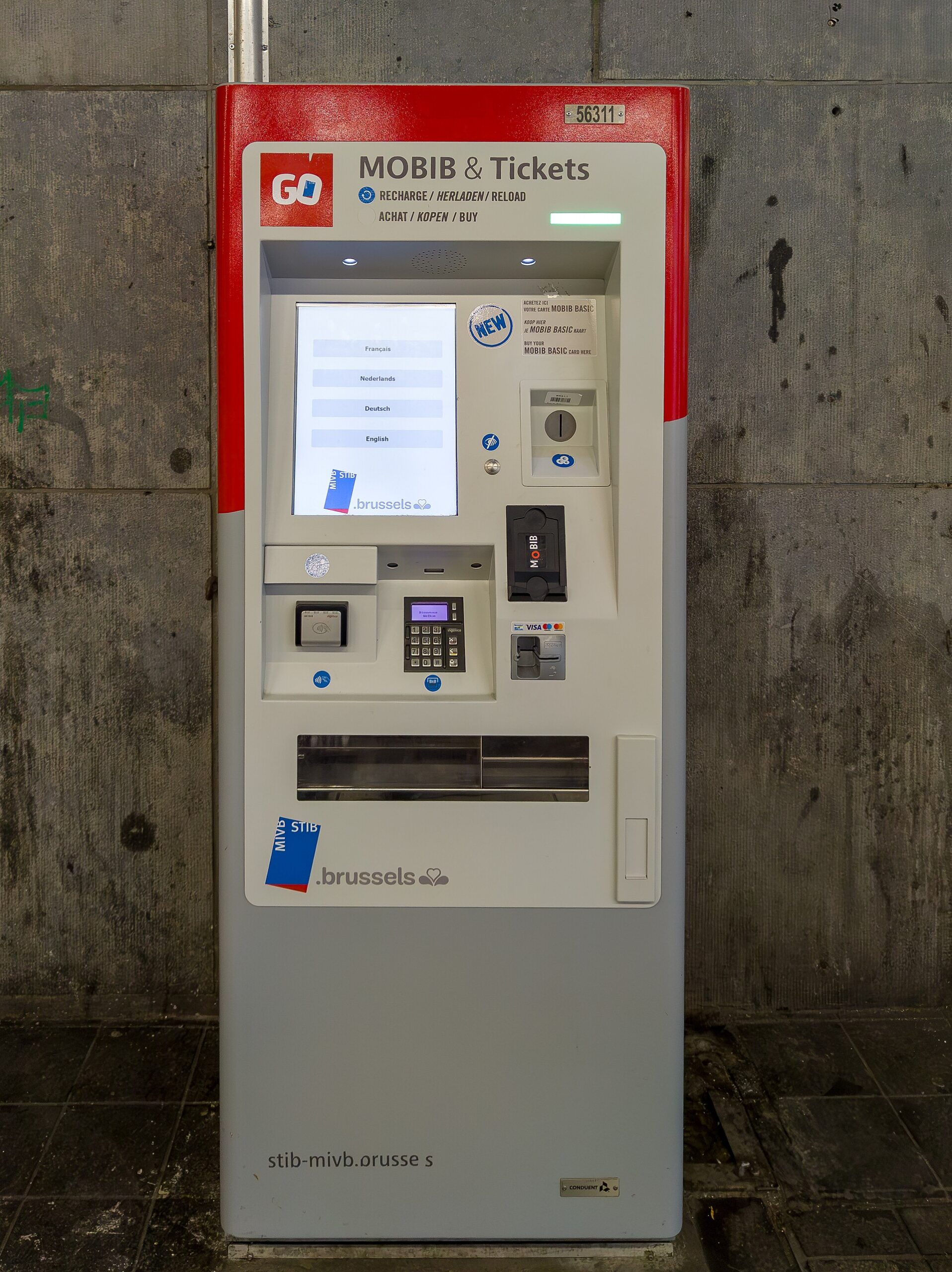
Where to buy: Ticket machines at every metro station, STIB kiosks at major stations, the STIB app, and contactless tap-to-pay (no buying needed).
Brussels Metro Guide: Operating Hours
Daily: 5:30 AM – 12:30 AM (Friday/Saturday some lines until 1:00 AM).
Frequency: Every 3-5 minutes peak; every 7-10 minutes off-peak; every 15-20 minutes late night.
Sunday morning: First trains around 6:00 AM.
Brussels Metro Guide: Practical Tips
Use the STIB app. Real-time train arrivals, route planning, and tickets. Available iOS and Android.
Watch for pickpockets. Especially on Line 1 and 5 during rush hour and around tourist stations.
Validate tickets. Single tickets and 24-hour passes must be tapped at the turnstile or validator. Contactless tap-to-pay handles this automatically.
Metro hubs are massive. Allow 5-10 minutes to transfer between lines at major stations (Arts-Loi, De Brouckère, Gare du Midi).
Premetro = underground tram. Some “metro” stations actually serve premetro trams (lines 3, 4, 7, 51). Same ticket works.
No Sunday-morning early service. If you have an early Sunday flight, take a taxi.
Accessibility: Most stations have lifts; the older central stations have stairs. Check the STIB accessibility map if needed.
Brussels Metro Guide: Tram Integration
Brussels’ tram system integrates with the metro on the same ticket. Key tourist tram routes:
- Tram 3 (Bourse): Connects Grand Place area to southern Brussels.
- Tram 4 (Bourse): Similar route to Tram 3.
- Tram 81: Châtelain (Ixelles) to Pentagon — the Ixelles brunch route.
- Tram 92, 93, 97 (Avenue Louise): Run the full length of Avenue Louise.
- Trams 7, 51 (Heysel): Alternative routes to Atomium area.
Brussels Metro Guide: Quick Reference
| Detail | Information |
|---|---|
| Number of lines | 4 metro + 17 trams + 50+ buses |
| Single ticket | €2.40 contactless, €2.90 paper (60-min transfers) |
| 1-day ticket | €9 (paper) |
| Brupass 10 journeys | €18.90 (MOBIB) |
| Daily cap (contactless) | €8.50 |
| Hours | 5:30 AM – 12:30 AM |
| Frequency peak | Every 3-5 min |
| Closest to Grand Place | De Brouckère (5 min walk) |
| To Atomium | Heysel (Line 6, 25 min) |
Real Traveller Scenarios for the Brussels Metro Guide
The Brussels metro guide changes meaning based on how you’re using the city. These four scenarios cover the most common patterns and the smart-money choices for each.
- Weekend tourist staying near Grand Place – You’ll need the metro only twice or three times – to Heysel for the Atomium and to Schuman for the EU quarter. Tap a contactless card (€2.40 a ride) rather than buying a day ticket.
- Business traveller commuting Schuman to Brussels Midi – Metro line 2 or 6 between Maelbeek and Brussels Midi, 10 minutes each way. A 10-journey Brupass (€18.90) saves over single tickets and works on metro, tram and bus.
- Family of four on a 3-day visit – STIB sells no family or group pass for visitors, so each paying traveller taps their own contactless card, capped at €8.50 a day.
- Late-night returning from a concert at Forest National – Metro lines 2 and 6 run until 00:30 weekdays and 02:00 weekends. Outside those hours, use Noctis night buses (normal STIB fare, every 30 minutes) or Bolt (€10-€18 typical late fare).
Sample Day Using the Brussels Metro
Here is what a realistic full day looks like using only the Brussels metro and connected trams, with line numbers and timings.
- 09:00 De Brouckere station (line 1, central) to Heysel – Take metro line 6 north for 14 minutes. Atomium opens at 10:00; arriving early avoids queues.
- 12:00 Heysel back to Park – Metro line 6 to Arts-Loi (12 minutes), change to line 1 for two stops to Park station.
- 12:30 Walk to Sablon for lunch – 8 minutes on foot from Park, no metro needed.
- 14:30 Sablon area to EU quarter – Walk to Trone station, metro line 2 or 6 east to Schuman (3 minutes).
- 17:00 Schuman to Ixelles – Metro 5 to Porte de Namur, change to tram 81 toward Marius Renard (5 stops to Bailli).
- 19:30 Bailli back to central – Tram 8 or 92 back to Louise, walk to Place Stephanie, or hop back on metro 2 to De Brouckere.
- 23:00 Late return to your hotel – Last metros depart around 00:30. If staying out later, use Noctis bus or Bolt.
Common Mistakes With the Brussels Metro
Even regular European travellers slip up on the Brussels metro. These are the mistakes that cost time, money, or both.
- Forgetting to validate at the orange machines – Even pre-paid tickets must be tapped at the orange validator before each journey. Fines for unvalidated tickets are €110 on the spot.
- Confusing tram 92 directions – Tram 92 runs north-south through the centre with two distinct branches at its southern end. Check the destination on the front of the tram before boarding.
- Buying paper tickets repeatedly – The MOBIB card (€6 fee + reloads) saves you €0.50 per trip and avoids the awkward dance of fumbling for tickets at busy stations.
- Boarding line 5 expecting to reach Heysel – Only lines 2 and 6 reach Heysel. Line 5 terminates at Stockel and Erasme.
- Assuming the metro covers the airport – It doesn’t. Use the SNCB train from Brussels Airport, which is a separate national rail ticket.
Accessibility Notes for the Brussels Metro
The Brussels metro has improved accessibility significantly in the last decade but it’s not uniform across all stations.
- Step-free stations – Around 80% of metro stations have working lifts. Always check stib-mivb.be/accessibility for current outages before you travel.
- Most reliable lifts are at Brussels Midi, Brussels Central, De Brouckere, Schuman, and Heysel. These are the priority hubs.
- Tram accessibility is more limited – older T3000 trams have steps, newer T4000 and T7000 trams are step-free. Routes 7, 25 and 92 use mostly new stock.
- Hearing-impaired travellers – Most platforms now show electronic boards with next-train times and disruption alerts.
- Travelling with strollers – Use the wide gates at metro entry rather than the turnstiles. They open automatically when a MOBIB card is tapped.
For ticket options pair this with our Brussels transport tickets guide, and for navigating the city on foot check our walking in Brussels guide.
Brussels Metro Guide: Common Mistakes First-Time Riders Make
Even with only four lines, Brussels metro guide newcomers regularly trip up on a handful of recurring issues. Learn them in advance:
- Boarding the wrong direction. Brussels metro line signs name terminus stations, not directions. Memorise the terminus of your line (e.g. for Line 6 know “Roi Baudouin” vs “Elisabeth”) before going underground.
- Missing the validation tap. Single tickets MUST be tapped at the turnstile. Without validation, you may be fined €107 if checked. Contactless tap-to-pay validates automatically.
- Forgetting the 60-minute transfer window. A single ticket covers transfers within 60 minutes — make sure you tap when boarding each new metro/tram/bus to extend coverage.
- Underestimating transfer time at Arts-Loi or De Brouckère. Both are major junctions but huge — allow 5-10 minutes for transfer between lines, more during peak hours.
- Confusing premetro with metro. “Premetro” lines (3, 4, 7, 51) run trams underground in central Brussels — same ticket works, but the station experience differs from metro proper.
- Missing first-and-last train times. First trains around 05:30; last trains 00:30 (00:00-01:00 Fri/Sat for some lines). Plan your night out accordingly.
For more on the Brussels metro guide essentials, plus integration with trams and buses, see our Brussels transport tickets guide.
Related Brussels Guides
Keep planning with these companion guides:
- Brussels Wheelchair Accessible Travel Guide — Transport, Hotels & Attractions
- Brussels to Bruges Train — Complete Travel Guide
- Brussels Bike Rental — Villo!, Shops, Routes & Prices
Useful Resources
- STIB-MIVB — official Brussels public transport.
- STIB Network Maps — downloadable metro and tram maps.
Frequently Asked Questions
How does the Brussels metro work?
Four metro lines (1, 2, 5, 6) operated by STIB. Tap a contactless card (€2.40, capped at €8.50 a day) or buy a paper ticket (€2.90 single, €9 day). Trains run every 3-10 minutes from 5:30 AM to 12:30 AM.
How much does the Brussels metro cost?
Single ride €2.40 contactless or €2.90 on paper (transfers within 60 minutes included). Paper 1-day ticket €9. Daily cap €8.50 with contactless tap-to-pay. STIB no longer sells 48- or 72-hour tickets.
Can I use contactless on the Brussels metro?
Yes. Tap your bank card or smartphone at the turnstile. Single rides €2.40; daily total automatically capped at €8.50.
Which Brussels metro station is closest to Grand Place?
De Brouckère (5-minute walk). Gare Centrale also close (5-minute walk south).
Does the Brussels metro reach the Atomium?
Yes. Line 6 from De Brouckère to Heysel station — 25 minutes total, then 5 min walk to the Atomium.
What are Brussels metro operating hours?
5:30 AM to 12:30 AM daily. Friday and Saturday some lines until 1:00 AM. Limited service before 6 AM on Sundays.
Final Thoughts
The Brussels metro guide essentials are simpler than most major European cities — four lines, cheap day passes, contactless everywhere. For more on Brussels transport, see our Brussels transport tickets guide and Brussels transportation guide.
Photo Credits
-
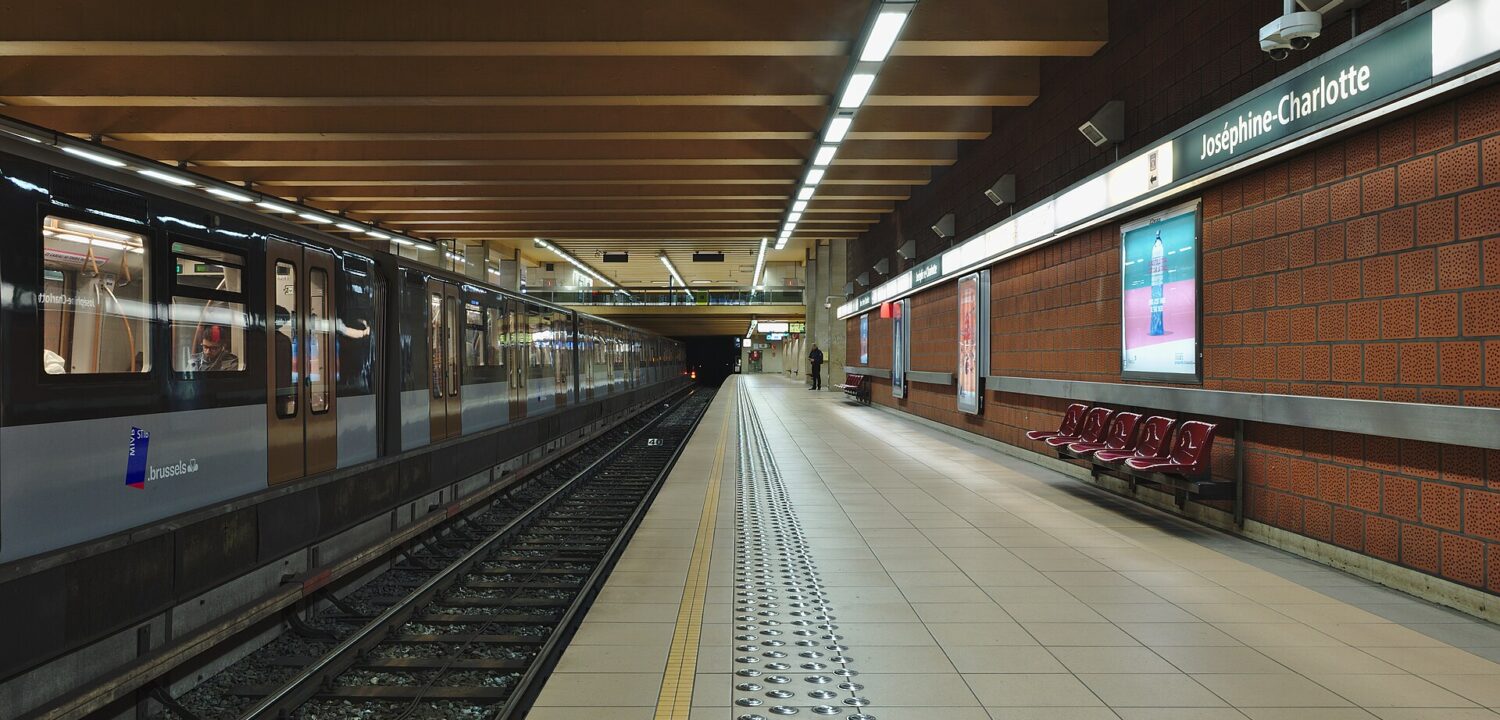
The Brussels metro at Joséphine-Charlotte: Joséphine-Charlotte metro station platform with a metro headed towards Stockel (Woluwe-Saint-Lambert, Belgium) by Trougnouf, CC BY 4.0, via Wikimedia Commons.
-
A STIB GO ticket machine: Mobib ticket machine, Brussels (LRM 20231012 094316-2) by Matti Blume, CC BY-SA 4.0, via Wikimedia Commons.