Why Getting Around Brussels Is Easier Than You Think
Brussels has a reputation for being a complicated city to navigate — bilingual signage, a confusing ring road, and a metro map that looks deceptively simple until you are standing on the wrong platform. But once you understand how the system works, getting around Brussels is remarkably straightforward and affordable. The city is compact enough to walk between most major attractions, yet has a comprehensive public transport network that reaches every corner of the capital region.
This Brussels transportation guide covers every way to move through the city: the metro, trams, buses, cycling, taxis, ride-sharing, and driving. We break down ticket types, prices, apps, insider tips, and the mistakes that catch first-time visitors off guard. Whether you are arriving at Brussels Airport, planning day trips by train, or simply trying to get from the Grand Place to the Atomium, this guide has you covered.
For broader trip planning information including when to visit, budgets, and where to stay, see our comprehensive Brussels Travel Guide.
Understanding Brussels’ Transport Network
Brussels’ public transport is operated by STIB (Société des Transports Intercommunaux de Bruxelles), known as MIVB in Dutch. The network consists of four metro lines, 18 tram lines and 53 bus lines covering the entire Brussels-Capital Region. Additionally, the national railway SNCB (Société Nationale des Chemins de fer Belges) operates commuter and intercity trains that pass through or terminate at Brussels’ major stations.
The key thing to understand is that a single STIB ticket is valid across all modes — metro, tram, and bus — within the Brussels zone. You buy one ticket and can transfer freely between any STIB services for the duration of your journey. The national trains (SNCB) require separate tickets unless you have a Brupass, which we explain in detail below.
The Bilingual Factor
Every station, stop, and sign in Brussels appears in both French and Dutch, which can be confusing. The station you know as “Gare Centrale” is simultaneously “Centraal Station.” Metro announcements alternate between languages. The easiest way to handle this: use the STIB app or Google Maps, which display both names and handle the translation for you.
The Brussels Metro: Your Underground Backbone
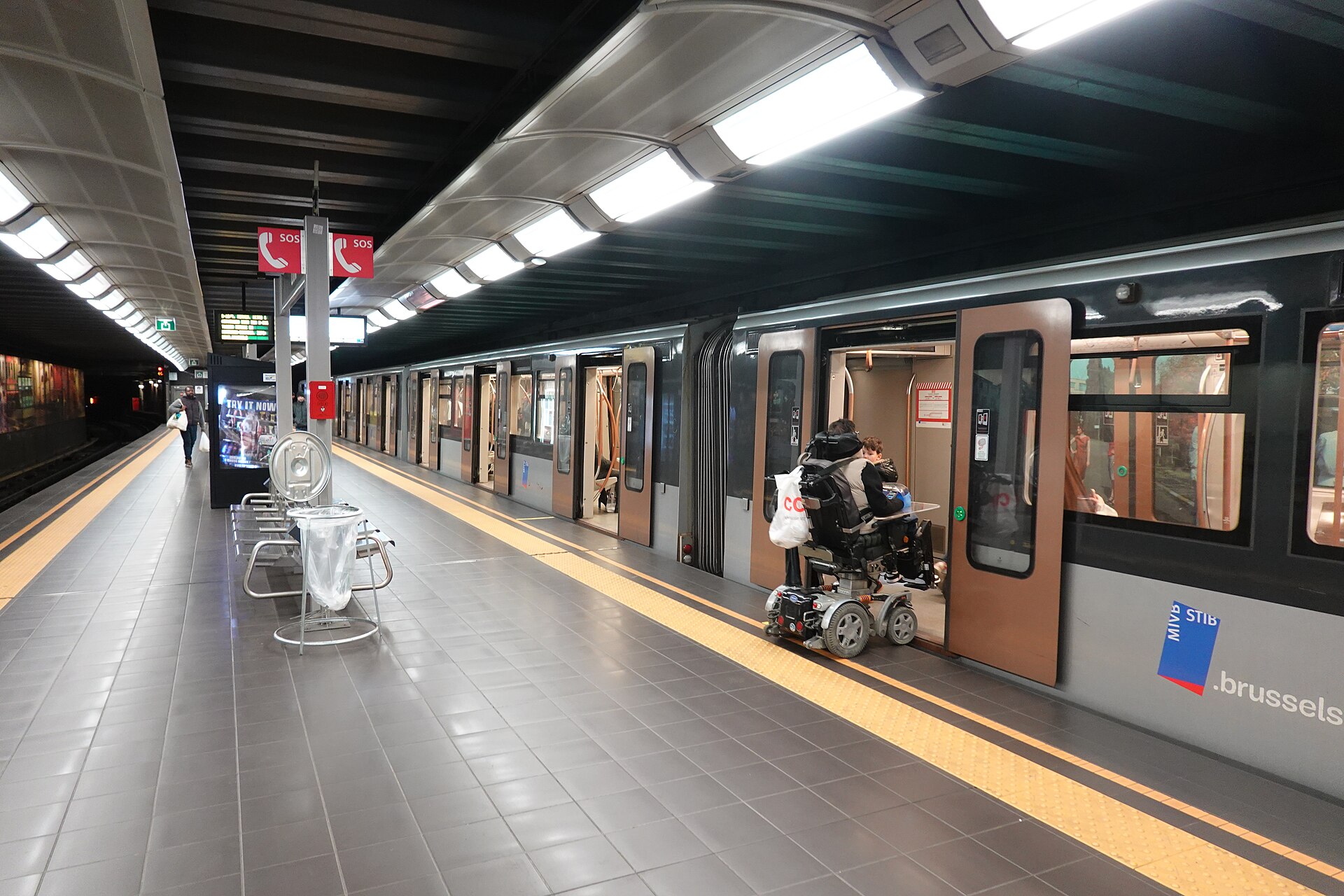
The Brussels metro is the fastest way to cover longer distances across the city. Four lines form the backbone of the network, running seven days a week from early morning until around midnight; check the last departure for your line and stop on STIB’s site or app.
The Four Metro Lines
- Line 1 (Purple): Runs east-west from Gare de l’Ouest (Weststation) to Stockel, passing through De Brouckère, Gare Centrale, Arts-Loi/Kunst-Wet (EU district interchange), Schuman, and Merode. This is the tourist workhorse — it connects the city centre to the European Quarter and the Parc du Cinquantenaire.
- Line 5 (Gold/Yellow): Runs from Erasme in the southwest to Herrmann-Debroux in the southeast. Useful for reaching the Heysel area (Atomium, Mini-Europe) from the Erasme end via a connecting tram.
- Line 2 (Orange): Runs between Simonis and Elisabeth around the inner ring, in both directions, calling at Rogier, Arts-Loi, Louise and Porte de Hal on the way, so check the direction your stop needs before boarding. Ideal for reaching the Marolles, the Sablon area, and Avenue Louise.
- Line 6 (Blue): Runs between Roi Baudouin and Elisabeth, sharing the central loop with Line 2 and continuing north to Heysel. On the shared stretch, trains of both lines stop at the same stations.
Key Metro Stations for Tourists
| Station | Line(s) | Nearby Attractions |
|---|---|---|
| De Brouckère | 1, 5 | Grand Place (short walk), Rue Neuve shopping, Place de la Monnaie |
| Gare Centrale | 1, 5 | Grand Place (very close), Galeries Royales Saint-Hubert, Mont des Arts |
| Sainte-Catherine | 1, 5 | Sainte-Catherine fish market, Dansaert district restaurants |
| Louise | 2, 6 | Avenue Louise shopping, Bois de la Cambre (via tram) |
| Porte de Namur | 2, 6 | Ixelles, Matongé quarter, Place du Luxembourg |
| Schuman | 1, 5 | European Parliament, Parlamentarium, Parc du Cinquantenaire |
| Porte de Hal | 2, 6 | Porte de Hal medieval gate, Marolles flea market |
| Heysel | 6 | Atomium, Mini-Europe, Bruparck |
| Horta | Underground tram stop (check STIB’s planner during works) | Horta Museum (Art Nouveau), Saint-Gilles |
Metro Tips
Validate your ticket at the gates before entering the platform area — inspectors check for valid tickets on the trains and fines are steep (€107 for a first offence). Trains are frequent, and the STIB app shows live departures. The metro can get crowded during the weekday morning and evening rush hours. After midnight, Noctis night buses run on Friday and Saturday nights until 3am; on other nights, plan another way home, such as a taxi.
Trams: Brussels’ Surface Network
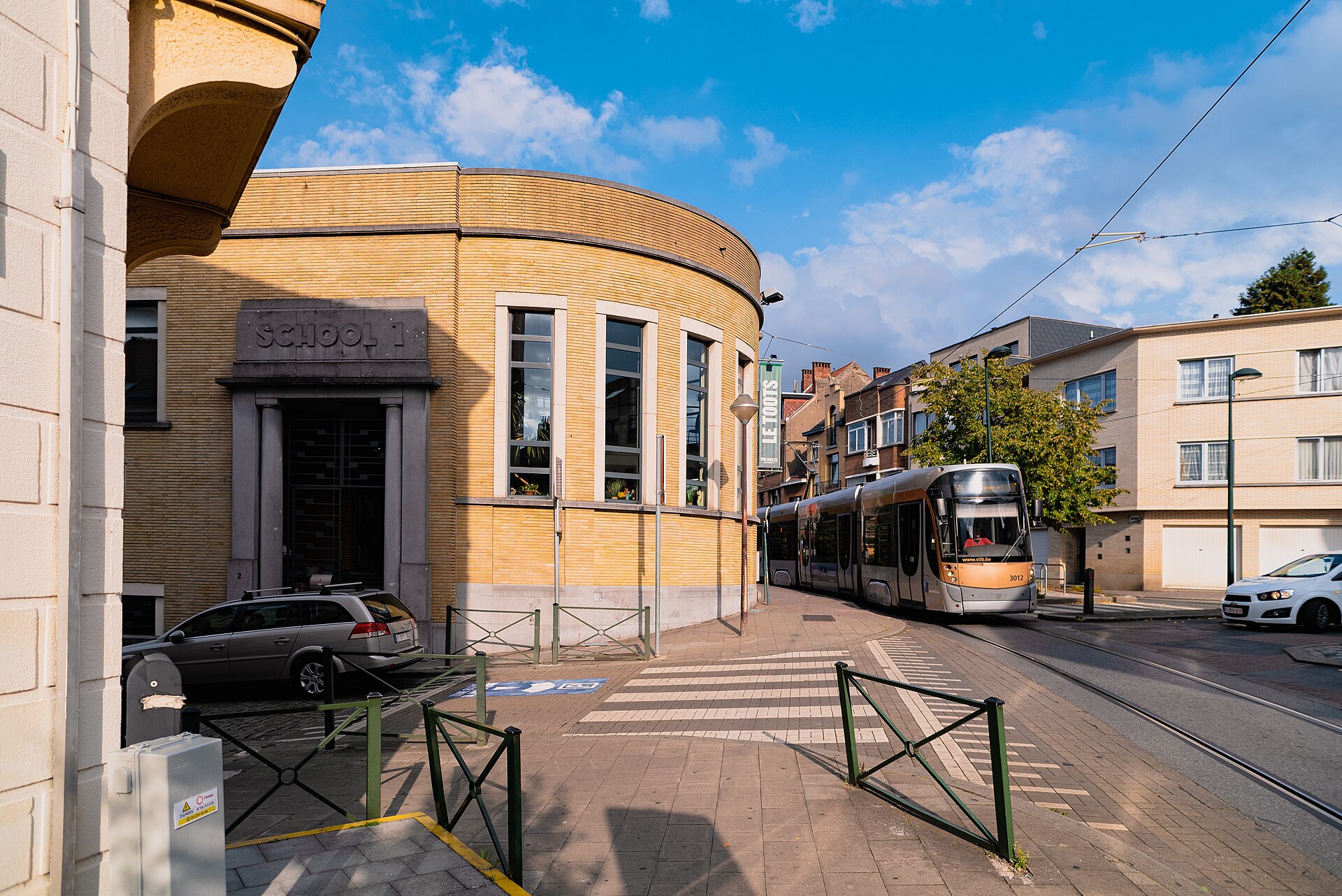
Brussels’ tram network is extensive, with 18 lines weaving through the city above ground. Trams reach neighbourhoods and attractions that the metro does not, and they are an excellent way to see the city while you travel. Many tram routes run along dedicated tracks, making them reliable even during busy traffic periods.
Key Tram Routes for Visitors
- Tram 7: Runs from Heysel (Atomium) along the eastern side of the city to Churchill. For Tervuren and the AfricaMuseum, take tram 44 instead.
- Tram 81: Normally links Montgomery and Marius Renard. During the current works, replacement buses cover sections west of Trinité, so check STIB’s site before you set out.
- Tram 92/93: Two north–south routes through the Royal Quarter and the Sablon. Tram 92 runs between Schaerbeek station (for the Train World museum) and Fort-Jaco; tram 93 runs between Stade and Legrand.
- Tram 10: Links Churchill and Hôpital Militaire via the central north–south corridor. During the current works it is interrupted between Churchill and Midi.
- Tram 51: Normally links Stade and Midi; during the current works it terminates at Lemonnier.
Premetro (Underground Trams)
Brussels also has a premetro system — trams that run underground through the city centre before emerging above ground in the outer sections. The premetro stations look almost identical to metro stations, which can cause confusion. The key difference: premetro platforms serve trams (which look different from metro trains and have a slightly different door mechanism). If your tram suddenly dips underground, don’t worry — it is simply using the premetro tunnel.
Tram Tips
Validate your ticket using the red validators inside the tram. Press the “stop” button in time — trams will skip stops where nobody is waiting and nobody has requested a stop. At some stops, you may need to press a button on the door to open it. Trams have priority over most traffic, but always check both directions before crossing tram tracks on foot — trams are quieter than you expect and approach quickly.
Buses: Filling the Gaps
STIB buses cover areas that metro and tram lines do not reach, with over 50 routes operating across the Brussels-Capital Region. While tourists typically rely more on the metro and trams, buses can be the most direct option for certain journeys.
Useful Bus Routes
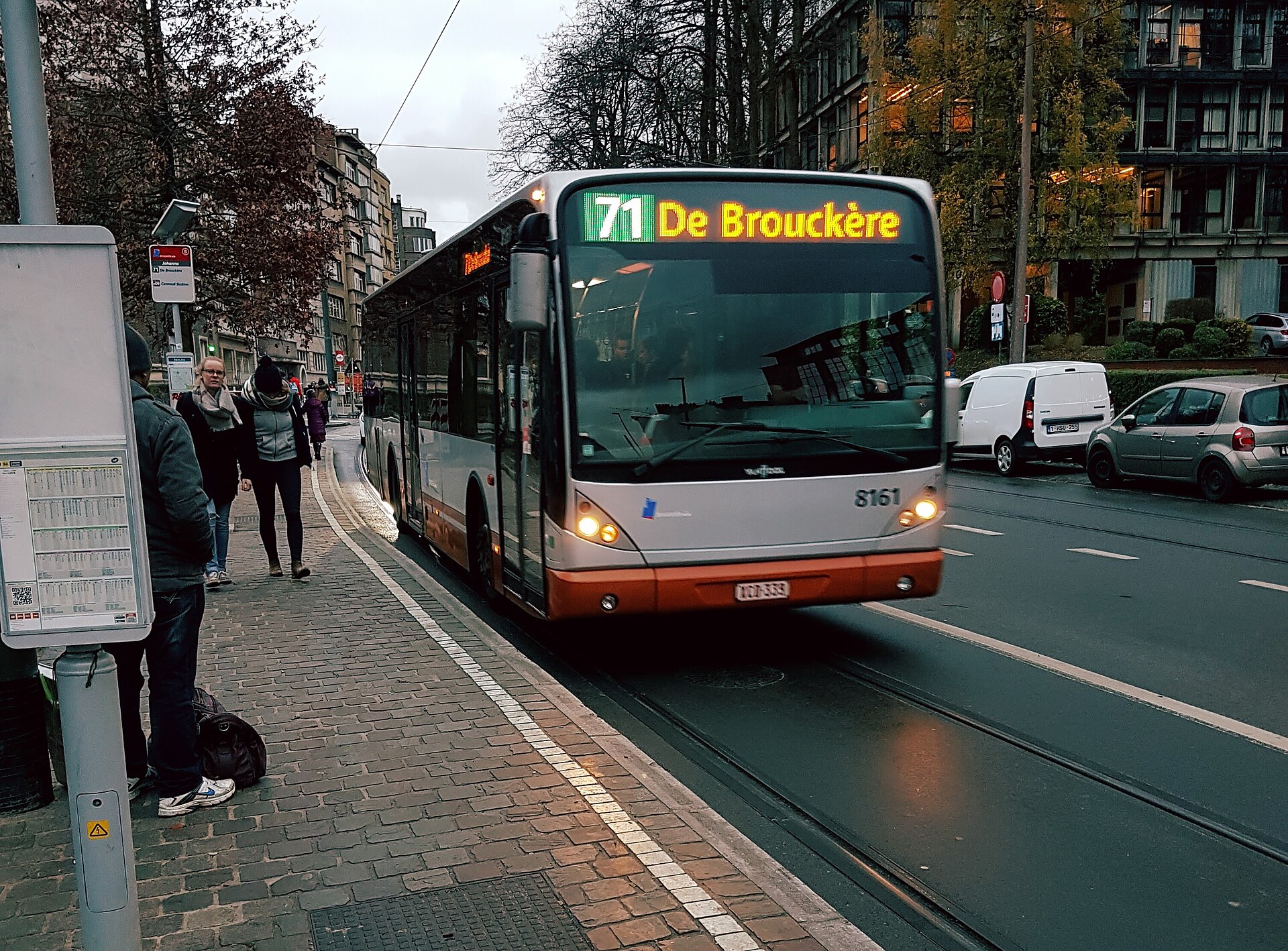
- Bus 71: A popular route connecting De Brouckère and Delta via the Ixelles shopping district and Flagey — excellent for reaching the trendy Flagey neighbourhood and its weekend market.
- Airport Line (Bus 12): Links Brussels Airport with the city, with metro connections at Schuman and Trône. Check the live bus 12 timetable on STIB’s site for exact departures.
Night Buses (Noctis)
When the metro and trams stop running around midnight, the Noctis night bus network takes over on Friday and Saturday nights. Eleven routes leave from Gare Centrale (Brussels-Central) for various parts of the Brussels region, operating from midnight to 3:00am with a bus every 20–30 minutes. Standard STIB tickets are valid on Noctis buses. This is a lifesaver for anyone enjoying Brussels’ nightlife without wanting to pay for a taxi.
Bus Tips
Board through the front door and validate your ticket or tap your contactless card. Brussels buses are generally punctual but can be affected by traffic during rush hours. Check the real-time STIB app for accurate arrival times rather than relying on the posted schedule. Some bus stops are request-only — raise your hand to flag the bus as it approaches.
Tickets, Passes, and Fares: The Complete Breakdown
Understanding Brussels’ ticketing system saves both money and confusion. The good news: one ticket works across STIB metro, tram, and bus services, with one exception: boarding at Brussels Airport towards the city needs the Airport2City fare. Here is every option available to visitors and residents alike.
Single Journey Tickets
| Ticket Type | Price | Valid On | Duration |
|---|---|---|---|
| Single trip (paper ticket) | €2.90 | All STIB services except journeys from Brussels Airport into the city | 60 minutes, unlimited transfers |
| Brupass single (MOBIB or digital ticket) | €2.70 | STIB plus trains, De Lijn and TEC in Brussels | Last connection within 59 minutes; journey up to 2 hours |
| Contactless bank card tap | €2.40 | STIB services (boarding at Brussels Airport towards the city needs Airport2City) | 60 minutes, unlimited transfers |
| STIB 1 day (paper) | €9 | STIB network, airport-to-city journeys excluded | Until the end of that day’s service |
| Contactless daily cap | €8.50 | Ordinary STIB journeys on the same card or device (not airport-to-city) | One service day |
Brupass and Brupass XL
The Brupass system is a game-changer for visitors who want seamless travel across all operators in Brussels. Unlike standard STIB tickets, Brupass tickets are valid on STIB metro, trams, and buses plus TEC buses, De Lijn buses, and SNCB trains within the Brussels zone. This means you can hop on a national railway train between Brussels stations (e.g., Gare du Midi to Gare du Nord) using the same ticket.
- Brupass single: €2.70 — valid for one journey across all operators in the Brussels zone
- Brupass XL single: €3.60 — covers the wider suburban zone around Brussels (STIB bus 12 from Brussels Airport into the city needs the Airport2City fare)
- Brupass 1 day: €9.50 on a MOBIB card — unlimited travel for the day on all operators in the Brussels zone
MOBIB Card
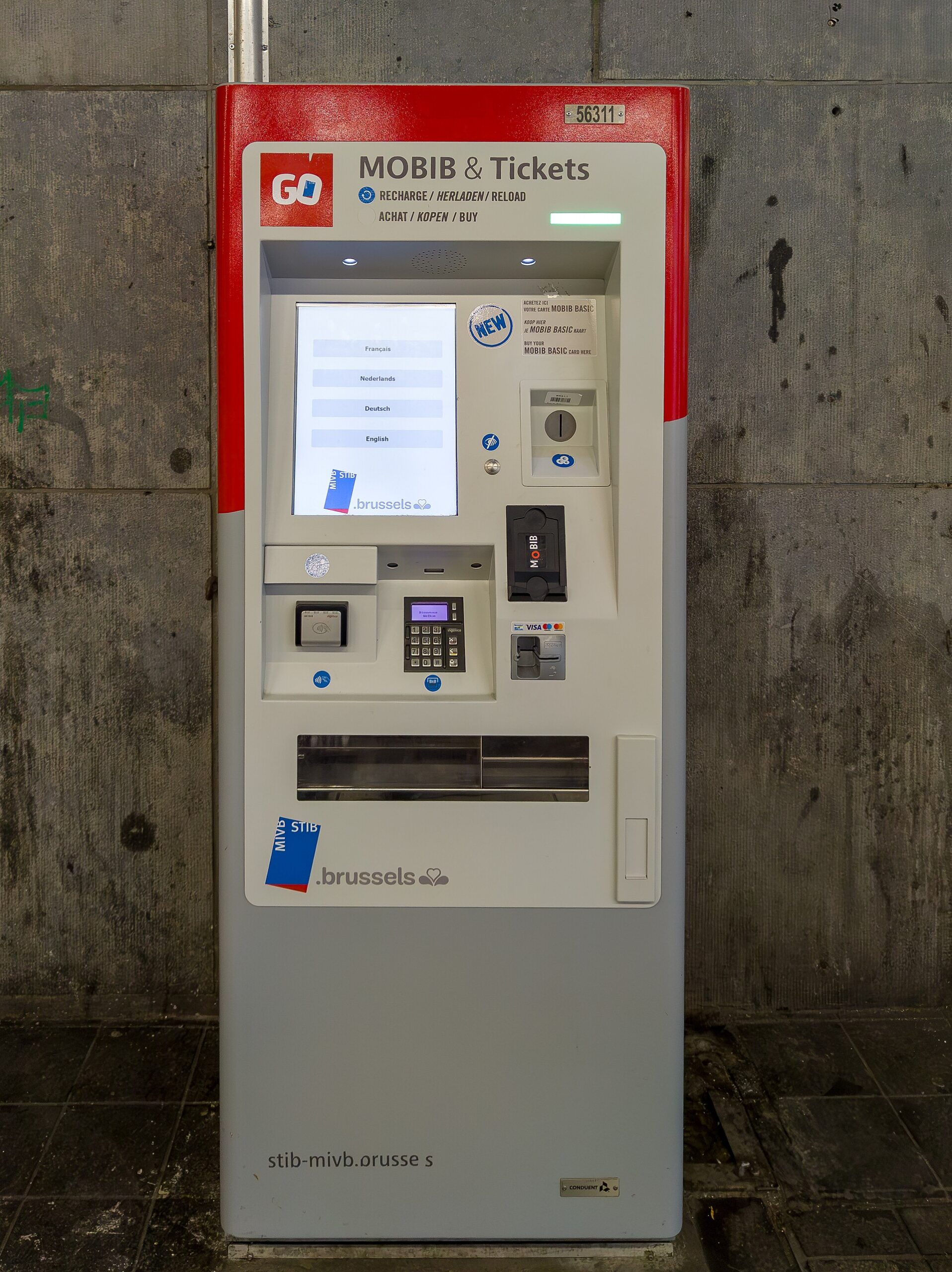
The MOBIB card is Brussels’ reloadable smart card. A MOBIB basic card costs €6 and holds journey tickets: buy one at a BOOTIK (STIB shop), a KIOSK or a red GO vending machine, and reload it online or through STIB’s other sales channels. Season tickets need a personal MOBIB card instead. A 10-journey Brupass on the card costs €18.90, €1.89 a ride, against €2.40 by contactless card, so once the €6 card is paid for it pays off the more you travel; for a short stay with a few trips a day, contactless and its daily cap can work out cheaper. The card itself is reusable and valid for five years.
Contactless Payment
Since July 2020, STIB vehicles and metro stations have accepted contactless bank cards, smartphones, and smartwatches. Simply tap your card at the validator when boarding a tram or bus, or at the metro station gates. Ordinary journeys on the same card or device are capped at €8.50 per service day, however many trips you make; a journey from Brussels Airport into the city is charged separately at the Airport2City fare. This is the simplest option for short-stay visitors who do not want to deal with buying a MOBIB card.
The Brussels Card (Transport Add-On)
The Brussels Card, primarily a museum pass, offers an optional public transport add-on for an extra €9 (24h), €16.95 (48h), or €21.50 (72h). This gives unlimited STIB travel, including bus 12 to and from the airport, and is excellent value if you are also planning museum visits. See our Brussels Museums Guide for details on whether the card is right for your visit.
Which Ticket Should You Buy?
For a short weekend visit where you will mostly walk: contactless tap is simplest — just use your bank card. For four or more trips in a day: three contactless journeys cost €7.20 and the €8.50 cap kicks in on the fourth, so there is no need for a pass. For visitors who want to include train transfers between stations: the Brupass 1-day ticket (€9.50) adds second-class SNCB trains within Brussels to STIB, De Lijn and TEC services in the zone, so it suits a day that mixes rail and metro. For longer stays of a week or more: a MOBIB card loaded with multiple trips gives the lowest per-journey cost.
Airport Transfers: Getting Into the City
From Brussels Airport (BRU/Zaventem)
Brussels Airport is 12 kilometres northeast of the city centre and is well-connected by multiple transport options.
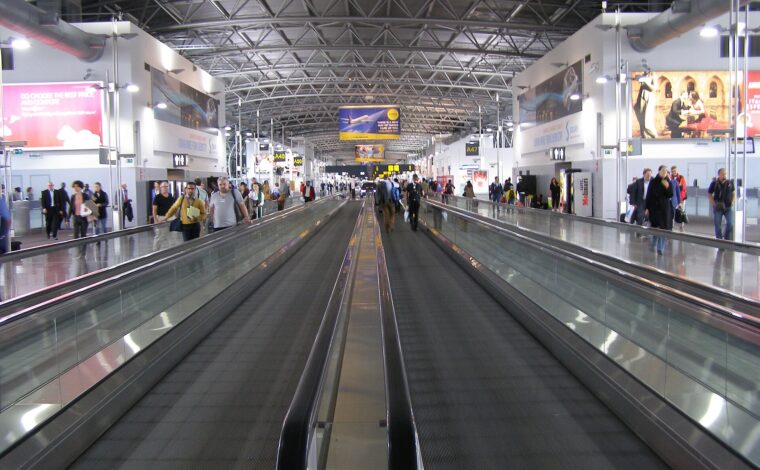
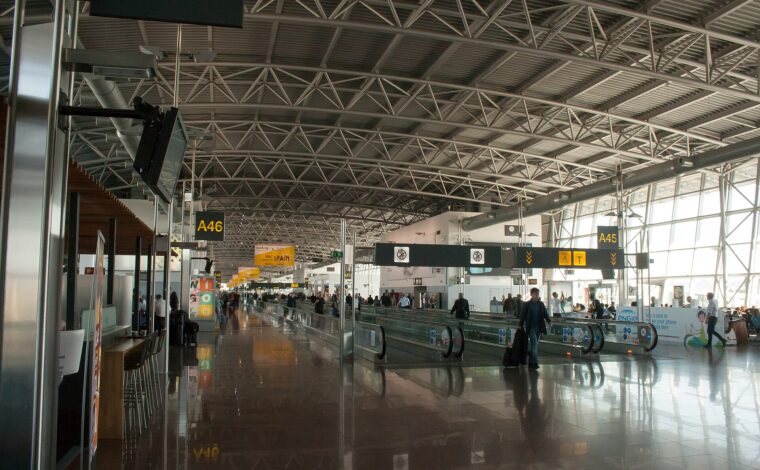
Train (Recommended): The fastest public transport option. Direct trains run to Brussels-Nord (about 11 minutes), Brussels-Central (18) and Brussels-Midi (23), six an hour from early morning until around midnight. Follow the “Train” signs in the arrivals hall — the station is one level below. A one-way ticket is the standard fare plus the €6.90 Brussels Airport supplement, which applies to most rail journeys to and from the airport (some exemptions apply); check belgiantrain.be for the current total. Buy tickets at the machines in the station or via the SNCB app.
Bus: STIB bus 12, the Airport Line, links the airport with the city, stopping at Schuman and Trône for the metro. From the airport the Airport2City fare applies, €7.90 by contactless or MOBIB (€8.40 on paper), and journey times depend on traffic.
Taxi: Official taxis wait outside the arrivals hall. A metered ride to the city centre costs €35–50 and takes 20–35 minutes depending on traffic. Only use taxis from the official rank — do not accept offers from people approaching you inside the terminal.
Ride-sharing: Uber and Bolt both offer rides from Brussels Airport. Prices are comparable to taxis (sometimes slightly cheaper, sometimes higher during surge). Follow signs to the designated ride-share pickup point.
From Brussels South Charleroi Airport (CRL)
Despite its name, Charleroi Airport is 46 kilometres south of Brussels. It primarily serves budget airlines (Ryanair, Wizz Air).
Shuttle bus (Most popular): Flibco operates shuttle buses every 20 minutes between Charleroi Airport and Brussels-Midi station. The journey takes approximately 55 minutes. One-way tickets cost around €17, returns around €31. Book online at flibco.com for a small discount. The bus stop at Brussels-Midi is on Rue de France, just outside the station.
Train + bus combination: TEC bus A1 connects the airport to Charleroi-Central station in about 20 minutes, four times an hour. From Charleroi-Central, take an SNCB train to any Brussels station; the SNCB journey planner gives the current times. This is cheaper than the shuttle bus but more complex — best for confident travellers or those continuing beyond Brussels.
Private transfer/taxi: Available but expensive — expect €90–130 for a direct car from Charleroi Airport to Brussels city centre.
Cycling in Brussels
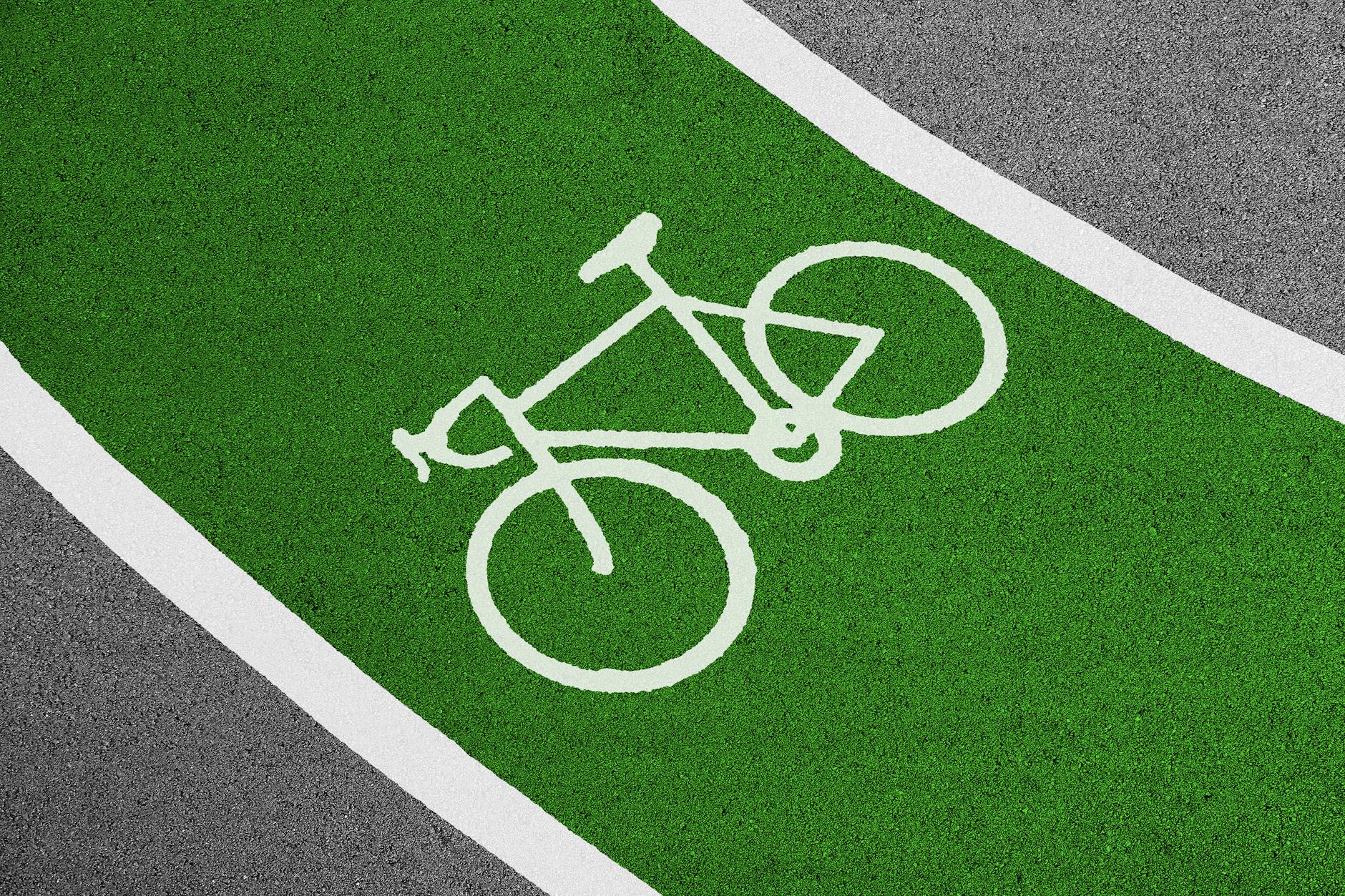
Brussels has invested heavily in cycling infrastructure over the past decade, with protected bike lanes expanding across the city and a default 30km/h speed limit (the so-called “Zone 30”), with signed exceptions of 50 or 70km/h on some major roads. While Brussels is hillier than cities like Amsterdam or Copenhagen — the upper town sits significantly higher than the lower town — cycling remains a practical and enjoyable way to get around, especially with electric options now widely available.
Villo! Bike-Sharing
Villo! is Brussels’ public bike-sharing system, operated by JCDecaux, with approximately 360 docking stations and 5,000 bikes across the region. Here is how it works:
- Day pass: €1.50 for a 24-hour ticket, with the first 30 minutes of every ride included
- Monthly pass: €3.50, with the first 30 minutes of each ride free
- Overtime charges: If you exceed 30 minutes without redocking, extra charges apply (€0.50 for the next 30 minutes, then escalating). Dock before the half-hour is up and each ride stays within its free 30 minutes.
Register and unlock bikes via the Villo! app or at any station terminal using a credit card. The bikes are sturdy city bikes with a front basket, lights, and a bell. They are not electric, so be prepared for the hills.
Electric Bikes and Scooters
Several dockless operators offer electric bikes and scooters across Brussels. Dott, Bolt, and Voi are the most common for electric scooters (around €0.25 per minute after an unlock fee). Dott also offers electric bikes. Download the respective apps before you arrive — you will spot these vehicles parked on pavements throughout the city. Note: electric scooters are limited to 25km/h and must not be ridden on pavements. Park responsibly in designated areas to avoid fines.
Cycling Safety Tips
Brussels drivers are generally accustomed to cyclists, but stay alert at intersections — Belgian driving can be assertive. Use the dedicated cycling lanes wherever possible. Helmets are not legally required for adults but are strongly recommended. Watch out for tram tracks — your wheel can get caught in the groove, especially when crossing at a shallow angle. Lock your bike securely; bike theft is common in Brussels.
Walking in Brussels
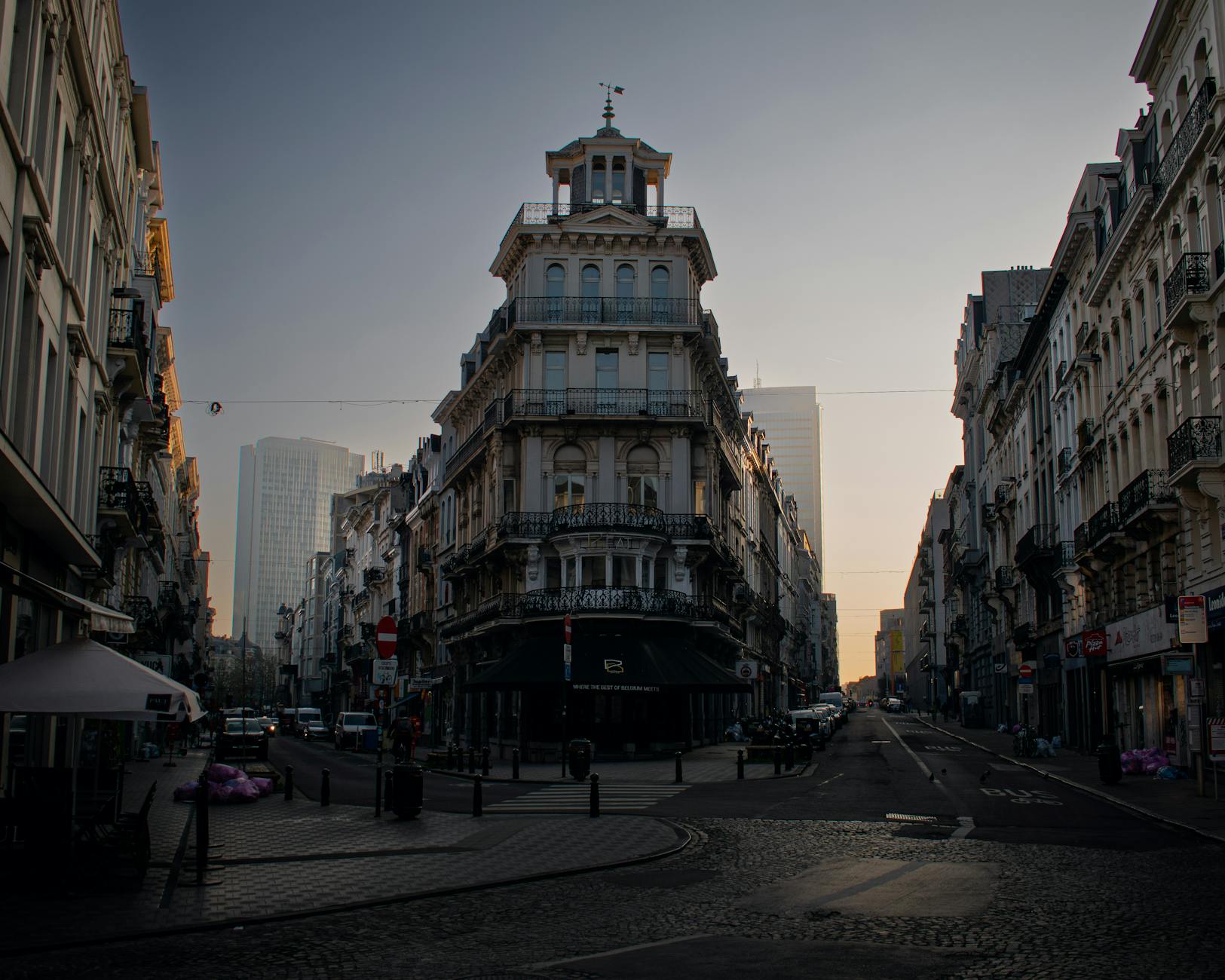
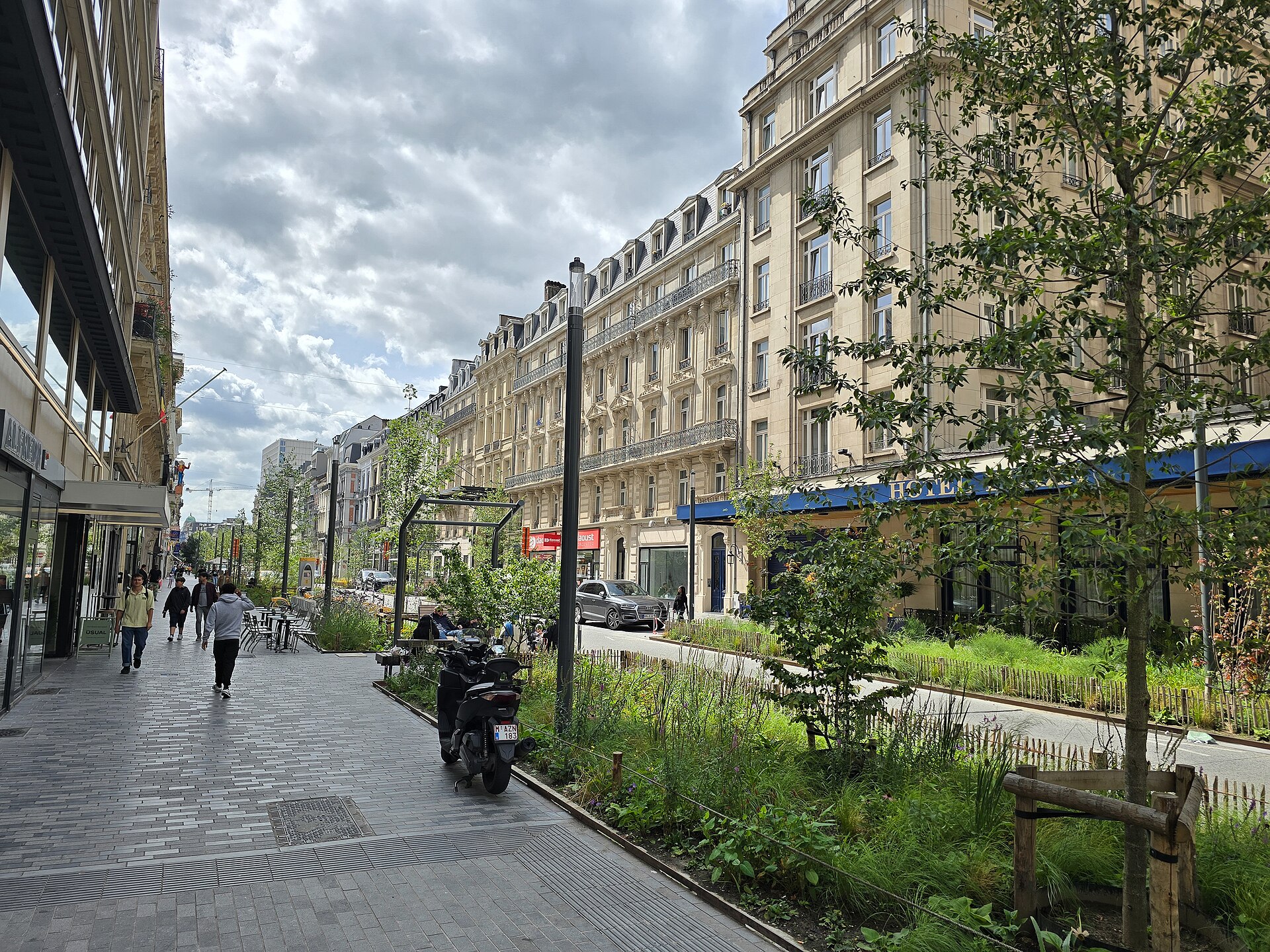
Walking is by far the best way to experience Brussels’ architectural beauty, hidden courtyards, and street-level details that you miss on any other form of transport. The historic centre is remarkably compact — the Grand Place, the Galeries Royales Saint-Hubert, Manneken Pis and Sainte-Catherine are all a short walk apart.
Key Walking Distances from the Grand Place
| Destination | On Foot |
|---|---|
| Manneken Pis | About 5 minutes |
| Galeries Royales Saint-Hubert | Very close |
| Mont des Arts / Royal Museums | A short walk |
| Sablon / Place du Grand Sablon | A short walk |
| Sainte-Catherine / Fish Market | A short walk |
| Bourse / Brussels Stock Exchange | Very close |
| European Parliament | A longer walk |
| Parc du Cinquantenaire | A longer walk |
| Royal Palace | A short walk, uphill |
Walking Tips
Wear comfortable, waterproof shoes — Brussels has extensive cobblestone streets that can be slippery when wet. The city is hillier than it appears on maps: the lower town (Grand Place area) sits at around 15m elevation, while the upper town (Royal Palace, Palais de Justice) is at approximately 60m. This means some walks involve unexpected climbs. The Mont des Arts gardens offer a particularly lovely (and steep) connection between the two levels.
Look up as you walk — Brussels’ architectural heritage includes Art Nouveau facades, comic-strip murals painted on building walls (part of the Brussels Comic Book Route), and ornate guild house decorations. Some of the city’s most beautiful details are above street level and easy to miss if you are looking at your phone. For detailed neighbourhood walking suggestions, see our Brussels Neighbourhoods Guide.
Taxis and Ride-Sharing
Brussels Taxis
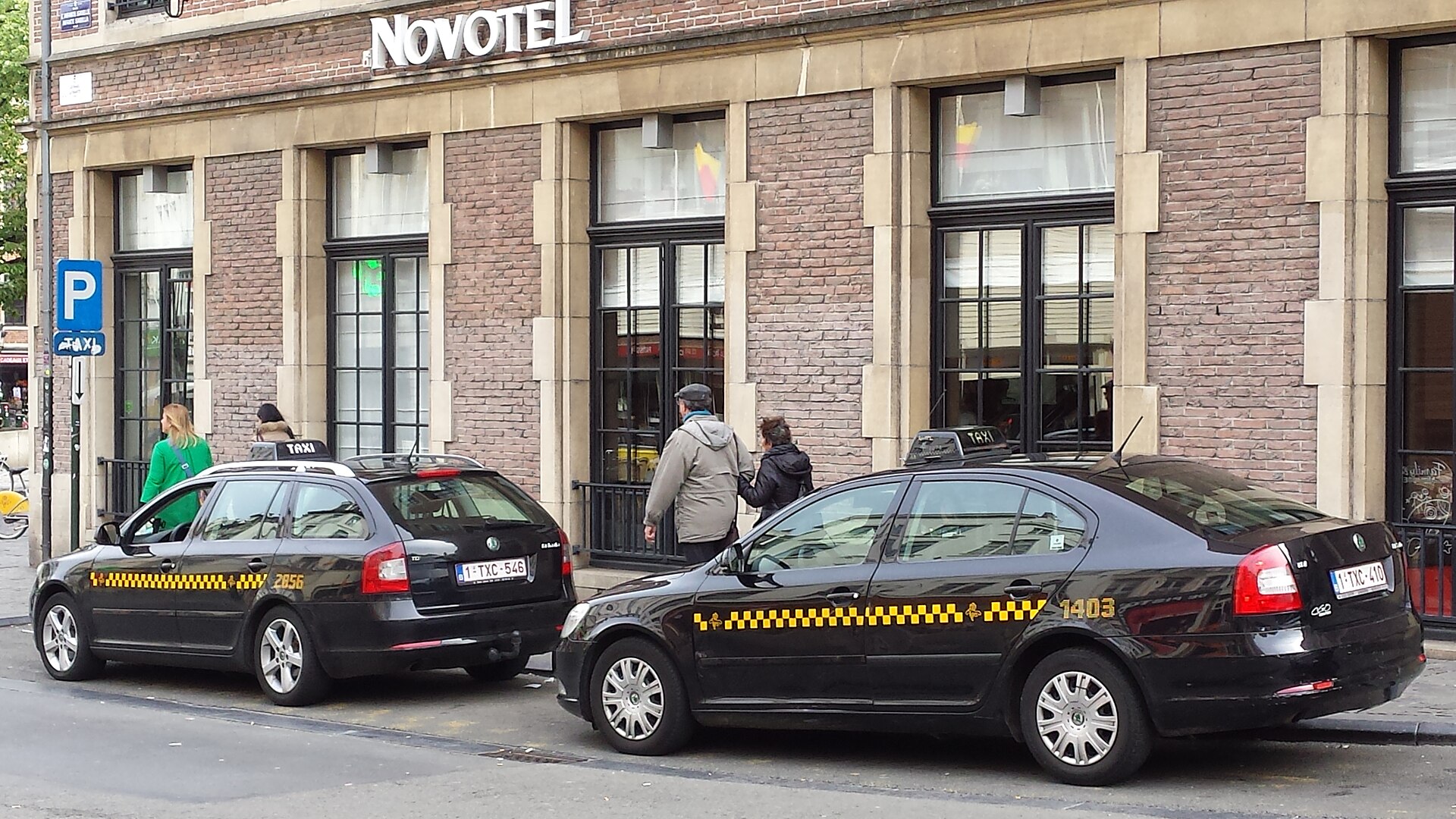
Official Brussels taxis are recognisable by their illuminated roof sign and are either white or black. All legitimate taxis have a visible licence plate and a taximeter. Key fare information:
- Base fare: €2.60
- Per kilometre: €2.30
- Per minute started: €0.60
- Night surcharge (10pm–6am): €2.00 flat
- Minimum fare: €8.00
A typical cross-city ride (e.g., Grand Place to Atomium, approximately 6km) costs around €15–18. A ride from Gare du Midi to the Grand Place should cost €10–12. From Brussels Airport to the city centre, expect about €50 on average. Tips are not expected but rounding up is appreciated.
Ride-Sharing Apps
Several ride-sharing services operate in Brussels, often at prices slightly below traditional taxi fares:
- Uber: Operates across Brussels, including pickups at the airport. UberX prices are competitive with regular taxis and sometimes cheaper, though surge pricing applies during peak times or events.
- Bolt: A European competitor to Uber. Compare its quote with Uber’s for the same route before you book.
- Heetch: A Brussels-based platform particularly popular for evening and night rides. Offers cash payment options in addition to card.
Taxi Tips
Always insist on the meter being used. Verify the route on your phone if you are unfamiliar with the city — occasional overcharging on airport routes does occur. You can hail taxis on the street (look for the illuminated roof sign indicating availability), find them at designated taxi ranks (Grand Place, Gare Centrale, Gare du Midi), or book via the Taxis Verts app (a Brussels taxi network, also reachable on +32 2 349 49 49). Ride-sharing apps have a clear advantage in price transparency: you see the fare before you book.
Driving and Parking in Brussels
Let us be direct: driving in central Brussels is not recommended for visitors. The city has a confusing one-way system, aggressive traffic, limited parking, and a mandatory Low Emission Zone that can catch tourists off guard. If you are arriving by car or renting one for day trips, here is what you need to know.
The Low Emission Zone (LEZ)
Since 2018, the Brussels-Capital Region has been a Low Emission Zone, enforced 24 hours a day; the Ring and some roads leading to transit car parks are outside it. Vehicles that do not meet minimum emission standards are banned from entering. Since 1 January 2026:
- Diesel vehicles: Must meet at least Euro 6 standard (Euro 5 diesels are now barred)
- Petrol/CNG/LPG vehicles: Must meet at least Euro 3 standard (check your vehicle’s Euro norm on lez.brussels before you travel)
- Motorcycles: Petrol motorcycles must also meet at least Euro 3
Foreign-registered vehicles (Dutch ones excepted) must be registered online at lez.brussels, free and valid for five years, before entering the zone or within five days of doing so — there is no physical check at the border, but automatic camera recognition reads number plates and cross-references the database. A non-compliant car or van can still enter on a day pass (€35, or €20 for a motorbike), up to 24 a year per plate, bought before entering or within five days. Fines are in force: for a vehicle newly excluded on 1 January 2026, a first offence brings a warning letter, a €350 fine may follow from three months later, and one fine then covers 12 months; older non-compliant vehicles can be fined €350 each quarter. If you are renting a car in Belgium, all major rental companies provide LEZ-compliant vehicles by default.
Parking
Street parking in the Brussels city centre is metered and expensive — typically €3–4 per hour with a maximum stay of 2 hours in the most central zones. Residential areas require a parking disc or payment; where local signs allow it, you can pay by the 4411 app, so download it before you arrive. Underground car parks (Parking Grand Place, Parking Albertine, Parking Sablon) cost €2.50–4.00 per hour, with daily maximums of €20–35.
The best strategy for drivers: park at a Park & Ride (P+R) facility on the outskirts of Brussels and take the metro into the centre. Major P+R locations include Ceria/COOVI (Line 5) and Kraainem (Line 1). Many offer free parking combined with a heavily discounted or free STIB ticket for the onward metro journey — significantly cheaper and less stressful than trying to park centrally.
Car Rental
Car rental is unnecessary for exploring Brussels itself but useful for day trips to the Belgian countryside, the Ardennes, or cross-border destinations like Luxembourg. All major international companies (Europcar, Hertz, Avis, Sixt, Enterprise) have desks at Brussels Airport and Gare du Midi. Prices start around €35–50 per day for a compact car. Remember: all Belgian motorways are toll-free, and fuel prices are moderate by Western European standards (approximately €1.70–1.90 per litre for petrol in 2026).
Train Travel: Brussels as a Rail Hub
Brussels is an international rail hub, with direct trains to London, Paris, Amsterdam, Cologne and Frankfurt, making it an ideal base for day trips and onward travel. The city has three major railway stations, each serving different purposes.
Brussels’ Three Main Stations
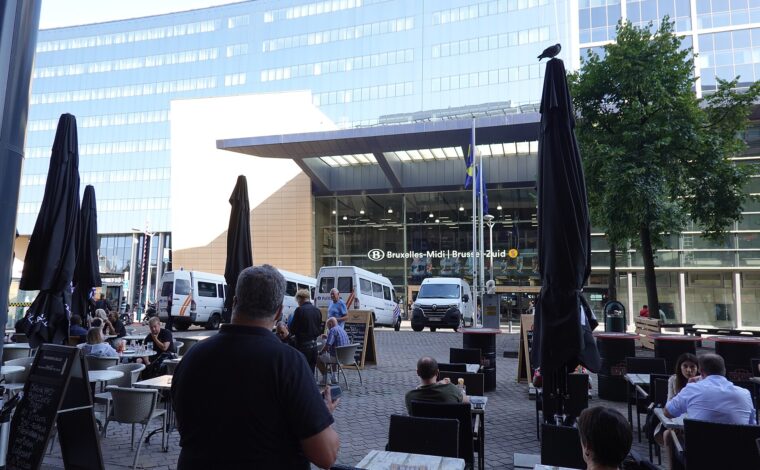
Brussels-Midi (Bruxelles-Midi / Brussel-Zuid): The international hub. Eurostar trains to London, Paris and Amsterdam and ICE trains to Cologne and Frankfurt arrive and depart here. Also serves domestic routes. Located south of the city centre, connected by metro Lines 2 and 6. Be aware: the area immediately outside the station can feel rough, especially at night — head directly to your transport connection rather than lingering.
Brussels-Central (Bruxelles-Central / Brussel-Centraal): The most useful station for tourists. Located steps from the Grand Place and the Mont des Arts. Serves domestic routes and some international connections. Connected by metro Lines 1 and 5.
Brussels-North (Bruxelles-Nord / Brussel-Noord): Primarily a business district station near the World Trade Center area. Serves domestic routes; for Eurostar and ICE trains, head to Brussels-Midi. Less useful for tourists unless you are staying near Rogier.
Domestic Train Journeys
| Destination | Travel Time | Standard Single (2nd Class) | Frequency |
|---|---|---|---|
| Bruges | About 1 hour | Under the maximum fare | Around 65 trains/day |
| Ghent | About 35 minutes | Well under the cap | Around 86 trains/day |
| Antwerp | About 40 minutes | Well under the cap | 4–5 trains/hour |
| Leuven | A short hop | A few euros | Frequent |
| Namur | About 1 hour | Well under the cap | See belgiantrain.be |
| Liège | About 55 minutes | Under the maximum fare | See belgiantrain.be |
| Dinant | 1h 30min | Under the maximum fare | 1–2 trains/hour |
| Ypres (Ieper) | 1h 45min | At or near the maximum fare | 1 train/hour (change at Kortrijk) |
Since SNCB’s new fares launched on 15 October 2025, every fare has been priced by distance. At launch, no adult second-class single inside Belgium cost more than €20.90, and fares rose by 2.14% on 1 February 2026, so check the exact fare and the current maximum on belgiantrain.be.
For comprehensive day trip planning, see our Day Trips from Brussels guide.
Discounted Rail Tickets
SNCB launched a new ticket range on 15 October 2025, replacing the old flat-rate Youth and Senior Tickets. Travellers under 26 and those aged 65 or older now get 40% off the standard fare at any time, with no card to buy. Adults aged 26–64 get 30% off at weekends, singles included, and children under 12 travel free with an accompanying adult. The Rail Pass and SNCB’s other ten-journey cards were withdrawn in October 2025 and nothing replaced them. The Train+ card (€6 a month for adults aged 26–64) adds 40% off off-peak and at weekends and caps any second-class journey at €14, and Mini Groups of four to fourteen people get 40% off off-peak and at weekends. Our Belgium by train guide explains the new fares in detail. Note that Belgium’s domestic train tickets do not require advance booking — you pay the same price whether you buy on the day or weeks ahead.
International Train Services
- Eurostar to London: Approximately 2 hours. Book early for fares from €44 one-way, subject to availability.
- Eurostar to Paris: 1 hour 22 minutes. Early-bird fares from approximately €29.
- Eurostar to Amsterdam: Approximately 1 hour 52 minutes.
- ICE to Cologne: Under 2 hours. To Frankfurt, approximately 3 hours.
- Eurocity Direct to Amsterdam: About 2 hours to Amsterdam Zuid, with up to 16 services a day.
For all international services, booking in advance is strongly recommended — prices increase significantly closer to the travel date. Use the SNCB International website (b-europe.com) or the Trainline app for the best comparison of fares and schedules.
Accessibility
Brussels has made significant progress on accessibility, though the older parts of the city and transport network still present challenges.
Metro Accessibility
Step-free access varies by station across the network, De Brouckère, Sainte-Catherine and Schuman included, so check the stations on your route before you go. The STIB website and app clearly indicate which stations have operational lifts, and you can check real-time lift status before travelling. Gare Centrale’s platform lifts are out of service until the end of 2026, so that metro station is not accessible to passengers with reduced mobility in the meantime. Stations with accessibility features display a grey wheelchair logo.
Free assistance for boarding and exiting the metro is available daily from 7am to 11pm. Contact the accessibility helpline at 02 515 23 65 (Monday–Friday 7am–7pm, Saturday 8am–4pm) to arrange assistance in advance, or visit the help point at the accessible entrance of any equipped station.
Tram and Bus Accessibility
Newer trams have low-floor sections for wheelchair access, though older trams on some routes still have steps. All STIB buses are low-floor and wheelchair accessible, with a deployable ramp at the front door. Bus drivers will deploy the ramp on request. The STIB website provides a detailed accessibility guide with information about specific routes and vehicles.
Street-Level Challenges
Cobblestone streets and hilly terrain are among the main accessibility challenges in Brussels. The lower town (Grand Place area) is relatively flat and manageable, but reaching the upper town (Royal Palace, Palais de Justice) involves significant elevation changes. The elevator at the Palais de Justice connects the Marolles neighbourhood to the upper town and is free to use.
Essential Apps for Getting Around Brussels
Download these apps before you arrive to make navigating Brussels seamless:
- STIB-MIVB: The official public transport app. Real-time departures, route planning, ticket purchasing, and lift status for accessibility. Available in French, Dutch, English, and German.
- Citymapper: Excellent for multi-modal journey planning. Combines STIB, SNCB trains, walking, cycling, and ride-sharing options into a single route comparison. Particularly good at showing you when it is faster to walk than wait for a connection.
- Google Maps: Reliable for walking directions and real-time public transport information. Shows both French and Dutch station names.
- SNCB/NMBS: Essential for planning and booking train journeys. Real-time platform information and delay alerts.
- Villo!: For bike-sharing. Shows available bikes and docking stations near you.
- Uber/Bolt: For ride-sharing. Download both to compare prices for the same journey.
- 4411: For street parking payment. Easier than finding coins for meters.
Explore Getting Around in Depth
This guide is the overview. Each link below goes deeper on one part of it:
- Brussels to Bruges Train — Complete Travel Guide
- Brussels Bike Rental — Villo!, Shops, Routes & Prices
- Brussels Wheelchair Accessible Travel Guide — Transport, Hotels & Attractions
Frequently Asked Questions
What is the best way to get around Brussels as a tourist?
Walking combined with the metro covers most tourist needs. The city centre is compact enough to walk between the Grand Place, Sablon, Sainte-Catherine, and Mont des Arts. Use the metro for longer journeys to the Atomium, European Quarter, or train stations. Contactless payment caps ordinary metro, tram and bus journeys on the same card at €8.50 a day (airport-to-city trips are charged separately), and a paper 1-day ticket is €9.
Is the Brussels metro safe?
Yes, the Brussels metro is generally safe during operating hours. Exercise normal big-city precautions: keep valuables secure, be aware of your surroundings, and avoid travelling alone on empty trains late at night. The most common issue is pickpocketing during rush hours at busy stations like De Brouckère and Gare du Midi.
Can I use contactless payment on Brussels public transport?
Yes. All STIB buses, trams, and metro stations accept contactless bank cards, smartphones, and smartwatches. Simply tap at the validator. Ordinary journeys on the same card or device are capped at €8.50 per service day; the Airport2City fare from Brussels Airport sits outside the cap.
How do I get from Brussels Airport to the city centre?
The train is the fastest public transport option — about 18 minutes to Brussels-Central, six trains an hour. The ticket usually includes the €6.90 airport supplement. STIB Airport Line bus 12 costs €7.90 into town by contactless or MOBIB (€8.40 on paper), because the Airport2City fare applies. Taxis average about €50. See the airport transfers section above for full details.
Do I need a car in Brussels?
No. Public transport, walking, and occasional taxis cover all tourist needs within the city. A car is only useful for day trips to rural areas like the Ardennes. Brussels has a mandatory Low Emission Zone, expensive parking, and confusing roads — renting a car for city exploration is not recommended.
What happens if I am caught without a valid ticket on STIB?
A first offence for travelling without a valid, validated ticket costs €107. If you hold a valid season ticket but forgot to validate it, the fine is €10 when paid within 10 working days. Always validate your ticket or tap your contactless card before boarding.
Christmas Day, New Year’s Eve and New Year’s Day can bring timetable changes, and STIB announces its festive service on stib-mivb.be ahead of the holidays. Our guide to Brussels over Christmas and New Year covers the festive timetable alongside everything else that changes.
One option deliberately left out of the network above is the tourist bus, because it is not public transport — it is a fixed sightseeing loop sold at roughly four times the price of a day pass. If you are weighing it up anyway, our guide to the Brussels hop-on hop-off bus does the comparison properly, including the mobility and family cases where it genuinely wins.
Everything above starts once you are in the city, which for a great many visitors means first getting out of Charleroi — an airport with no station, 46 km to the south. Our Charleroi Airport guide covers the shuttle, the local bus to Charleroi-Sud and the rail connections that skip Brussels entirely.
The one piece of Brussels infrastructure worth learning before you arrive is the station most visitors land at. Our Brussels-Midi station guide explains the two-level layout, which platforms handle international trains, the metro and tram connections, luggage lockers and prices, and the pickpocket problem the signage does not mention.
Photo Credits
-
A metro train at CERIA/COOVI: CERIA COOVI metro station 2023 by Smiley.toerist, CC BY-SA 4.0, via Wikimedia Commons.
-
A Brussels tram in Evere: 20180906 Evere 02 by Flocci Nivis, CC BY 4.0, via Wikimedia Commons.
-
A STIB bus in Ixelles: (STIB-MIVB) 71 Jeanne Johanna by Tram93, CC BY-SA 4.0, via Wikimedia Commons.
-
A STIB GO ticket machine: Mobib ticket machine, Brussels (LRM 20231012 094316-2) by Matti Blume, CC BY-SA 4.0, via Wikimedia Commons.
-
Walking along Boulevard Anspach: 2024-08-21 in Brussels 64 by Szilas, CC BY 4.0, via Wikimedia Commons.
-
Brussels taxis on Rue Infante Isabelle: Skoda Taxis in Brussels by Raf24~commonswiki, CC BY-SA 4.0, via Wikimedia Commons.