Your Complete Guide to Shopping in Brussels
Brussels is a shopper’s paradise that most visitors discover almost by accident. You might come for the Grand Place and the chocolate, but you will leave with bags full of Belgian fashion, antique treasures, artisan crafts, and speciality foods that you simply could not find back home. From one of Europe’s oldest covered shopping arcades to sprawling Sunday flea markets, Brussels offers retail experiences to suit every taste and budget.
This comprehensive Brussels shopping guide covers every major shopping district, the best markets and speciality stores, what to buy as souvenirs, and practical tips including opening hours and tax-free shopping. Whether you are hunting for luxury fashion on Boulevard de Waterloo, vintage finds in the Marolles, or the perfect box of pralines to take home, this guide has you covered.
For general trip planning, see our Brussels Travel Guide. To explore each neighbourhood’s character in detail, visit our Brussels Neighbourhoods Guide.
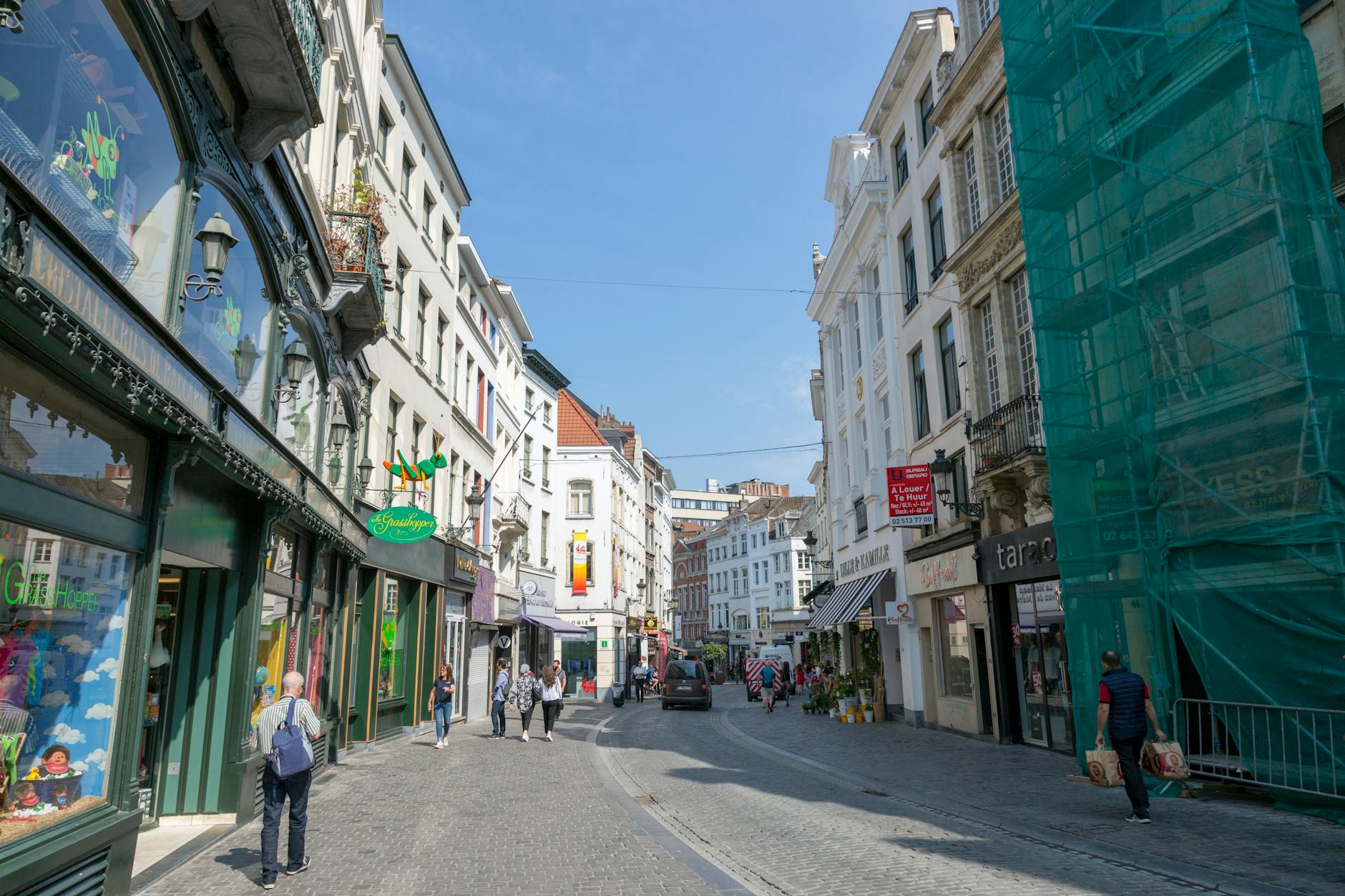
Brussels’ Premier Shopping Streets and Districts
Rue Neuve: The High Street Heart
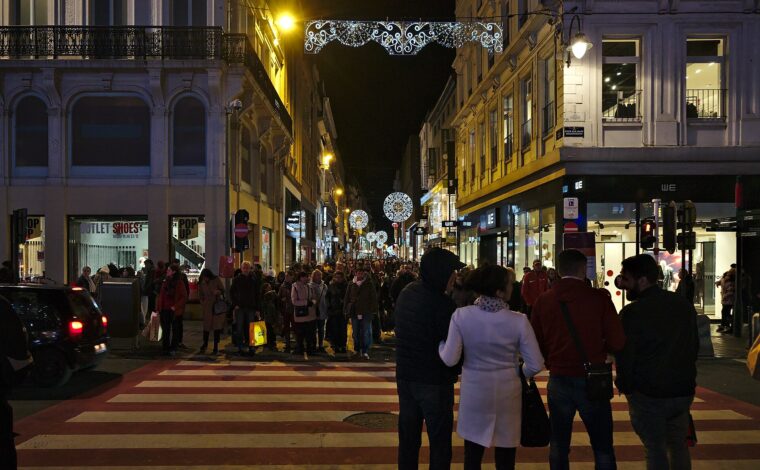
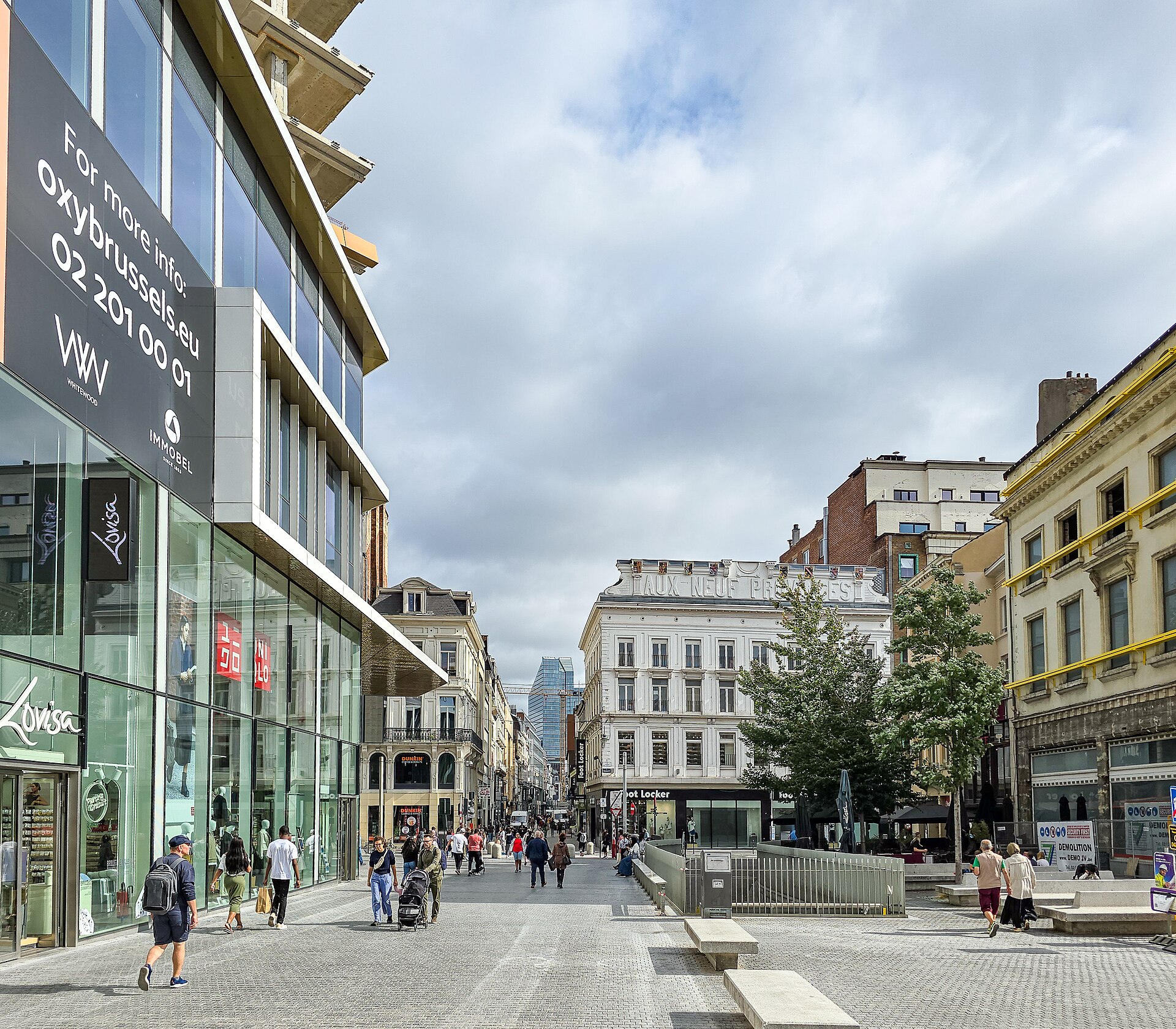
Rue Neuve (Nieuwstraat) is Brussels’ busiest commercial street and one of the busiest pedestrian shopping streets in Belgium. Running from Place de la Monnaie to Place Rogier, this predominantly pedestrianised thoroughfare is lined with international high-street brands including Zara, H&M, Primark, Mango, and FNAC.
Anchoring the street is City2, a multi-level shopping centre with over 100 stores spread across several floors. City2 houses a mix of fashion, electronics, sports equipment, and dining options. The adjacent INNO department store (formerly Innovation), whose first Brussels store opened in 1897, offers fashion, beauty, homeware, and a food hall. For those seeking a one-stop shopping experience, Rue Neuve and City2 together provide the most concentrated mainstream retail offering in the city.
Avenue Louise and Boulevard de Waterloo: Luxury and Designer Fashion
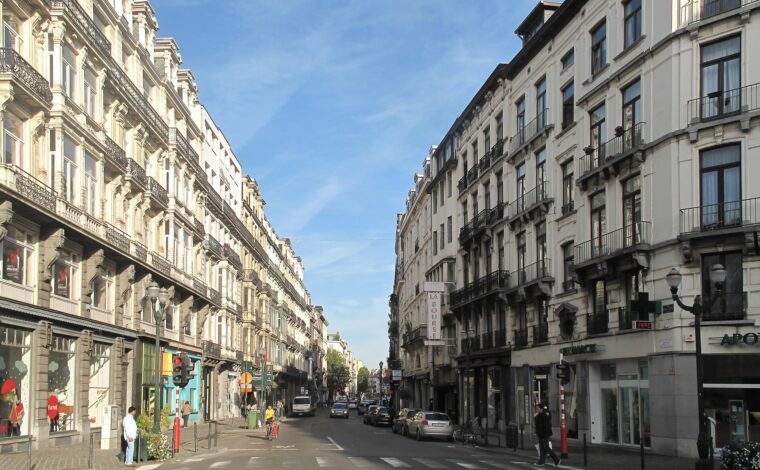
If Rue Neuve is Brussels’ high street, Avenue Louise and the adjoining Boulevard de Waterloo represent its luxury mile. This elegant avenue — running from Place Louise, near the Palais de Justice, to the Bois de la Cambre — forms part of the city’s main luxury shopping district, with prestigious fashion boutiques and flagship stores.
Boulevard de Waterloo is where you will find the global luxury houses: Hermès, Louis Vuitton, Chanel, Gucci, Dior, Giorgio Armani, Tiffany & Co., and Ralph Lauren all maintain elegant boutiques here.
Avenue Louise itself offers a mix of upscale Belgian and international brands, including Max Mara, Lacoste, Montblanc, and Michael Kors, alongside Belgian designers and high-end interior design showrooms. The Galerie Louise, a covered passage between Avenue Louise and Boulevard de Waterloo, adds additional boutique shopping in a sheltered environment.
Rue Antoine Dansaert: Belgian Design and Contemporary Fashion
For fashion-forward shoppers interested in Belgian design, Rue Antoine Dansaert is essential. This street in the heart of the city — running from the Bourse towards the canal — is Brussels’ creative fashion district, where you will discover Belgian designers alongside international avant-garde labels.
The street’s transformation began in the 1980s and 1990s when Belgian fashion exploded onto the international scene with the “Antwerp Six” generation. Today, Dansaert and its surrounding streets house concept stores, independent boutiques, and flagship shops for Belgian labels. Stijl, one of the district’s anchor stores, carries a carefully curated selection of international and Belgian designers. You will also find home décor shops, design studios, and the kind of lifestyle boutiques that make browsing here a pleasure even without buying.
The Dansaert district merges naturally into the Saint-Géry area, where fashion shopping gives way to coffee bars, cocktail spots, and a youthful creative energy that makes this one of the most enjoyable neighbourhoods to explore on foot.

The Sablon: Antiques, Chocolate, and Art
The Sablon district — comprising the Grand Sablon (Place du Grand Sablon) and the Petit Sablon — is Brussels’ most refined shopping neighbourhood. This elegant quarter specialises in antiques, fine chocolate, contemporary art galleries, and upscale home décor.
The Grand Sablon square is lined with chocolatiers, including Pierre Marcolini and Wittamer, alongside antique dealers and art galleries. The narrow streets radiating from the square — particularly Rue de Rollebeek, Rue Lebeau, and Rue des Minimes — contain dozens of antique shops specialising in furniture, silverware, fine art, Art Nouveau and Art Deco objects, old maps, and rare books.
Every weekend, the Sablon Antiques Market fills the Grand Sablon square with dealers offering antiques, vintage items, and collectables. It runs on Saturdays from 9am to 5pm and on Sundays from 9am to 3pm. The market has been a fixture since the 1960s, and the quality of goods — from Chinese porcelain and Flemish paintings to Art Nouveau glassware and vintage jewellery — is generally high.
Chaussée d’Ixelles and Place Flagey: Eclectic Mix
Running through the diverse Ixelles neighbourhood, the Chaussée d’Ixelles offers a more eclectic shopping experience than the city centre streets. Here you will find a mix of mainstream chains, independent boutiques, African fabric shops reflecting the neighbourhood’s Congolese community (the area around Porte de Namur is sometimes called “Matongé”), and speciality food stores.
Further along, Place Flagey hosts a general market every Saturday and Sunday from 8am to 2:30pm. The Toison d’Or area, connecting Porte de Namur to Avenue Louise, provides additional shopping with a mix of chains and independent stores.
Historic Shopping Arcades
Galeries Royales Saint-Hubert
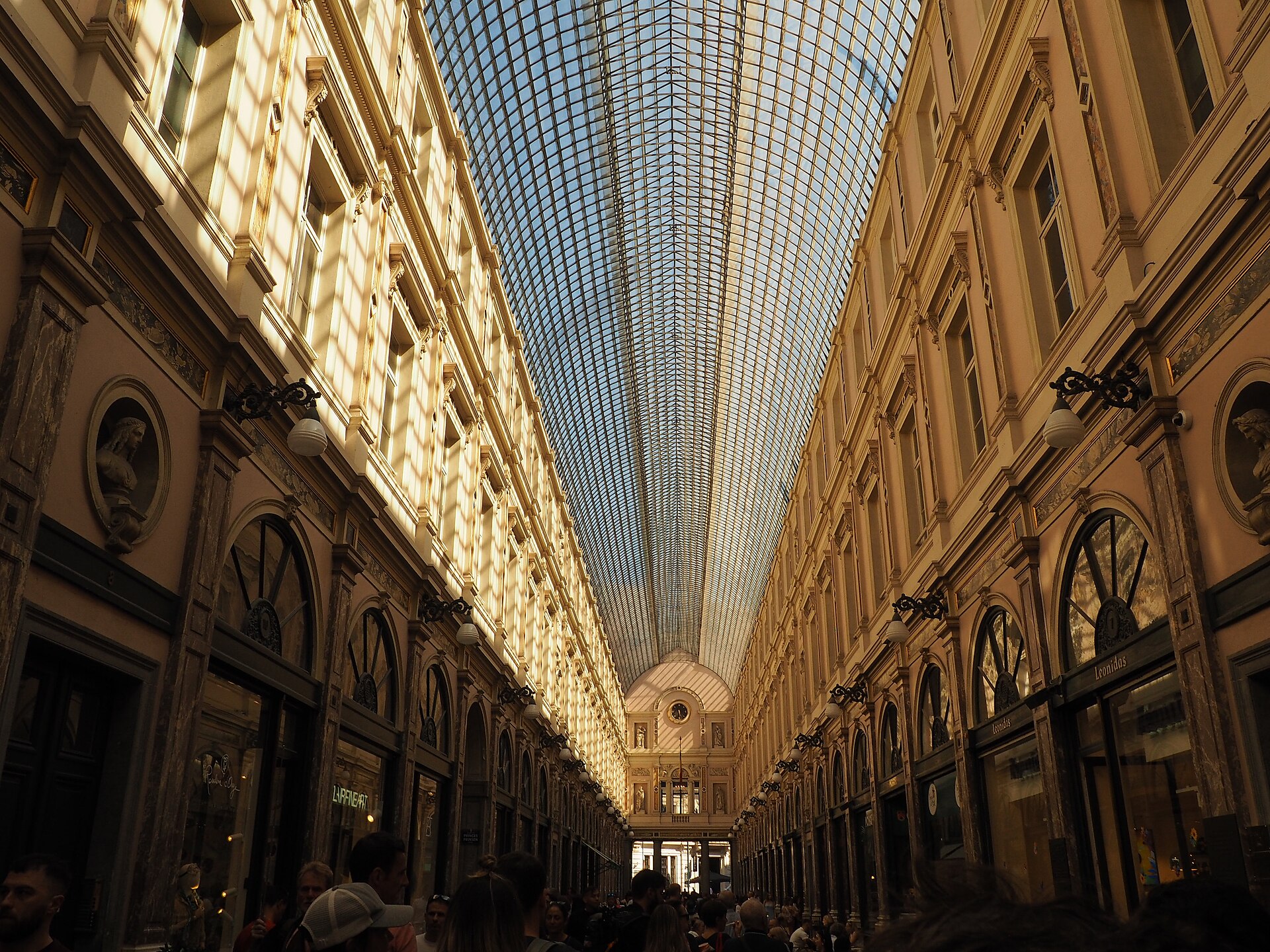
Opened in 1847, the Galeries Royales Saint-Hubert is one of the oldest covered shopping arcades in Europe and arguably the most beautiful. This stunning glazed arcade — comprising the Galerie du Roi, Galerie de la Reine, and Galerie des Princes — was designed by architect Jean-Pierre Cluysenaar and was revolutionary for its time, predating Milan’s Galleria Vittorio Emanuele II by two decades.
Today, the Galeries house an elegant mix of chocolatiers (including Neuhaus, the inventor of the praline, and Mary, founded in Brussels in 1919 and trading at Galerie de la Reine 36), leather goods shops, bookstores, jewellers, and fashion boutiques. The Galeries are also home to the Théâtre Royal des Galeries, several cafés and restaurants, and the Cinéma Galeries arthouse cinema. Even if you buy nothing, walking through this beautifully proportioned arcade — with its vaulted glass ceiling flooding the interior with natural light — is one of Brussels’ finest experiences.
Passage du Nord
Less famous than the Galeries Royales but equally charming, the Passage du Nord is a 19th-century covered arcade connecting Rue Neuve to Boulevard Adolphe Max. The passage features a glazed roof and neoclassical decoration, with shops specialising in men’s fashion, accessories, and gifts. It is a pleasant shortcut and a pocket of 19th-century elegance amid the commercial bustle of Rue Neuve.
Markets: Where Brussels Really Shines
Brussels’ market culture is one of the best in Europe. From daily flea markets to vast Sunday food markets, the city’s outdoor markets offer experiences that no shopping centre can match.
Place du Jeu de Balle Flea Market (Daily)
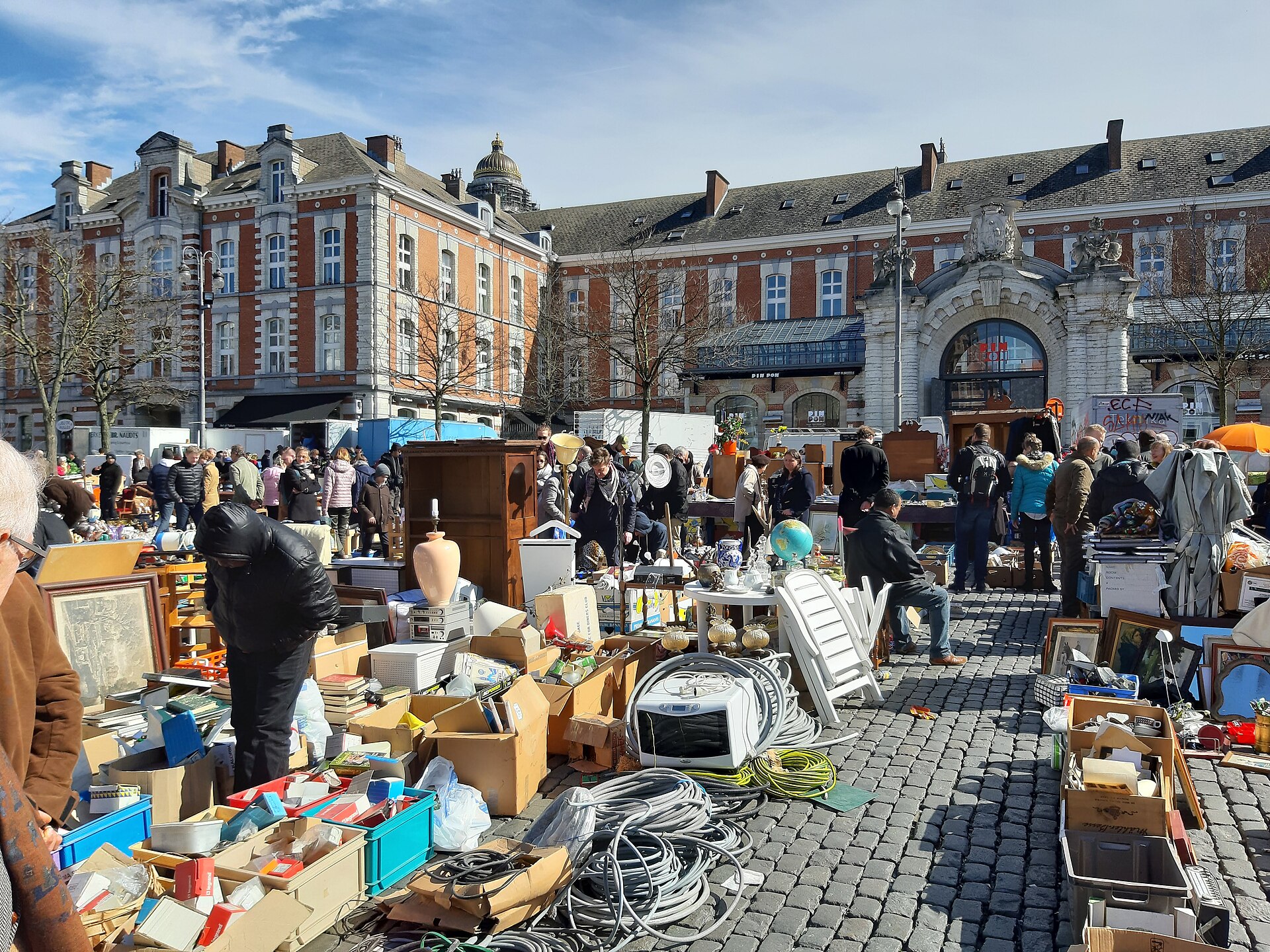
The Place du Jeu de Balle, in the heart of the Marolles neighbourhood, hosts Brussels’ most famous flea market. The market runs every day, from 7am to 2pm on weekdays and until 3pm at weekends, with more than 300 stalls. Dealers offer everything from vintage furniture and second-hand clothes to old vinyl records, old photos, crockery, and plain curiosities.
The market is best experienced early in the morning, when dealers are setting up and keen buyers can spot bargains before the crowds arrive. Weekday mornings are quieter and better for serious bargain-hunting, while weekends bring a livelier atmosphere with street musicians and more varied offerings. The Marolles neighbourhood surrounding the market is also rich with vintage shops and brocantes (second-hand shops) along Rue Haute and Rue Blaes, making it possible to spend half a day exploring the area.
Midi Market (Sunday)
The Midi Market fills the streets around the Gare du Midi (Brussels South station) every Sunday morning. It is a large market, with stalls stretching across several streets surrounding the station, selling fresh produce, spices, meat, fish, cheese, textiles, electronics, household goods, and clothing.
The market reflects Brussels’ extraordinary cultural diversity, with stalls run by vendors from the Maghreb, Turkey, sub-Saharan Africa, South Asia, and beyond. It is the best place in Brussels to buy exotic spices, fresh herbs, olives, dried fruits, and ingredients that are hard to find elsewhere. The atmosphere is vibrant, noisy, and authentically multicultural — an experience that captures modern Brussels like nothing else.
Other Notable Markets
Brussels hosts markets throughout the week across different neighbourhoods. The Place Sainte-Catherine Market, the Objectif Zéro Déchet market, sets up on Saturdays near the former fish market, with food stalls, flowers, and artisan products. The Flagey Market on Place Flagey (Saturday and Sunday mornings) is a favourite among locals for organic produce, artisan bread, cheese, and prepared foods. The Christmas Market (Plaisirs d’Hiver/Winter Wonders), running from 27 November 2026 to 3 January 2027, transforms the city centre with 238 chalets selling crafts, food, and gifts, an ice rink on Place De Brouckère, and a Ferris wheel.
The Abattoir Market in Anderlecht (Friday to Sunday) is a large covered market popular for wholesale and retail meat, cheese, and household goods, drawing shoppers from across the Brussels region.
What to Buy in Brussels: The Essential Souvenir Guide
Belgian Chocolate
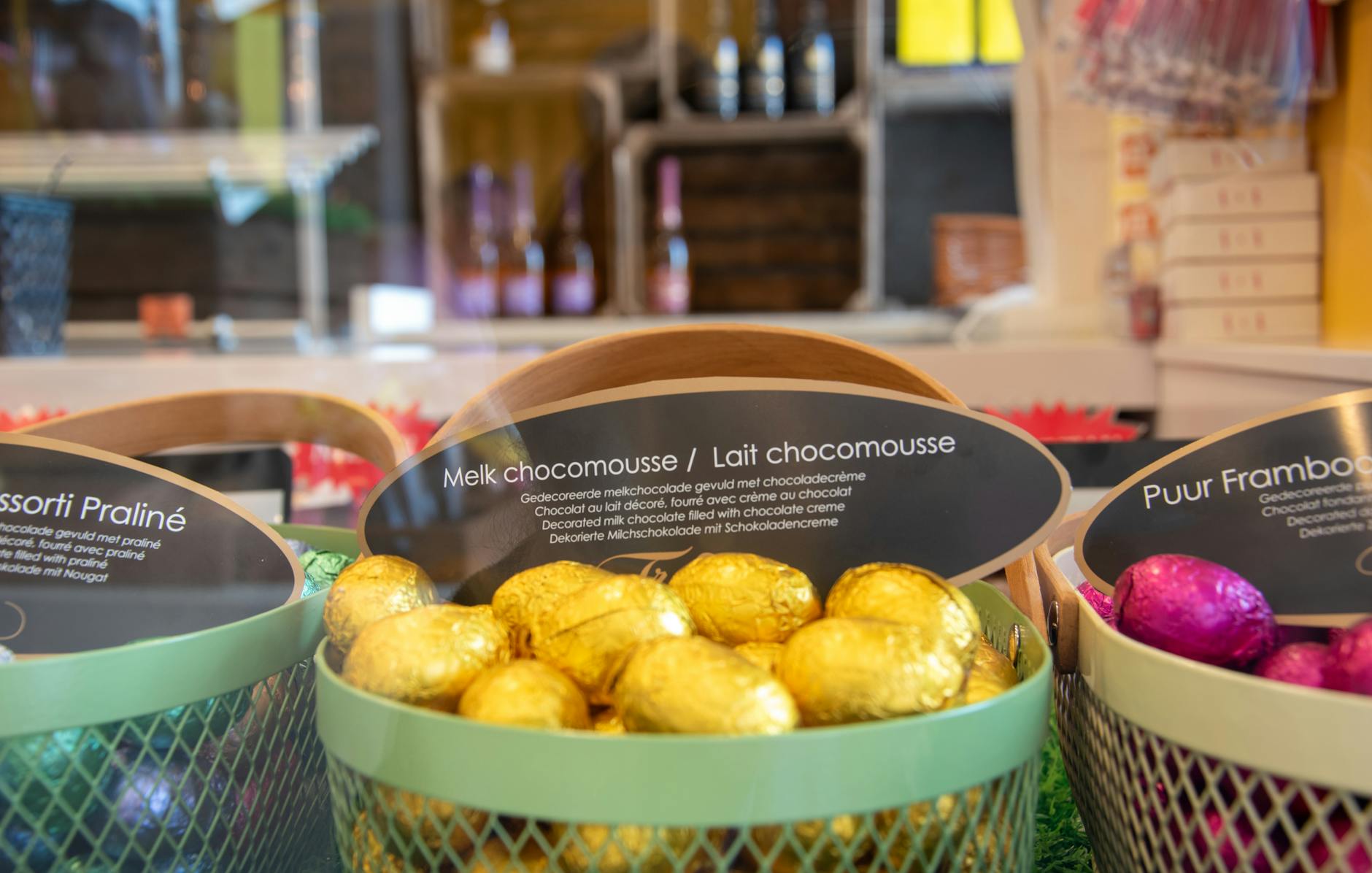
Chocolate is Belgium’s most famous export, and Brussels is the ultimate destination for chocolate shopping. Belgian chocolate is renowned for its quality — strict regulations require a minimum cocoa butter content, and the tradition of the filled chocolate (praline) was invented here by Jean Neuhaus in 1912.
For the finest artisan chocolate, head to the established houses and rising artisan chocolatiers. Pierre Marcolini (Place du Grand Sablon) is a Grand Cru chocolatier who sources and roasts his own cacao beans — his ganaches and truffles are works of art. Laurent Gerbaud (Rue Ravenstein 2D, near the Central Station) makes inventive pralines with nuts and other flavourings. Mary (Rue Royale), founded in 1919, holds a Royal Warrant and packages its chocolates in beautiful vintage-style boxes. Neuhaus (multiple locations, including the Galeries Royales) is the inventor of the praline and the ballotin (the iconic Belgian chocolate gift box).
For everyday chocolate shopping, Leonidas offers excellent quality at more accessible prices and has shops throughout the city. Avoid the mass-market chocolate shops clustered around the Manneken Pis — while convenient, they often sell overpriced tourist-grade chocolate. Instead, venture to the Sablon, the Galeries Royales, or the individual shops of the chocolatiers listed above for the real thing.
Belgian Beer
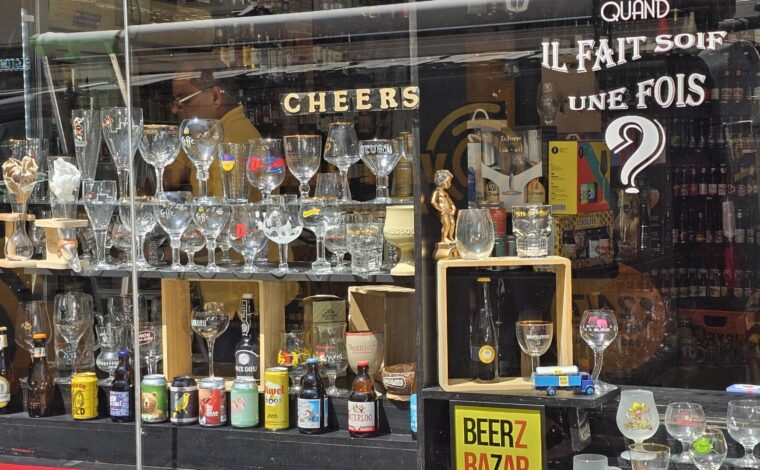
Belgium brews an enormous range of beers, and Brussels is an excellent place to buy them. Speciality beer shops offer a far wider selection than any supermarket, and many will advise you on pairings and styles.
Beer Mania (Chaussée de Wavre 174–176, Ixelles) is one of Brussels’ best-known beer shops, with more than 400 craft beers from Brussels and Belgium. Bière Artisanale and the shops in the Galeries Royales also carry excellent selections. For a truly Brussels-specific gift, look for lambic beers — spontaneously fermented beers traditionally associated with Brussels, the Pajottenland and the Senne valley. Gueuze (a blend of young and old lambics) and kriek (lambic with sour cherries) from producers like Cantillon, Drie Fonteinen, and Tilquin are exceptional and make memorable gifts for beer lovers.
Supermarkets like Delhaize and Carrefour also carry impressive beer selections at lower prices than speciality shops, and are a good option for buying in bulk. The Brussels Airport shop also sells Belgian beer gift packs, handy for a last-minute present.
Belgian Lace
Belgian lace-making has been a tradition since the 15th century, with Brussels, Bruges, and Mechelen as the historic centres of production. Genuine handmade Belgian lace — including bobbin lace, needle lace, and Brussels point lace — is a luxury product that makes a refined gift or keepsake.
The challenge for visitors is distinguishing handmade Belgian lace from mass-produced imported imitations, which are widely sold in tourist shops around the Grand Place. Genuine handmade lace is expensive (a small doily can cost €50-200), irregular in pattern (a sign of handwork), and sold by specialist shops that can explain the provenance and technique. The Belgian Lace Museum (near the Grand Place) is a good starting point for understanding the craft before buying. Reputable lace shops include those in the Galeries Royales and specialist boutiques in the Sablon area.
Speculoos and Artisan Biscuits
Belgian speculoos — spiced caramelised biscuits traditionally eaten around Saint Nicholas Day (6 December) — have become a year-round favourite. Maison Dandoy, founded in 1829, is one of Brussels’ best-known biscuit makers, with a boutique on Rue au Beurre near the Grand Place. Their speculoos, pain à la grecque, and other traditional biscuits are made daily using original recipes and come in beautiful packaging perfect for gifts. Dandoy also has a tea room where you can sample the biscuits with coffee or Brussels waffles.

Comic Books and Tintin Memorabilia
Belgium is the comic strip capital of the world, and Brussels is paradise for comic book collectors and fans. Tintin, the Smurfs, Lucky Luke, Spirou, and dozens of other beloved characters are all Belgian creations, and you will find merchandise, original editions, and collectables throughout the city.
The Tintin Shop (Rue de la Colline, near the Grand Place) is the official Hergé store, selling everything from books and prints to clothing, figurines, and household items featuring Tintin, Captain Haddock, Snowy, and other characters. Brüsel (Boulevard Anspach) is a specialist comic book shop with an extraordinary collection of new and vintage Belgian and Franco-Belgian comics. The Belgian Comic Strip Centre (Rue des Sables) has its own shop with a curated selection of comics, art prints, and related merchandise.
Other Brussels Specialities Worth Buying
Beyond the big-ticket souvenirs, Brussels offers several other shopping specialities that deserve attention. Artisan mustard from Tierenteyn (a Ghent institution with products available in Brussels speciality food shops) adds Belgian flair to any kitchen. Belgian waffles and waffle irons — both the light, rectangular Brussels waffle and the denser, pearl-sugar-studded Liège waffle — make distinctive gifts. Côte d’Or chocolate bars and Speculoos spread (Lotus Biscoff) are affordable, portable, and universally appreciated souvenirs available in any supermarket.
For design lovers, look for products by Belgian designers and design labels. Belgian fashion accessories, artisan ceramics, and design objects from shops in the Dansaert and Sablon districts make sophisticated, unique gifts that reflect Brussels’ creative energy.
Shopping Centres and Department Stores
City2
Located on Rue Neuve, City2 is the most centrally located shopping centre in Brussels. With over 100 stores across multiple levels, it offers mainstream fashion, electronics, beauty, and food. The centre is easily accessible by metro (Rogier or De Brouckère stations) and is open Monday to Saturday.
Docks Bruxsel
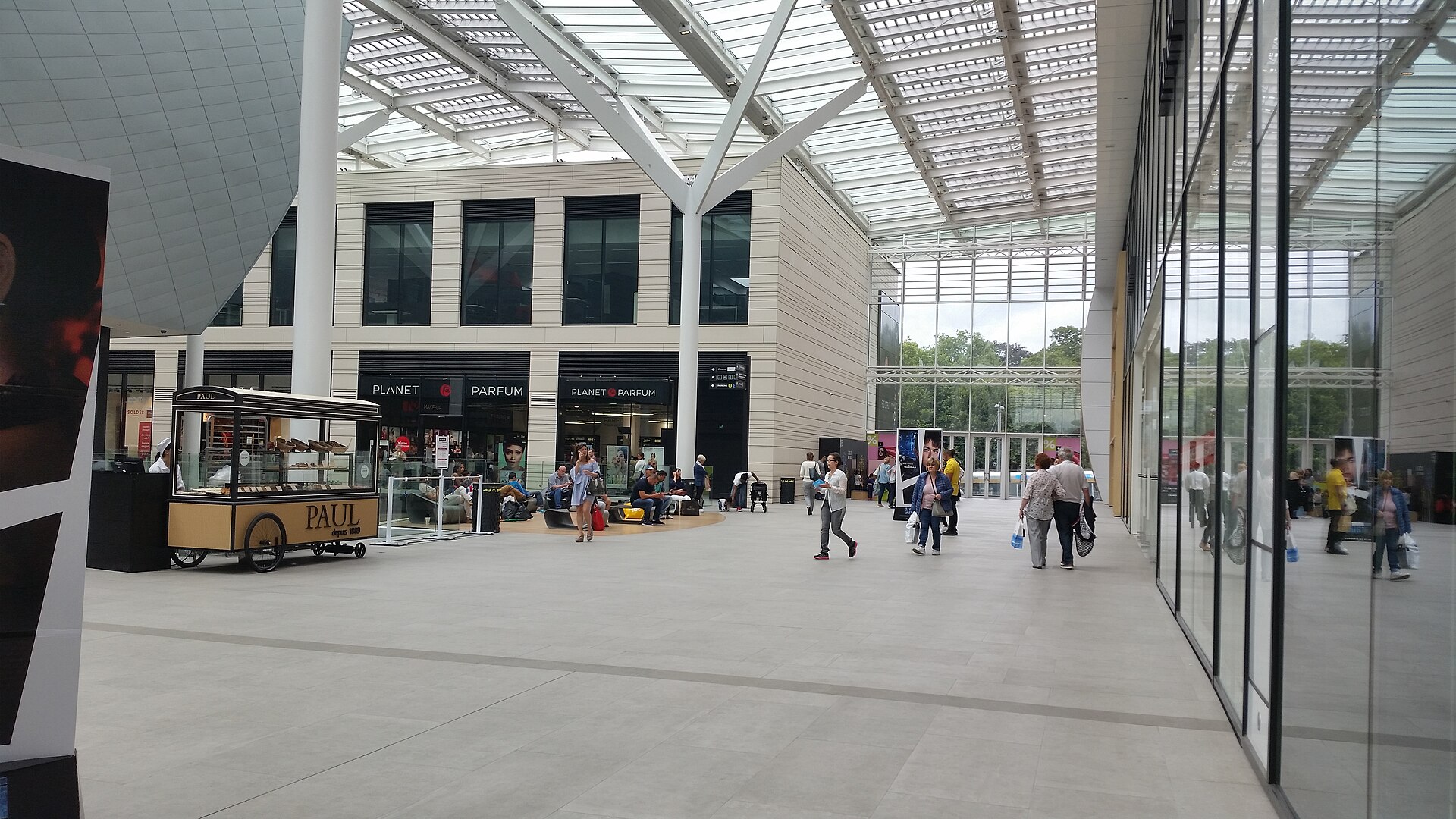
Opened in October 2016, Docks Bruxsel is a modern shopping and leisure complex built on a former industrial site along the Brussels canal. Its stores include Zara, Rituals, and Swarovski, alongside an 8-screen cinema and restaurants. The centre’s modern architecture and waterside location make it a pleasant alternative to city centre shopping. Accessible by tram and bus from the centre.
Woluwe Shopping Centre
Located in the residential commune of Woluwe-Saint-Lambert, this large shopping centre offers 120 shops in a more suburban setting. It features a good mix of fashion, homeware, electronics, and dining, and is accessible by metro (Roodebeek station). It is particularly popular with local residents and expats living in the eastern suburbs.
INNO (formerly Galeria Inno)
Belgium’s main department store chain has its flagship on Rue Neuve. Inno offers a curated selection of fashion, beauty, accessories, and homeware across multiple floors. The cosmetics and perfume department is particularly strong. INNO’s own website lists its other branches.
The Marolles: Vintage and Second-Hand Paradise
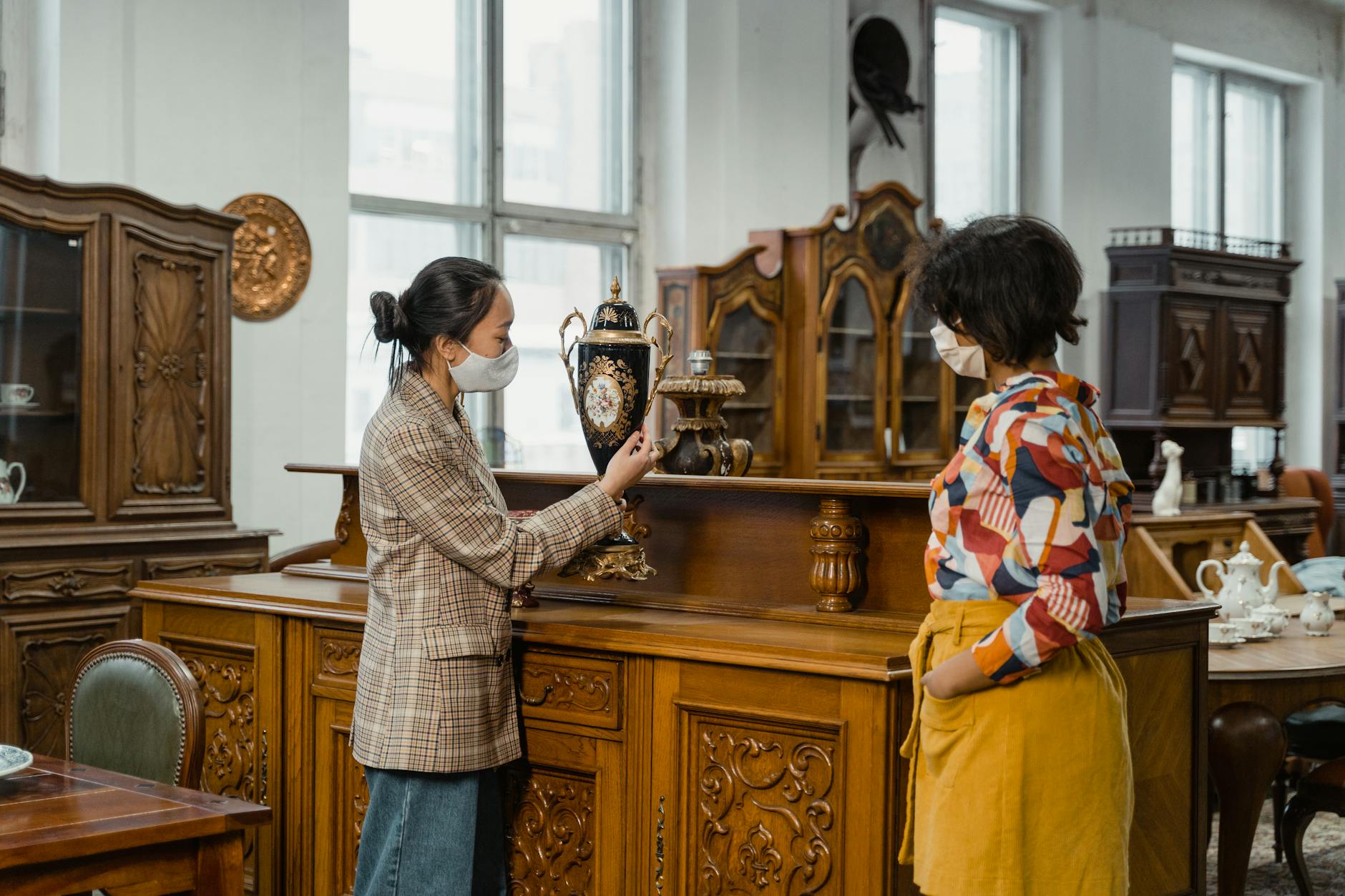
The Marolles neighbourhood deserves its own section because it offers a shopping experience unlike anything else in Brussels — or indeed in most European capitals. This historic working-class quarter, stretching from the Palais de Justice down the hill to the Place du Jeu de Balle, is Brussels’ vintage and antique heartland.
The main shopping artery is Rue Haute (Hoogstraat) and its continuation Rue Blaes (Blaesstraat), which together form a kilometre-long corridor of brocantes, antique shops, vintage clothing stores, and curiosity dealers. You will find everything from mid-century modern furniture and vintage Murano glass to retro clothing, old advertising signs, and pre-war kitchenware.
What makes the Marolles special is the mix: genuine antique dealers sit next to junk shops, high-end galleries next to charity shops. Prices range from a few euros for small trinkets at the flea market to thousands for museum-quality antiques. The neighbourhood retains a distinctly local character — the Marolles was historically Brussels’ most working-class area, and its spirit of irreverence and independent character survives in its shops and cafés. For the history of this neighbourhood and the Marolles dialect, see our Brussels History & Culture Guide.
Practical Shopping Tips for Brussels
Opening Hours
Shops in Brussels usually open Monday to Saturday, 10am to 6pm, with some on Rue Neuve and in shopping centres staying open until 7pm or 8pm. Sunday is a quieter shopping day, though some independent shops, including in the Marolles, stay open. Supermarket hours vary by chain and branch, and some (like those in train stations) open on Sundays.
Brussels has designated “shopping Sundays” (koopzondagen) during the year, when shops in the main commercial districts are permitted to open. Check the Visit Brussels website for exact dates during your visit.
Tax-Free Shopping (VAT Refund)
Eligible non-EU residents can reclaim the Belgian VAT (21% standard rate) on qualifying purchases of at least €125.01 per transaction, as long as the goods leave the EU and pass customs. When shopping, look for stores displaying “Tax Free Shopping” signs and ask for a tax-free form at the point of purchase. You will need to show your passport. Complete the form, and present it — along with the goods, receipt, and your boarding pass — at the customs office at the airport or border crossing before departing the EU.
Refund services like Global Blue and Planet Tax Free process the refund as a credit card payment or cash refund, minus a service fee. How much you get back depends on the goods, the refund service and its fees. Keep goods in your hand luggage for customs inspection, and allow extra time at the airport for processing.
Sales Seasons
Belgium has legally regulated sales periods (solden/soldes). The winter sales normally run from 3 to 31 January, starting on 2 January when the 3rd falls on a Sunday (as in 2027, when they run from 2 to 31 January), and the summer sales from 1 to 31 July, starting on 30 June when 1 July is a Sunday. During these periods, shops offer genuine reductions on seasonal stock. Outside official sales periods, shops are not permitted to advertise percentage discounts, though they may offer promotions described differently. The sales periods are the best time for bargain hunters, particularly for fashion shopping on Rue Neuve and Avenue Louise.
Payment Methods
Credit and debit cards (Visa, Mastercard, and Maestro/Bancontact) are accepted in virtually all shops and shopping centres. Many Belgian shops prefer Bancontact (the local debit system), but international cards work fine. Contactless payment is widely available. Some market stalls and smaller vintage shops may be cash-only, so carry some euros when visiting the Jeu de Balle flea market or the Midi Market.
Getting Your Purchases Home
If you buy bulky items like antique furniture, many Sablon and Marolles dealers can arrange international shipping. For fragile items like chocolate, ask the chocolatier about packing for the flight; some will ship internationally. Belgian postal services (bpost) are reliable, and you can find post offices in the city centre for sending parcels. Brussels Airport has a post office and packaging service in the departure area.
Neighbourhood Shopping Quick Reference
Each Brussels neighbourhood offers a distinct shopping personality. The Grand Place area is best for chocolate, lace, and tourist souvenirs. Rue Neuve and City2 are your go-to for high-street fashion and mainstream brands. Avenue Louise and Boulevard de Waterloo cater to luxury and designer shopping. The Dansaert quarter is the place for Belgian and contemporary design. The Sablon excels in antiques, fine chocolate, and art galleries. The Marolles is unbeatable for vintage, flea market finds, and brocante browsing. Ixelles (Chaussée d’Ixelles and Matongé) offers eclectic, multicultural shopping. And the European Quarter, while not a shopping destination per se, has several bookshops and gift stores catering to the international community.
For information on reaching these shopping districts, consult our Brussels Transportation Guide. To discover what else each neighbourhood offers beyond shopping, see our Brussels Neighbourhoods Guide.
Explore Shopping in Depth
This guide is the overview. Each link below goes deeper on one part of it:
- Belgian Chocolate Souvenirs — Brands & Where to Buy in Brussels
- Brussels Christmas Market Shopping — Winter Wonders Complete Guide
Frequently Asked Questions
What is Brussels most famous for shopping?
Brussels is most famous for Belgian chocolate, with world-renowned chocolatiers including Pierre Marcolini, Neuhaus, and Mary. The city is also known for Belgian lace, beer, comic books (especially Tintin), antiques in the Sablon district, and the daily flea market at Place du Jeu de Balle in the Marolles neighbourhood.
What is the main shopping street in Brussels?
Rue Neuve (Nieuwstraat) is Brussels’ main shopping street and one of the busiest in Belgium. It runs from Place de la Monnaie to Place Rogier and features mainly high-street chains and the City2 shopping centre. For luxury shopping, Avenue Louise and Boulevard de Waterloo are the main destinations.
Are shops open on Sunday in Brussels?
Sunday is quieter for shopping in Brussels, but not everything shuts: some independent shops (including in the Marolles), some shops in train station areas, and certain supermarkets open. Brussels has designated shopping Sundays during the year when main commercial districts can open. The Jeu de Balle flea market and the Midi Market operate every Sunday.
Can I get a tax refund on shopping in Brussels?
Yes, eligible non-EU residents can claim a VAT refund on qualifying purchases of at least €125.01 per transaction. Request a tax-free form in store, have it stamped by customs when leaving the EU, and process the refund through services like Global Blue or Planet Tax Free. The net amount varies with the goods and the provider’s fees.
Where is the best place to buy chocolate in Brussels?
The best chocolate shopping areas are the Grand Sablon (Pierre Marcolini, Wittamer), the Galeries Royales Saint-Hubert (Neuhaus, Mary), and Rue Royale (Mary). For artisan chocolate with innovative flavours, visit Laurent Gerbaud near the Central Station. Avoid tourist-trap chocolate shops near the Manneken Pis, which often sell lower-quality products at inflated prices.
When are the sales in Brussels?
Belgium has legally regulated sales periods. Winter sales normally run from 3 to 31 January (2 to 31 January in 2027), and summer sales from 1 to 31 July. Outside these periods, shops cannot advertise percentage-based discounts, making the sales seasons the best time for fashion bargains.
Photo Credits
-
Shopping in the Galeries Royales Saint-Hubert: Galeries royales Saint-Hubert 01 by BelPatty86, CC BY-SA 4.0, via Wikimedia Commons.
-
Inside Docks Bruxsel: Docks Brussels by Nemo_Le_Poisson, CC BY-SA 4.0, via Wikimedia Commons.
-
Rue Neuve shopping street: 2024-08-23 in Brussels 21 by Szilas, CC BY 4.0, via Wikimedia Commons.
-
Secondhand stalls at Place du Jeu de Balle: Flea market of Brussels 03 by Donarreiskoffer, CC BY-SA 4.0, via Wikimedia Commons.