15 Incredible Free Things to Do in Brussels
Brussels is one of Europe’s most generous capitals when it comes to free experiences. While some cities charge admission for practically everything, Brussels offers an extraordinary amount of world-class culture, architecture, and entertainment at zero cost. From UNESCO-listed squares and Gothic cathedrals to comic strip walking trails and panoramic viewpoints, you can fill an entire trip without spending a euro on attractions.
This guide covers the 15 best genuinely free things to do in Brussels — not just “cheap” options or discounted entry, but experiences that cost nothing at all. We also include tips on free museum days and budget strategies that stretch your money further. For a complete trip planning overview, see our Brussels Travel Guide.
1. Explore the Grand Place
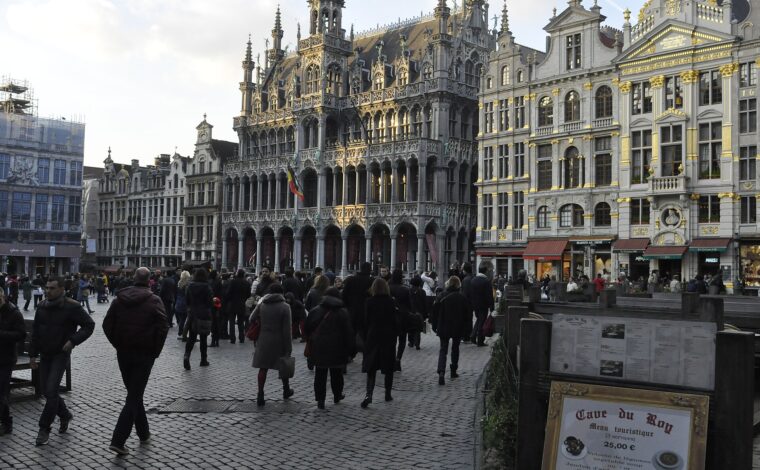
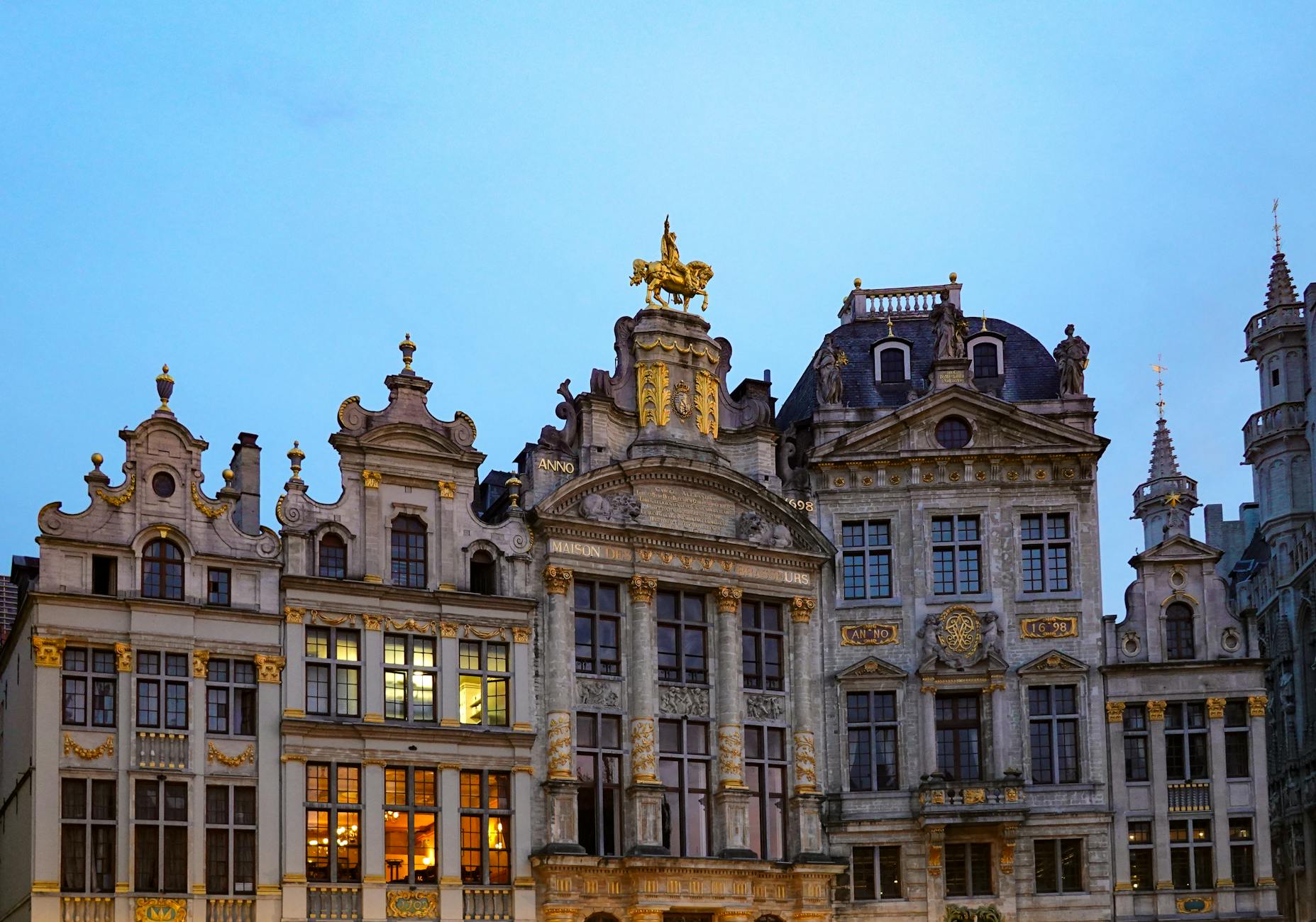
The Grand Place is not only Brussels’ finest attraction — it is one of the most spectacular public squares in the world, and visiting it costs absolutely nothing. This UNESCO World Heritage Site is surrounded by ornate 17th-century guild houses rebuilt in exuberant Baroque style, the Gothic Hôtel de Ville (City Hall) with its soaring 96-metre spire, and the neo-Gothic Maison du Roi housing the Brussels City Museum.
The square transforms throughout the year: in even-numbered years, the famous Flower Carpet covers the entire square with over 500,000 begonias in August (the 2026 edition has taken place, and the next is in August 2028). December brings an elaborate Christmas market and a towering tree. The daily light shows illuminate the facades after dark, and early morning visits before the tourist crowds arrive offer the square at its most atmospheric. This is the natural starting point for any Brussels itinerary and you can return as many times as you like without spending a cent.
Tip: The side streets radiating from the Grand Place — Rue de l’Étuve, Rue des Bouchers, Rue au Beurre — are equally historic and lead to many of Brussels’ other free attractions. For the full history, see our Brussels History & Culture Guide.
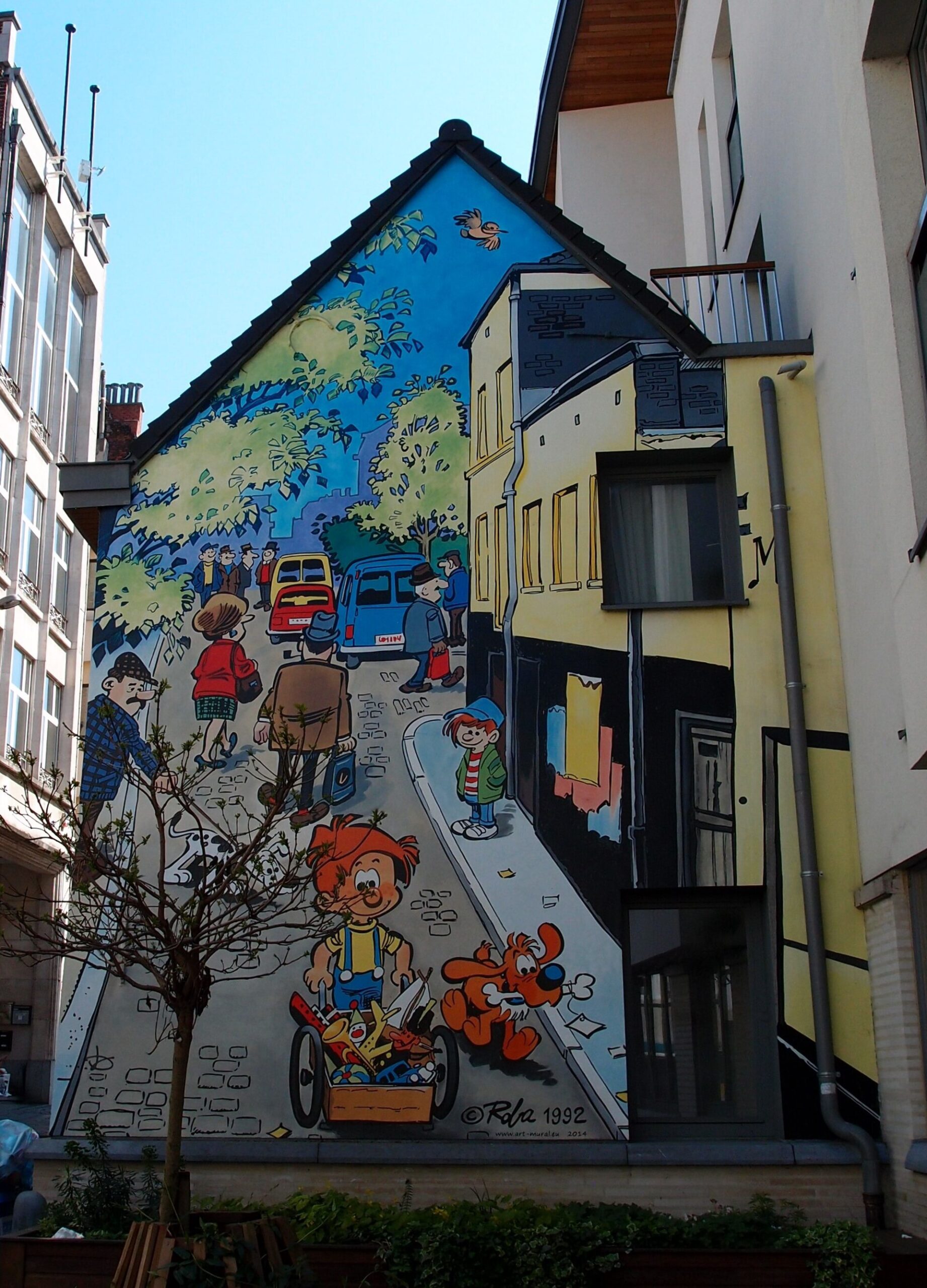
2. Walk the Brussels Comic Strip Trail
Belgium has produced more comic strip artists per square kilometre than any other country, and Brussels celebrates this heritage with over 50 giant comic book murals painted across the city’s buildings. The Brussels Comic Book Route — a self-guided walking trail that started in 1991 — features characters including Tintin, the Smurfs, Lucky Luke, Gaston Lagaffe, Marsupilami, and many lesser-known Belgian comic heroes.
The trail covers roughly 6 kilometres through the city centre (inside the Pentagon, as locals call the area bounded by the ring road), and can be comfortably walked in 3 to 4 hours. Each mural is a genuine work of street art, often filling an entire building facade. The effect is like walking through an open-air gallery that brings Belgium’s comic heritage to life at a massive scale. Free maps are available from the Visit Brussels tourist office, or you can use the official Visit Brussels app.
Tip: Start at the Belgian Comic Strip Centre (the building itself is worth admiring from outside) and work your way through the Marais, Saint-Jacques, and Marolles neighbourhoods. Some of the best murals are slightly off the main tourist routes, which makes exploring them a rewarding way to discover quieter parts of the city.
3. Visit the Cathedral of Saints Michael and Gudula
Brussels’ most important church is a Gothic masterpiece that took almost three centuries to build, and entry is completely free. The Cathedral of Saints Michael and Gudula stands on a hill between the upper and lower town, its twin towers visible from across the city centre. Inside, the soaring nave, magnificent 16th-century stained-glass windows, and an extraordinary Baroque carved wooden pulpit depicting the expulsion of Adam and Eve from the Garden of Eden create an atmosphere of quiet grandeur.
The cathedral has been the site of royal coronations, weddings, and state funerals throughout Belgian history. Regular organ concerts fill the vast interior with music, and the Romanesque crypt beneath the nave (small admission fee) reveals the foundations of an even older church. Even without entering the crypt, the cathedral offers one of Brussels’ most impressive free cultural experiences.
Hours: Monday–Friday 7am–6pm, weekends 8am–6pm. Free entry to the main church.
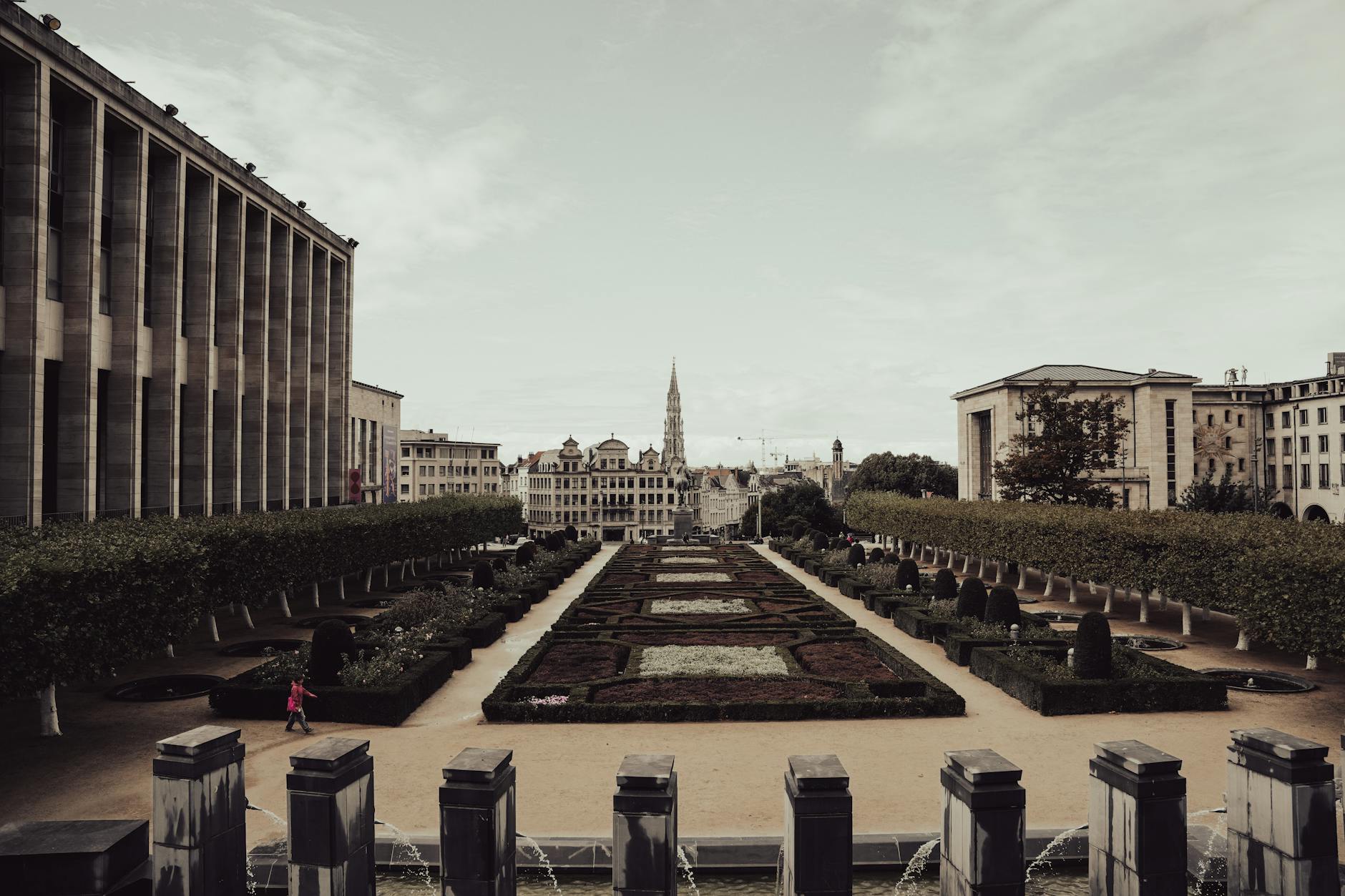
4. Admire the Mont des Arts Gardens
The Mont des Arts (Hill of the Arts) is one of Brussels’ most photogenic spots and a completely free pleasure. This terraced garden — with its symmetrical hedges, geometric flowerbeds, and a central fountain — sits between the lower town and the upper town’s museum district, offering sweeping panoramic views over the rooftops of Brussels towards the Hôtel de Ville spire and the Basilica of Koekelberg in the distance.
The gardens are beautifully maintained year-round and serve as a natural rest point between the Grand Place area below and the Royal Museums, BELvue Museum, and Royal Palace above. On clear days, the view from the top of the Mont des Arts is one of the best in the city — and it is particularly stunning at sunset when the light catches the old town’s rooftops and spires. There is a clocktower with carillon at the garden’s edge that plays tunes on the hour.
5. Wander Through the Galeries Royales Saint-Hubert
Opened in 1847, the Galeries Royales Saint-Hubert is one of the oldest and most beautiful covered shopping arcades in Europe. Walking through is entirely free, and the experience is as much about architecture as it is about shopping. The glass-vaulted ceiling floods the marble galleries with natural light, illuminating elegant storefronts, ornate pilasters, and period details that have changed remarkably little in over 175 years.
The arcade comprises three interconnected sections — the Galerie du Roi, Galerie de la Reine, and Galerie des Princes — and houses some of Brussels’ finest chocolatiers (including Neuhaus, which invented the praline here in 1912), bookshops, the historic Théâtre Royal des Galeries, and upscale cafés. Even if you do not plan to buy anything, the experience of walking through these galleries — especially on a rainy day when the glass roof provides welcome shelter — is one of Brussels’ greatest free pleasures. See our Brussels Shopping Guide for more.
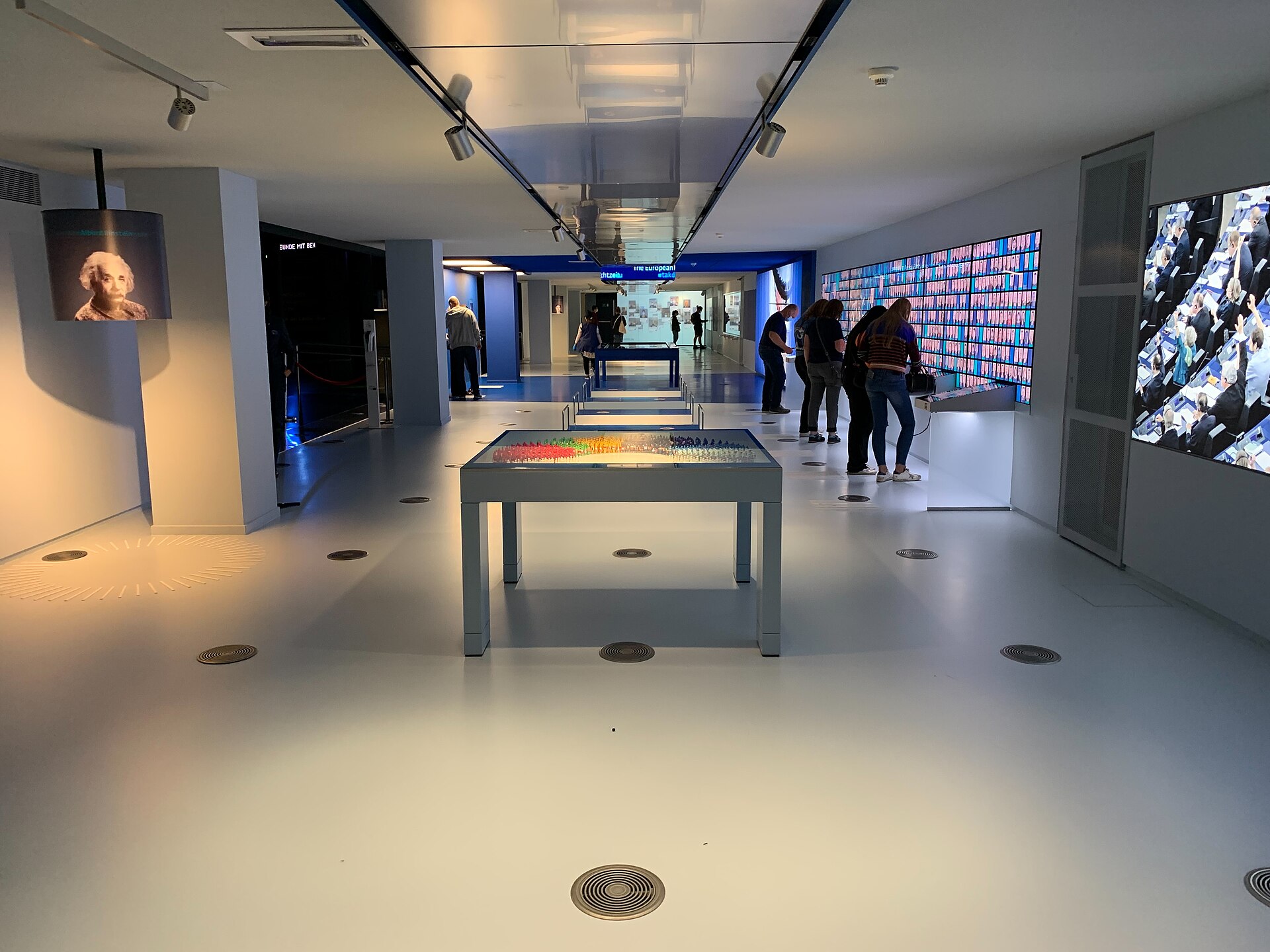
6. Tour the European Parliament (Parlamentarium)
The Parlamentarium is the European Parliament’s free visitor centre in the European Quarter, and it is one of the most impressive free museums in any European capital. This immersive, multimedia experience takes visitors through the history of European integration from the post-war period to the present, explains how the EU institutions work and how laws are made, and explores the European Parliament’s role in shaping policy across the continent.
A personal audio guide (available in all 24 EU official languages) leads you through interactive exhibits, a striking 360-degree cinema, and role-playing exercises where you participate in parliamentary debates. The experience is surprisingly engaging even for visitors with no particular interest in European politics. Allow 90 minutes. The nearby House of European History (also completely free) provides deeper historical context and is well worth combining with a Parlamentarium visit.
Hours: Monday 1pm–6pm, Tuesday–Friday 9am–6pm, weekends 10am–6pm. Free entry.
7. Relax in the Parc du Cinquantenaire
This magnificent park — built to celebrate the 50th anniversary of Belgian independence — combines vast green lawns, tree-lined avenues, fountains, and a monumental triumphal arch. The Parc du Cinquantenaire is where Brussels residents come to jog, have picnics, play football, and escape the urban bustle, and it is entirely free to enjoy.
The park also houses the Royal Museum of the Armed Forces and Military History, a ticketed visit (standard adult admission is €12) with spectacular aviation halls and historic aircraft suspended from the ceiling. The rooftop terrace of the triumphal arch itself, accessed through the military museum, provides one of the best panoramic views in Brussels. On weekdays the park is pleasantly uncrowded, and in summer it becomes a favourite spot for open-air events and concerts. For a full list of park activities, see our Brussels Things to Do Guide.
Access: Free. Open daily. Metro: Schuman or Mérode.
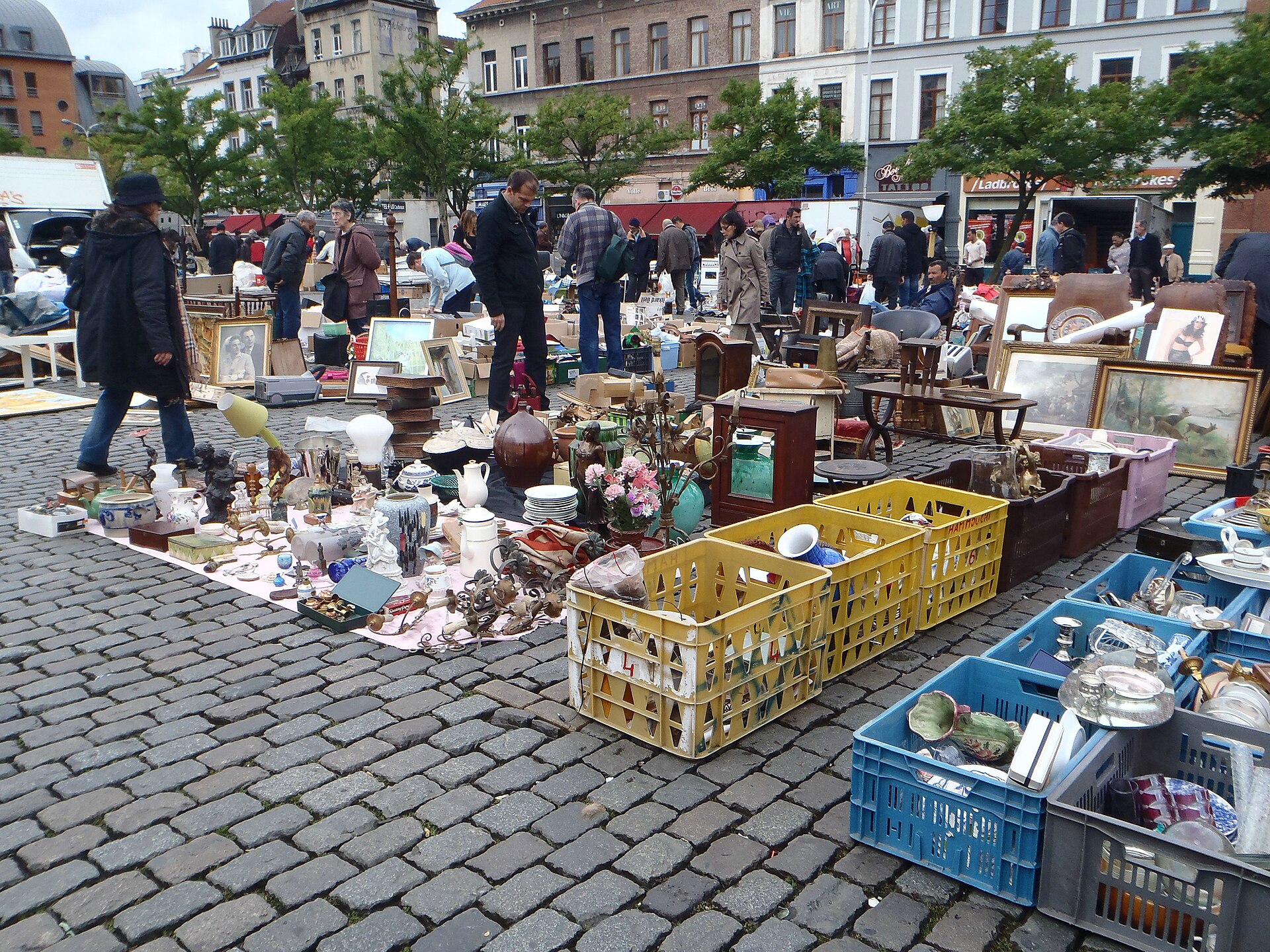
8. Discover the Marolles Flea Market
Every morning at the Place du Jeu de Balle in the Marolles neighbourhood, one of Brussels’ most authentic flea markets comes to life. Browsing is free (buying is optional), and the market runs daily from around 6am to 2pm, with the best selection and atmosphere on weekends. You will find vintage furniture, retro clothing, antique books, vinyl records, Art Deco lamps, and Brussels memorabilia spread across the cobblestoned square.
The surrounding Marolles neighbourhood is Brussels at its most characterful — working-class, multicultural, and refreshingly unpretentious. The area’s steep streets are lined with quirky shops, neighbourhood cafés, and street art. Walking from the Grand Place down to the Marolles (via the Rue Haute or the panoramic elevator from Place Poelaert) is one of the most enjoyable free walks in the city. For neighbourhood exploration, see our Brussels Neighbourhoods Guide.
9. Visit the Basilica of the Sacred Heart (Koekelberg)
The Basilica of the Sacred Heart in Koekelberg is the fifth-largest church in the world and the largest Art Deco building on the planet — and entry is free. This massive green-domed basilica, visible from across the Brussels skyline, took over 60 years to complete (1905–1969) and offers two stunning copper-green domes, a vast interior with Art Deco geometric design, and a panoramic terrace with some of the most expansive views in Brussels.
The basilica is located slightly outside the tourist centre, which means it receives far fewer visitors than it deserves. The rooftop terrace (small fee) is spectacular, but even without going up, the interior — with its dramatic proportions, modern stained glass, and serene atmosphere — is a remarkable free experience. The surrounding Elisabeth Park is pleasant for a stroll.
Hours: Daily 8am–5pm (summer until 6pm). Free entry to the main basilica. Metro: Simonis.
10. Stroll Through the Sablon and Petit Sablon Gardens
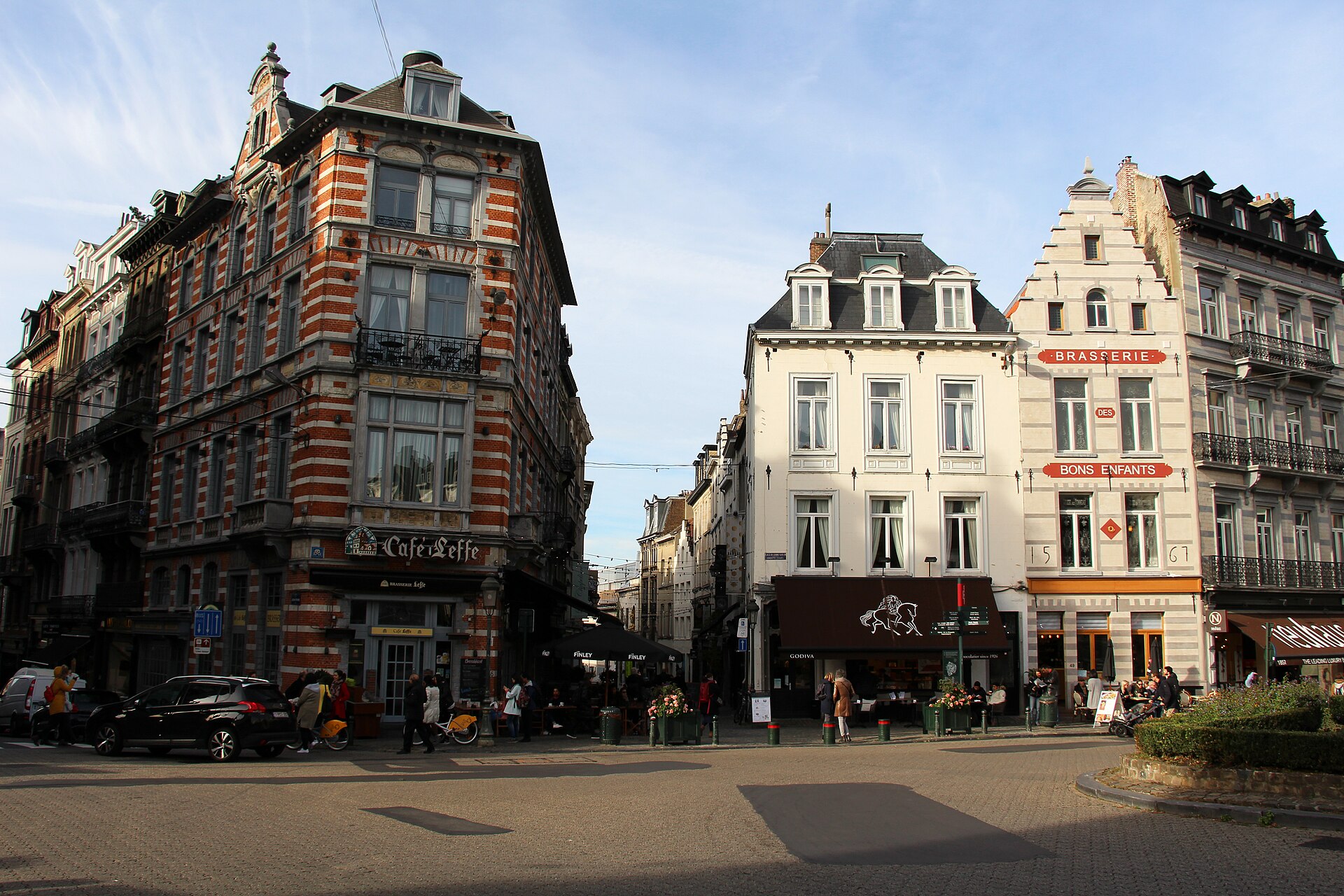
The Sablon district is Brussels’ most refined neighbourhood, and walking through it costs nothing. The Grand Sablon hosts a weekend antiques market where browsing is free, and the surrounding streets are lined with chocolate shop windows that are practically attractions in themselves — Pierre Marcolini, Wittamer, and Laurent Gerbaud all have displays worth admiring.
Behind the Grand Sablon lies the Petit Sablon, a small enclosed garden featuring 48 bronze statuettes on the pillars of its surrounding fence, each representing a medieval guild. At the centre stands a monument to the Counts of Egmont and Hoorn, executed in the Grand Place in 1568 during the Spanish rule of the Low Countries. The garden is peaceful, well-maintained, and provides a beautiful free rest stop between the Sablon and the nearby Palais de Justice. The stunning Church of Notre-Dame du Sablon adjacent to the square is free to enter and features some of Brussels’ finest stained-glass windows.
11. Walk Through the Parc de Bruxelles (Warandepark)
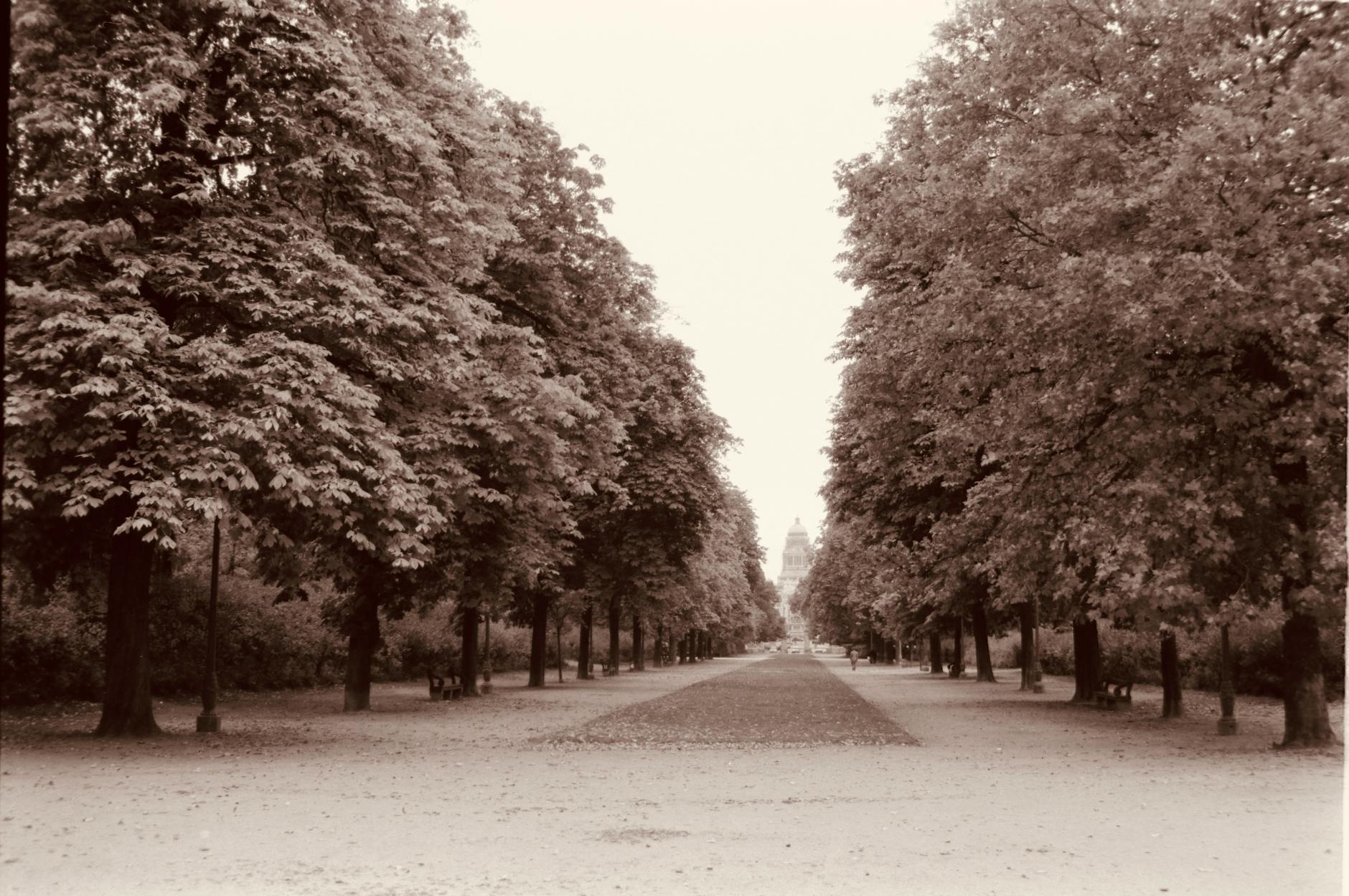
The Parc de Bruxelles sits in the most politically significant location in Belgium — between the Royal Palace and the Belgian Parliament. Laid out between 1776 and 1783 in a neoclassical style by Guimard and Zinner, it features symmetrical paths, a central fountain, a bandstand, mature plane trees, and an atmosphere of quiet formality. This is where the Belgian Revolution of 1830 erupted, and bullet holes from the fighting can still be seen in some surrounding buildings.
The park is free, open daily, and serves as a natural green corridor between the upper and lower town. In summer, the kiosk café operates and outdoor events bring the park to life. It is particularly beautiful in autumn when the plane trees turn golden, and the views of the Royal Palace from the southern end of the park are among the most photographed in Brussels.
12. Explore Brussels’ Art Nouveau Architecture
Brussels is the birthplace of Art Nouveau, and dozens of extraordinary buildings from the movement’s golden age (1893–1910) can be admired for free from the street. Victor Horta, Paul Hankar, Henry van de Velde, and Gustave Strauven all left their mark on Brussels, creating buildings with flowing ironwork, whiplash curves, mosaic-covered facades, and organic forms that broke completely with the rigid classicism of the 19th century.
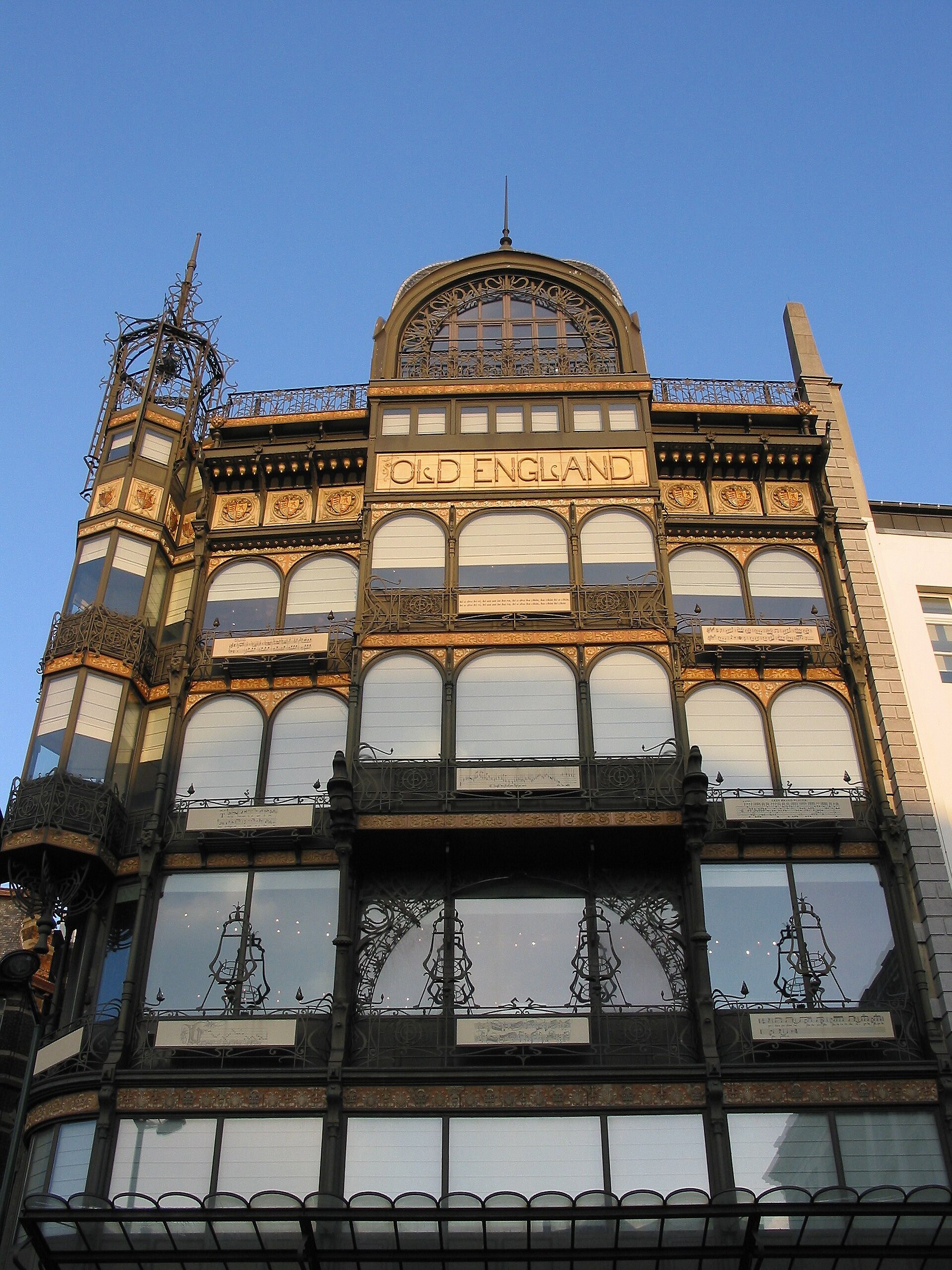
The best areas for Art Nouveau walking are Saint-Gilles (around the Horta Museum), Ixelles (Avenue Louise and surroundings), and Schaerbeek. Standout exteriors include the Horta Museum itself (enter for €12, but the facade is free), the Old England Building (now the Musical Instruments Museum) with its striking iron-and-glass facade, the Maison Cauchie in Etterbeek with its remarkable sgraffito murals, and the Hôtel Hannon in Saint-Gilles. Brussels has over 500 Art Nouveau buildings surviving, and walking tours of the best facades can be done entirely for free. See our Brussels History & Culture Guide for detailed routes.
13. Visit the House of European History
Located in the European Quarter in the beautifully restored Eastman Building, the House of European History is a world-class museum that is entirely free of charge. The permanent exhibition covers the shared European experience from the earliest civilisations to the present day, exploring how conflict, cooperation, revolution, and cultural exchange have shaped the continent.
The museum is excellently curated, with interactive exhibits, personal stories, original artefacts, and multimedia presentations spread across six floors. It tackles difficult subjects — two world wars, totalitarian ideologies, colonial legacies — with intelligence and sensitivity. A free tablet guide in all EU languages provides commentary throughout. Allow two hours. The combination of this museum with the Parlamentarium next door makes the European Quarter one of Brussels’ best free cultural destinations.
Hours: Monday 1pm–6pm, Tuesday–Friday 9am–6pm, weekends 10am–6pm. Free entry.
14. Watch the Manneken Pis Costume Changes
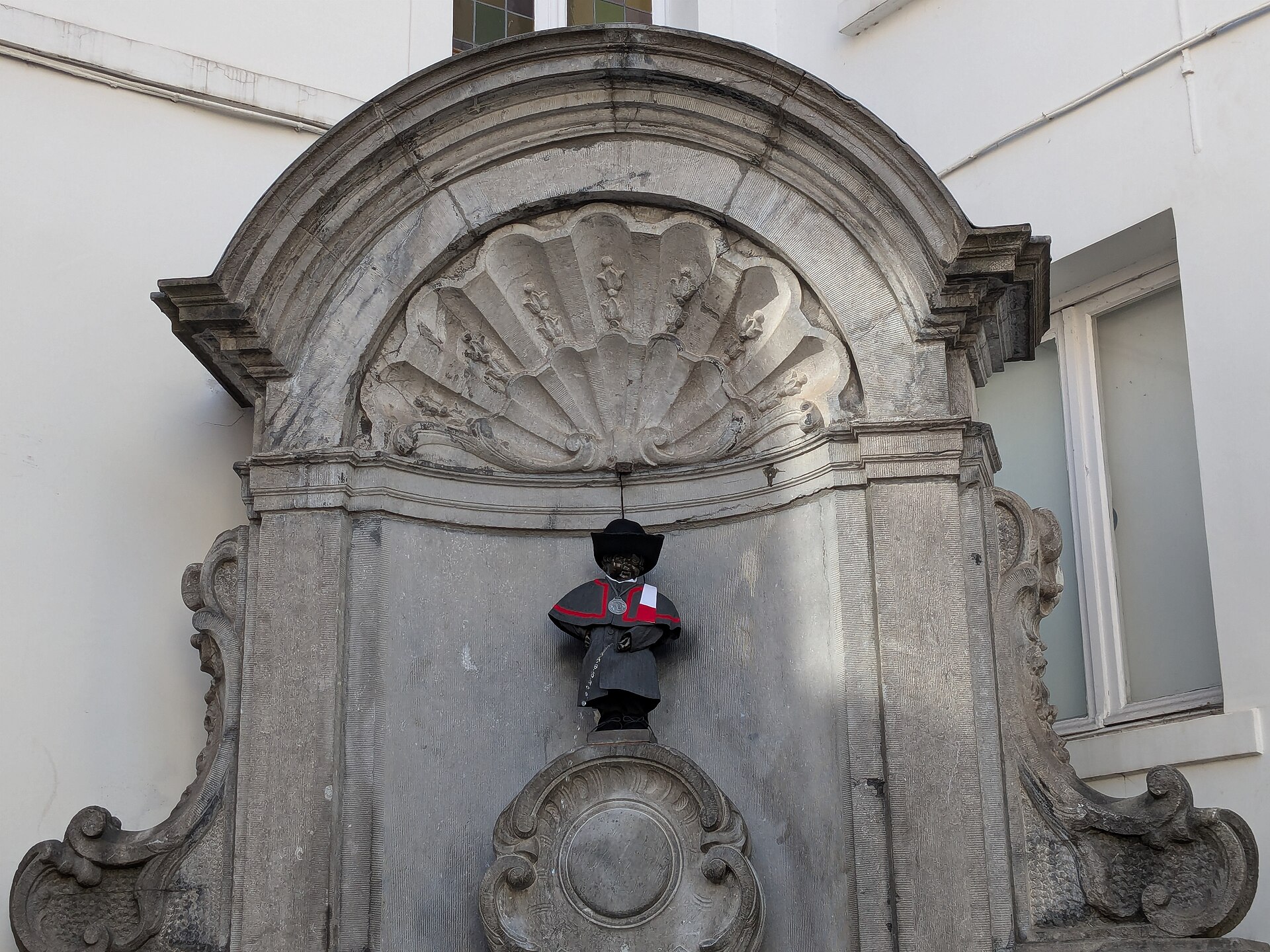
The Manneken Pis — Brussels’ famous 61-centimetre bronze statue of a urinating boy — is free to visit, but most tourists stop at a quick photo and move on. The real entertainment is the statue’s elaborate costume calendar. The Manneken Pis has been receiving costumes as diplomatic gifts since the 17th century, and his wardrobe now exceeds 1,000 outfits, from an Elvis Presley suit to a cosmonaut uniform to national costumes from around the world.
The official dressing schedule is published online by the City of Brussels. If you time your visit to coincide with a costume change, you will see a small ceremony that draws an enthusiastic crowd. The GardeRobe MannekenPis museum (on Rue du Chêne, a short walk from the statue; entry is charged, except on the first Sunday of the month) displays a rotating selection of the most remarkable costumes and is worth the brief detour. Do not miss the lesser-known Jeanneke Pis (a female counterpart, near the Delirium Café on Impasse de la Fidélité) and the Zinneke Pis (a urinating dog, on Rue des Chartreux).
15. Enjoy Free Museum Days
Many of Brussels’ world-class museums offer free admission on specific days, turning a budget trip into a cultural feast. The first Wednesday of each month, several major museums — including the Royal Museums of Fine Arts, the Magritte Museum, the BELvue Museum, and the Museum of Natural Sciences — offer free entry from 1pm onwards. Some museums also offer free admission on the first Sunday of each month.
The Parlamentarium and House of European History in the European Quarter are always free. The Royal Museum of the Armed Forces and Military History in the Parc du Cinquantenaire charges admission (€12 for adults), and the GardeRobe MannekenPis museum is free only on the first Sunday of the month. Planning your museum visits around these free days can save significant money — museum entry fees in Brussels typically range from €8 to €17 per museum, so three or four free museum visits can save €40 or more.
Key free days: First Wednesday of the month (afternoon) — Royal Museums of Fine Arts, Magritte Museum, BELvue Museum, Museum of Natural Sciences, Porte de Hal. First Sunday — additional museums participate. Check individual museum websites for current schedules as policies can change.
Budget Tips for Brussels
The Brussels Card
If you plan to visit several paid museums alongside the free attractions, the Brussels Card (24, 48, or 72 hours) provides free entry to over 49 museums plus discounts on other attractions and restaurants. For museum-intensive itineraries, the card pays for itself within two to three visits. An optional public transport add-on covers all STIB buses, trams, and metro lines.
Free Water and Wi-Fi
Brussels has public drinking water fountains throughout the city centre. Most museums, the Galeries Royales Saint-Hubert, and many cafés and restaurants offer free Wi-Fi. The Visit Brussels tourist offices (on the Grand Place and at Brussels-Midi station) provide free maps, brochures, and travel advice.
Getting Around for Free
Central Brussels is remarkably walkable — you can reach almost every attraction on this list on foot from the Grand Place within 20 minutes. For longer distances, many visitors rent a Villo! bicycle (first 30 minutes free with a 24-hour ticket costing just €1.50). For more transport tips, see our Brussels Getting Around Guide.
One entry on this list comes with an asterisk. Tip-based walking tours are free to join and expected to be tipped, and the guides are self-employed rather than salaried. Our guide to free walking tours in Brussels explains how the model works, what to hand over at the end, and the one genuinely free alternative that refuses tips altogether.
Related Brussels Guides
Keep planning with these companion guides:
- Best Instagram & Photography Spots in Brussels — the full guide to best instagram & photography spots in brussels
- The Ultimate Guide to Things to Do in Brussels — the full guide to the ultimate guide to things to do in brussels
- Top 25 Tourist Attractions in Brussels You Can’t Miss — the full guide to top 25 tourist attractions in brussels you can’t miss
Frequently Asked Questions
Can you visit Brussels for free?
Yes. Many of Brussels’ best attractions are completely free, including the Grand Place, cathedrals and churches, the Parlamentarium, the House of European History, the Comic Strip Trail, parks, the Marolles flea market, and Art Nouveau architecture walking routes. Several major museums also offer free admission days. You could easily spend two or three days in Brussels without paying any attraction admission fees.
What are the best free museums in Brussels?
The Parlamentarium and House of European History are always free and are world-class museums. The Royal Museum of the Armed Forces is a paid visit (€12 for adults). On the first Wednesday afternoon of each month, the Royal Museums of Fine Arts, Magritte Museum, BELvue Museum, and Museum of Natural Sciences are free.
Is the Grand Place free?
Yes, the Grand Place is free to visit at all times. It is an open public square and there is no admission charge. The Brussels City Museum inside the Maison du Roi charges an admission fee, but the square itself — including the guild houses, Hôtel de Ville exterior, and nightly illuminations — is entirely free.
Are Brussels churches free to enter?
Yes. All churches in Brussels, including the Cathedral of Saints Michael and Gudula, the Church of Notre-Dame du Sablon, and the Basilica of Koekelberg, are free to enter. Some may charge a small fee for specific areas (such as the cathedral crypt or the basilica’s rooftop terrace), but the main interiors are always free.
Photo Credits
-
The Boule et Bill mural: Cartoon auf einer Hausfassade in Brüssel (Belgien) 1 by Gordito1869, CC BY-SA 4.0, via Wikimedia Commons.
-
Visitors exploring the Parlamentarium: Brussels 22 25 26 100000 by Robot8A, CC BY-SA 4.0, via Wikimedia Commons.
-
Godiva on the Grand Sablon: Bruxelles – Place du Grand Sablon (46577265904) by Fred Romero from Paris, France, CC BY 2.0, via Wikimedia Commons.
-
The Old England facade: 0 Bruxelles Old England – 1 by Jean-Pol GRANDMONT, CC BY 3.0, via Wikimedia Commons.
-
Manneken Pis wearing a costume: Bruxelles – Manneken Pis – Habillé aux couleurs d’une confrérie by Romainbehar, CC0, via Wikimedia Commons.
-
Browsing the Jeu de Balle flea market: Mercado Segunda Mano en Marolles – panoramio by dinamicline, CC BY-SA 3.0, via Wikimedia Commons.